EU ratifies Turnberry trade deal affecting tech sector
💡New EU-US trade deal could lower hardware costs for AI infrastructure and server components.
⚡ 30-Second TL;DR
What Changed
Ratified with 440 votes in favor.
Why It Matters
The reduction in tariffs may lower hardware costs for AI infrastructure providers importing US-made components into Europe.
What To Do Next
Review your supply chain costs for US-imported hardware components to see if you qualify for tariff reductions under the new deal.
Key Points
- •Ratified with 440 votes in favor.
- •Eliminates most tariffs on US industrial goods in the EU.
- •Sets caps on US tariffs for EU goods.
🧠 Deep Insight
Background and context from public sources — not the original article. 18 sources cited.
🔑 Enhanced Key Takeaways
- •The Turnberry Agreement also grants preferential market access for a wide range of US fishery and agricultural products into the EU, alongside industrial goods.
- •The US will apply an all-inclusive tariff of 15% to most EU goods, with specific exceptions for products such as unavailable natural resources, aircraft, and generic pharmaceuticals, which will revert to Most Favored Nation (MFN) rates.
- •A significant feature of the agreement is a 'sunset clause,' stipulating that the main regulation will expire on December 31, 2029, unless it is renewed following a comprehensive impact assessment by the European Commission.
- •The European Parliament introduced robust safeguard and suspension clauses, empowering the EU Commission to suspend tariff preferences if the US fails to uphold its commitments, particularly concerning tariffs on steel and aluminum products.
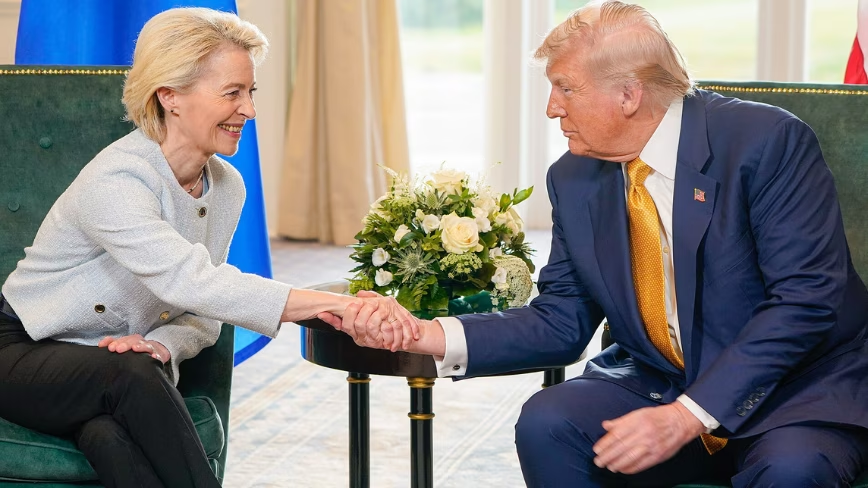
- •The deal was initially forged in July 2025 at the Turnberry golf resort in Scotland between European Commission President Ursula von der Leyen and US President Donald Trump, amidst threats of escalating tariffs from the US.
🛠️ Technical Deep Dive
- Sunset Clause: The primary regulation governing the tariff preferences is set to automatically expire on December 31, 2029. A comprehensive assessment of its trade effects on EU industry, agriculture, and SMEs, including changes in trade patterns with third countries, is mandated by June 30, 2029, to inform any potential legislative proposal for extension.
- Sunrise Clause: The tariff benefits granted by the EU are conditional and will only take effect once the United States demonstrably fulfills its commitments, specifically by lowering tariffs on European steel and aluminum products to a maximum of 15%.
- Suspension Clause: The European Commission is empowered to propose the total or partial suspension of tariff preferences if the US imposes additional tariffs exceeding the agreed 15% limit, introduces new tariffs on EU products, undermines the agreement's objectives, discriminates against EU operators, or engages in economic coercion.
- Safeguard Mechanism: This mechanism allows for the suspension of concessions if tariff preferences granted to the US lead to significant increases in imports that threaten to cause serious injury to EU domestic industries, including the agricultural sector.
- Specific Product Coverage: The agreement includes 'zero-for-zero' tariffs on strategic products such as aircraft and aircraft parts, certain chemicals, generic medicines, semiconductor equipment, natural resources, and critical raw materials.
- Steel and Aluminum Derivatives: The Commission can suspend tariff preferences if the US continues to apply a tariff rate higher than 15% on EU steel and aluminum derivatives beyond December 31, 2026.
🔮 Future ImplicationsAI analysis grounded in cited sources
⏳ Timeline
📎 Sources (18)
Factual claims are grounded in the sources below. Forward-looking analysis is AI-generated interpretation.
Weekly AI Recap
Read this week's curated digest of top AI events →
👉Related Updates

AI-curated news aggregator. All content rights belong to original publishers.
Original source: The Next Web (TNW) ↗
This is a summary, not the original. Read the source, or get the weekly briefing.
Weekly AI briefing
One email a week. Unsubscribe anytime.