EU Fund $160M Bet on Quantum Motion
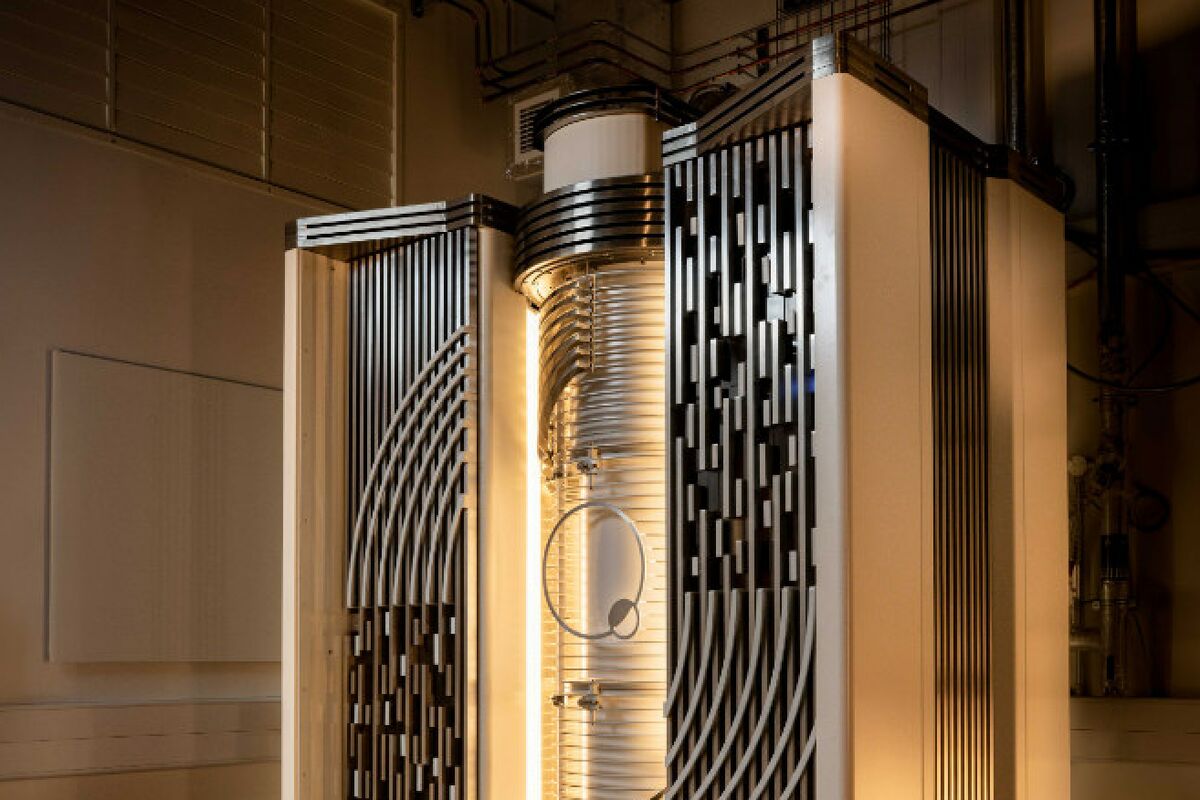
EU $160M into silicon QC: scalable path to quantum-boosted AI compute.
30-Second TL;DR
What Changed
Kembara EU fund's inaugural investment
Why It Matters
EU's move bolsters quantum leadership, potentially enabling quantum-AI hybrids for complex ML tasks. Silicon integration eases scaling with AI chip ecosystems.
What To Do Next
Study Quantum Motion's silicon qubit papers for quantum ML algorithm integration.
Key Points
- •Kembara EU fund's inaugural investment
- •$160M funding for Quantum Motion
- •Silicon chip-based quantum computers
- •UK startup targets scalable quantum tech
Deep Insight
Background and context from public sources — not the original article. 7 sources cited.
Enhanced Key Takeaways
- •Quantum Motion successfully delivered the world's first full-stack quantum computer fabricated entirely using standard CMOS silicon processes, which was installed at the UK's National Quantum Computing Centre (NQCC) in September 2025.
- •The company's hardware architecture is designed for data-center integration, with its current full-stack system fitting into three standard 19-inch server racks, including the dilution refrigerator and control electronics.
- •Quantum Motion utilizes machine learning and RF reflectometry for automated qubit tuning and calibration, addressing the scalability challenges of managing thousands of silicon-based quantum dots.
Competitor Analysis
- Modality
- Silicon-Spin
- Key Differentiator
- Focus on 300mm CMOS manufacturing scalability.
- Modality
- Silicon-Spin
- Key Differentiator
- Leverages internal EUV lithography and massive foundry infrastructure.
- Modality
- Photonic
- Key Differentiator
- CMOS-compatible silicon-photonic integration for room-temp operation.
- Modality
- Superconducting
- Key Differentiator
- Leads in qubit count and mature, long-term public roadmap.
| Competitor | Modality | Key Differentiator |
|---|---|---|
| Diraq | Silicon-Spin | Focus on 300mm CMOS manufacturing scalability. |
| Intel | Silicon-Spin | Leverages internal EUV lithography and massive foundry infrastructure. |
| PsiQuantum | Photonic | CMOS-compatible silicon-photonic integration for room-temp operation. |
| IBM | Superconducting | Leads in qubit count and mature, long-term public roadmap. |
Technical Deep Dive
- Qubit Modality: Electron spin qubits trapped in silicon quantum dots, implemented using standard MOSFET-like transistor structures.
- Fabrication: Utilizes industry-standard 300mm silicon wafers and commercial CMOS foundry processes.
- Scalability: Tile-based architecture designed to support dense, repeatable arrays; demonstrated 1,024 quantum dot sites in a 0.1 mm² area.
- System Integration: Full-stack system includes QPU, control stack, and software interface compatible with frameworks like Qiskit and Cirq.
- Control Electronics: Employs cryo-CMOS integration to manage qubit states at millikelvin temperatures.
Future ImplicationsAI analysis grounded in cited sources
Timeline
- 2017-01Quantum Motion founded as a spinout from UCL and Oxford University.
- 2023-02Raised £42 million Series B funding led by Bosch and Porsche.
- 2024-01Announced strategic partnership with GlobalFoundries for chip fabrication.
- 2025-04Appointed Hugo Saleh as President and CCO to lead global commercial expansion.
- 2025-09Delivered and installed the world's first full-stack CMOS silicon quantum computer at the UK NQCC.
Sources (7)
Factual claims are grounded in the sources below. Forward-looking analysis is AI-generated interpretation.
Weekly AI Recap
Read this week's curated digest of top AI events →
AI-curated news aggregator. All content rights belong to original publishers.
Original source: Bloomberg Technology ↗
This is a summary, not the original. Read the source, or get the weekly briefing.
The weekly digest
One email a week. Unsubscribe anytime.