EPFL Unveils Fatigue-Resistant 3D-Printed Elastomer
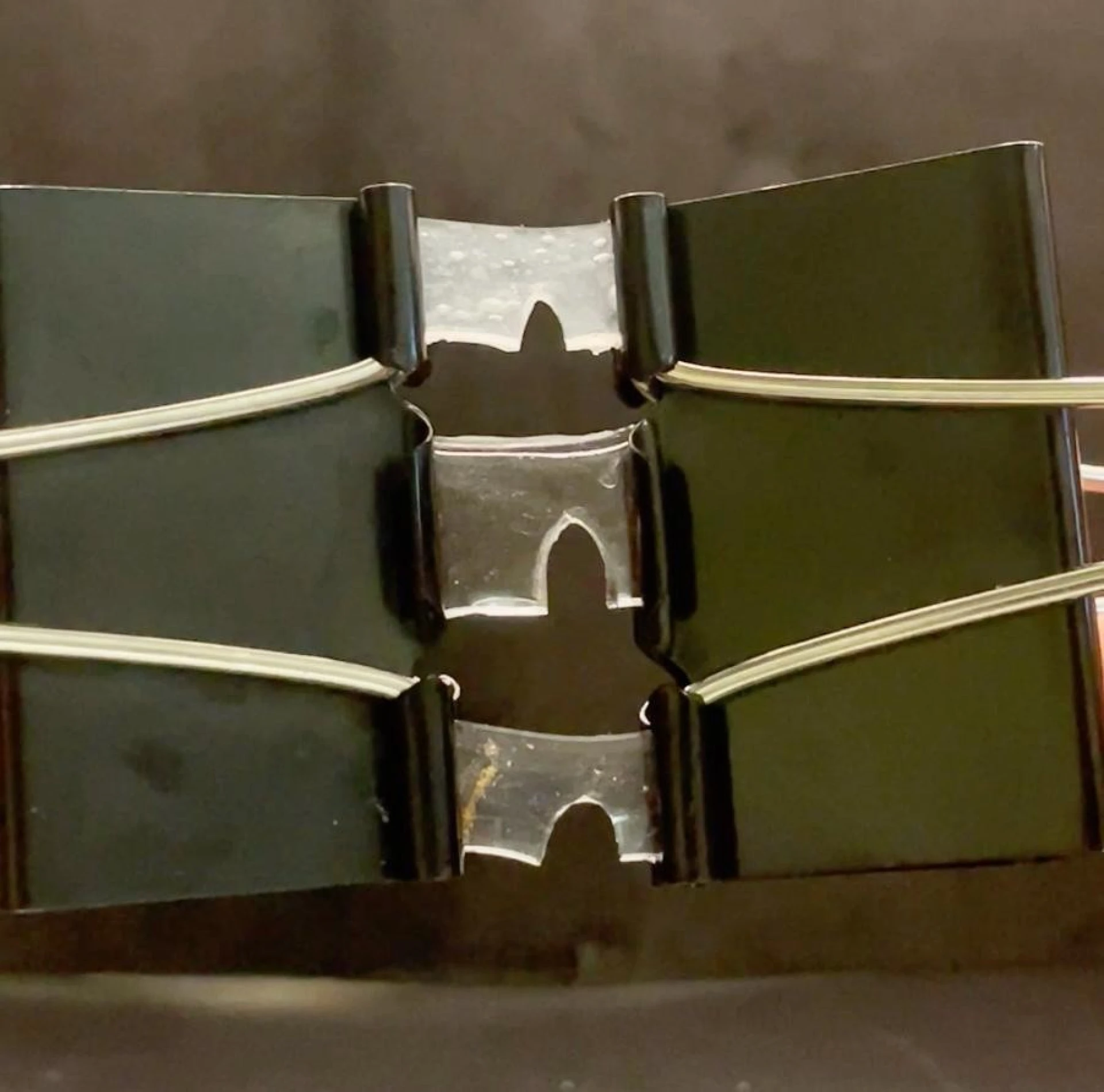
💡A tougher printable elastomer could make soft robots and wearable AI hardware far more durable.
⚡ 30-Second TL;DR
What Changed
EPFL created a new elastomer compatible with 3D printing.
Why It Matters
More durable printable elastomers could make soft robotic components and wearable interfaces more reliable in repeated-use environments. For AI practitioners building embodied systems, the material may improve the mechanical durability of prototypes and end-effectors.
What To Do Next
Evaluate the EPFL elastomer in a small soft-robot gripper prototype and benchmark cycle life against your current printed material.
Key Points
- •EPFL created a new elastomer compatible with 3D printing.
- •The material addresses brittleness and fatigue-related failure in soft printed parts.
- •Potential applications include wearable electronics, soft robotics, and medical devices.
🧠 Deep Insight
AI-generated analysis for this event.
🔑 Enhanced Key Takeaways
- •The material utilizes a dual-network polymer architecture that allows for energy dissipation, preventing crack propagation under cyclic loading.
- •Researchers employed a digital light processing (DLP) 3D printing technique to achieve high-resolution structures with this elastomer.
- •The elastomer demonstrates self-healing properties at room temperature, significantly extending the operational lifespan of printed components.
- •Mechanical testing revealed the material can withstand over 100,000 cycles of deformation without significant loss of elasticity or structural integrity.
- •The chemical formulation is specifically engineered to be compatible with standard stereolithography (SLA) printers, lowering the barrier for industrial adoption.
📊 Competitor Analysis▸ Show
| Feature | EPFL New Elastomer | Standard TPU (Thermoplastic Polyurethane) | Silicone-based 3D Resins |
|---|---|---|---|
| Fatigue Resistance | Ultra-High | Moderate | Low to Moderate |
| Printing Method | DLP/SLA | FDM/FFF | SLA/DLP |
| Self-Healing | Yes | No | No |
| Cost | Research-grade (High) | Low | Moderate |
🛠️ Technical Deep Dive
- Material Composition: Incorporates a sacrificial network of reversible hydrogen bonds within a covalently cross-linked polymer matrix.
- Energy Dissipation: The reversible bonds break and reform during mechanical stress, effectively blunting crack tips.
- Printability: Optimized for photopolymerization with a viscosity profile suitable for high-speed DLP printing.
- Fatigue Threshold: Exhibits a fatigue threshold significantly higher than conventional elastomers, measured via cyclic tensile testing.
- Elastic Recovery: Maintains >95% elastic recovery after repeated high-strain deformation cycles.
🔮 Future ImplicationsAI analysis grounded in cited sources
⏳ Timeline
Weekly AI Recap
Read this week's curated digest of top AI events →
👉Related Updates

AI-curated news aggregator. All content rights belong to original publishers.
Original source: cnBeta (Full RSS) ↗