Engineering Challenges of Orbital Data Centers
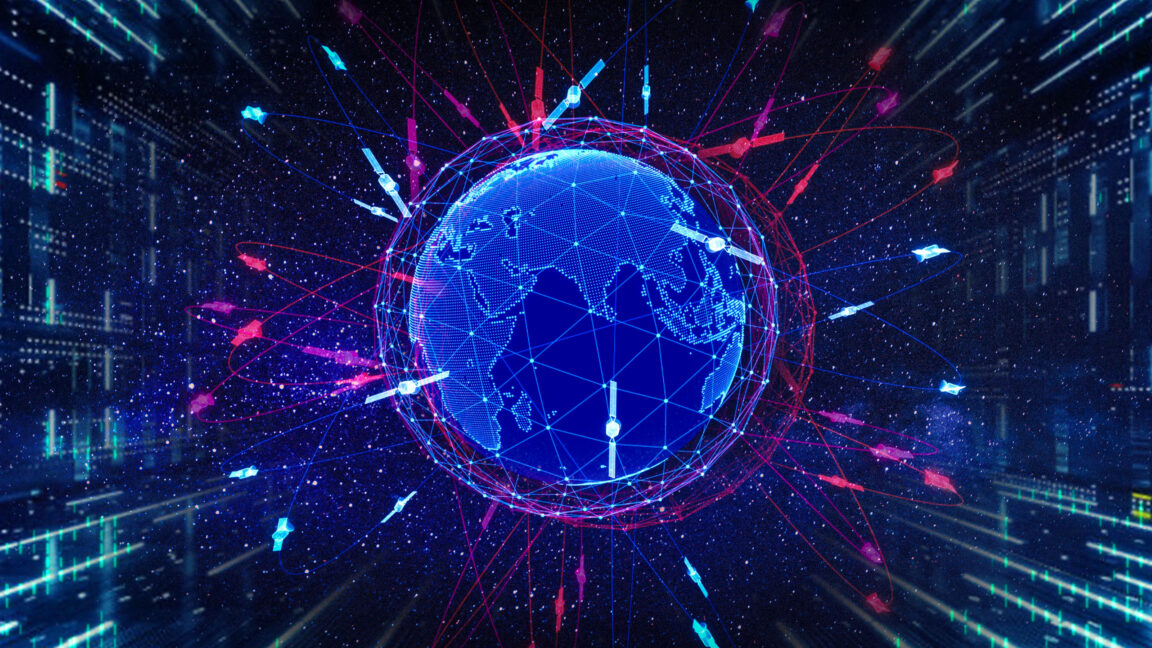
💡Space-based compute is the next frontier for edge AI; learn the hardware bottlenecks limiting orbital data centers.
⚡ 30-Second TL;DR
What Changed
ISS-grade radiators are currently too heavy and expensive for commercial scaling.
Why It Matters
If successful, orbital data centers could provide low-latency edge computing for satellite constellations and space-based AI processing. This would shift the paradigm of how we handle data generated in orbit.
What To Do Next
Monitor advancements in space-hardened hardware if you are building edge AI applications for satellite constellations.
Key Points
- •ISS-grade radiators are currently too heavy and expensive for commercial scaling.
- •Cost-effective thermal management is the primary bottleneck for space-based compute.
- •Lightweight hardware design is essential for orbital data center viability.
🧠 Deep Insight
AI-generated analysis for this event.
🔑 Enhanced Key Takeaways
- •Orbital data centers must contend with ionizing radiation, which necessitates specialized radiation-hardened components or redundant error-correction architectures to prevent bit-flips.
- •The lack of convective cooling in a vacuum environment forces reliance on radiative heat transfer, requiring massive surface areas that complicate launch fairing integration.
- •Latency advantages for orbital computing are primarily targeted at high-frequency trading and global synchronization, where the speed of light in a vacuum offers a distinct edge over terrestrial fiber optics.
- •Current research is exploring the use of phase-change materials and deployable origami-inspired radiator structures to maximize thermal dissipation while minimizing launch volume.
- •Orbital debris mitigation protocols, such as the FCC's five-year deorbit rule, impose strict end-of-life requirements that increase the total cost of ownership for space-based infrastructure.
🛠️ Technical Deep Dive
- Thermal Management: Transition from traditional pumped fluid loops to capillary pumped loops (CPL) or loop heat pipes (LHP) to reduce mechanical complexity and mass.
- Radiation Hardening: Utilization of Silicon-on-Insulator (SOI) processes and Triple Modular Redundancy (TMR) at the circuit level to mitigate Single Event Effects (SEE).
- Power Systems: Integration of high-efficiency multi-junction solar cells combined with regenerative fuel cells to maintain compute uptime during orbital eclipse periods.
- Structural Design: Adoption of modular, standardized bus architectures (e.g., ESPA-class rings) to allow for incremental scaling and easier integration with commercial launch vehicles.
🔮 Future ImplicationsAI analysis grounded in cited sources
⏳ Timeline
Weekly AI Recap
Read this week's curated digest of top AI events →
👉Related Updates
AI-curated news aggregator. All content rights belong to original publishers.
Original source: Ars Technica ↗