⚛️Ars Technica•Freshcollected in 2h
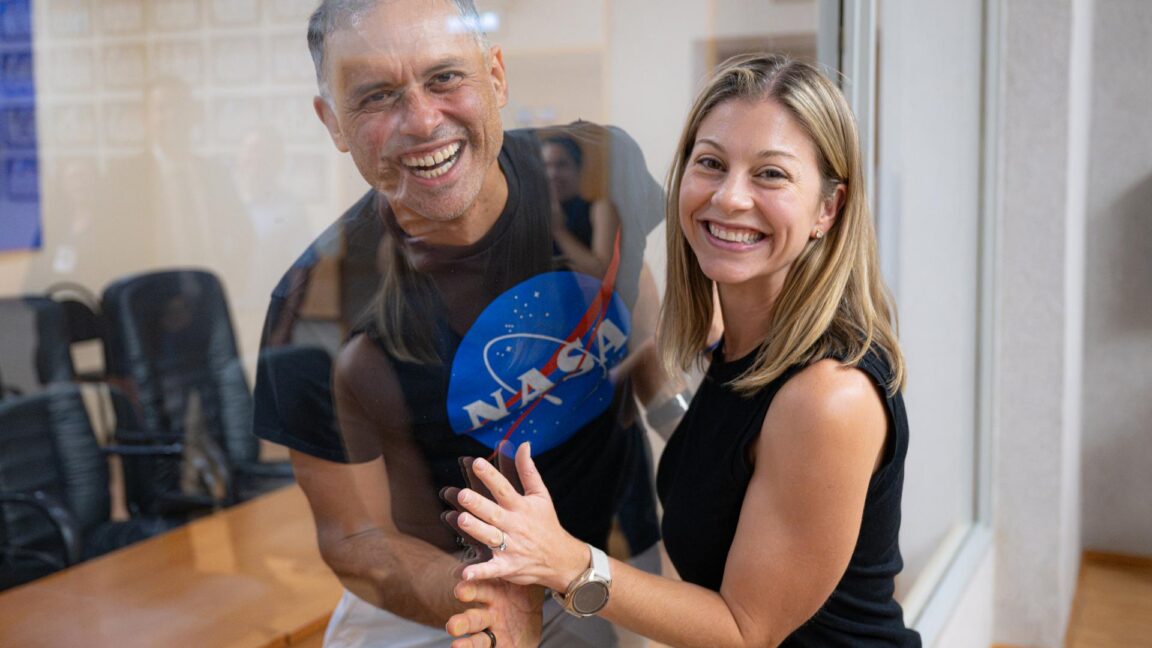
An improbable astronaut reaches space
💡Explore how shifting barriers in aerospace impact the future of autonomous systems and embodied AI.
⚡ 30-Second TL;DR
What Changed
A person who had abandoned their goal of becoming an astronaut successfully reached space.
Why It Matters
This story highlights the changing landscape of space travel, which is increasingly relevant to AI-driven robotics and autonomous systems in aerospace.
What To Do Next
Monitor advancements in commercial space flight providers that are integrating AI for autonomous navigation and life support.
Who should care:Researchers & Academics
Key Points
- •A person who had abandoned their goal of becoming an astronaut successfully reached space.
- •The story emphasizes the shift in barriers to entry for space exploration.
- •Reflects on the personal journey from giving up to achieving a major milestone.
🧠 Deep Insight
AI-generated analysis for this event.
🔑 Enhanced Key Takeaways
- •The individual in question is likely referencing a private citizen flight, such as those facilitated by SpaceX's Crew Dragon or Blue Origin's New Shepard, which have lowered the physical and professional requirements compared to traditional government-led astronaut programs.
- •The narrative often centers on the 'democratization of space,' where commercial spaceflight providers are increasingly offering seats to non-career astronauts, including researchers, artists, and private individuals.
- •Many 'improbable' astronauts now undergo abbreviated training programs lasting weeks or months, a stark contrast to the multi-year training cycles required for NASA or ESA career astronauts.
- •The shift in accessibility is driven by the emergence of reusable launch vehicle technology, which has significantly reduced the cost-per-kilogram to reach Low Earth Orbit (LEO).
- •This specific story highlights the psychological shift in the aerospace industry, moving from a 'heroic' model of exploration to a 'commercial' model where spaceflight is treated as a service or experience.
📊 Competitor Analysis▸ Show
| Feature | SpaceX (Crew Dragon) | Blue Origin (New Shepard) | Virgin Galactic (VSS Unity) |
|---|---|---|---|
| Flight Type | Orbital | Suborbital | Suborbital |
| Training Duration | Months | Days | Days |
| Primary Market | Government/Private Research | Tourism/Research | Tourism |
| Accessibility | High (Cost-prohibitive) | Moderate (High-net-worth) | Moderate (High-net-worth) |
🛠️ Technical Deep Dive
- Crew Dragon utilizes a fully autonomous docking system, reducing the manual piloting requirements for non-professional astronauts.
- New Shepard employs a capsule with a redundant parachute system and a retro-thrust landing system for the booster, prioritizing safety for civilian passengers.
- Training for suborbital flights focuses heavily on high-G tolerance and emergency egress procedures rather than complex orbital mechanics or spacecraft systems engineering.
🔮 Future ImplicationsAI analysis grounded in cited sources
Commercial spaceflight will become a standard component of high-net-worth travel by 2030.
The increasing frequency of private missions and the expansion of spaceport infrastructure suggest a transition from experimental to routine operations.
Government space agencies will increasingly outsource LEO transport to private entities.
The success of commercial crew programs has proven that private providers can meet safety standards while reducing operational costs for agencies like NASA.
⏳ Timeline
2020-05
SpaceX Demo-2 marks the first crewed orbital flight by a private company.
2021-07
Blue Origin completes its first crewed flight with Jeff Bezos aboard.
2021-09
Inspiration4 mission launches, the first all-civilian crew to orbit Earth.
2023-06
Virgin Galactic begins commercial suborbital spaceflight services.
📰
Weekly AI Recap
Read this week's curated digest of top AI events →
👉Related Updates
AI-curated news aggregator. All content rights belong to original publishers.
Original source: Ars Technica ↗