EnerVenue Raises $300M for China GWh Line
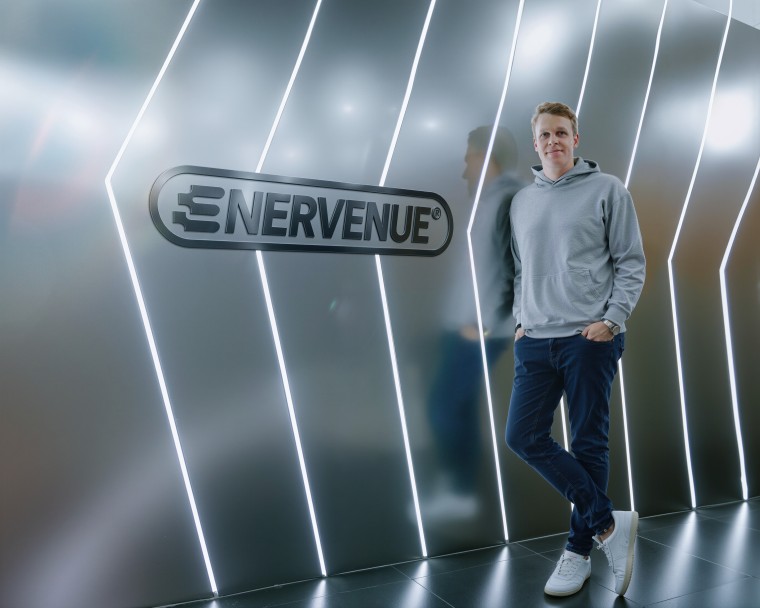
💡$300M fuels safe batteries for AI DCs: 30k cycles, no fires vs lithium.
⚡ 30-Second TL;DR
What Changed
Raised $300M led by Shusheng Capital with HKIM as new strategic investor
Why It Matters
Provides safer, maintenance-free alternative to LFP batteries for long-duration storage, critical for AI data centers' surging power needs. Scaling production could lower costs and accelerate adoption in grid-scale and DC applications.
What To Do Next
Assess EnerVenue pilots for data center UPS integration to mitigate lithium fire risks.
Key Points
- •Raised $300M led by Shusheng Capital with HKIM as new strategic investor
- •Changzhou factory Phase 1: 250 MWh/year capacity, first GWh-scale line
- •Appointed Henning Rath as CEO; new HK HQ and R&D center
- •AMC battery: >30,000 cycles, passes UL1973/IEC certs, no fire in thermal tests
- •Pilot projects in China, US, Australia, EU; eyes AI data center demand
🧠 Deep Insight
AI-generated analysis for this event — not the original article.
🔑 Enhanced Key Takeaways
- •EnerVenue's nickel-hydrogen technology is derived from aerospace-grade battery research originally developed at Stanford University, specifically leveraging the work of Nobel laureate Yi Cui.
- •The company's strategic pivot to a Hong Kong headquarters and R&D center is designed to facilitate closer integration with the Greater Bay Area's supply chain and accelerate expansion into Southeast Asian energy markets.
- •The new funding round includes a specific mandate to automate the Changzhou production line using AI-driven quality control systems to reduce the cost-per-cycle of their Metal-Hydrogen (MH) batteries to compete directly with LFP (Lithium Iron Phosphate) pricing.
📊 Competitor Analysis▸ Show
| Feature | EnerVenue (Nickel-Hydrogen) | LFP (Lithium Iron Phosphate) | Vanadium Redox Flow |
|---|---|---|---|
| Cycle Life | >30,000 | 6,000 - 10,000 | >20,000 |
| Thermal Safety | Non-flammable | Risk of thermal runaway | Non-flammable |
| Depth of Discharge | 100% | 80-90% | 100% |
| Cost/kWh | Moderate (Targeting parity) | Low (Benchmark) | High |
🛠️ Technical Deep Dive
- •Battery Chemistry: Utilizes a proprietary Metal-Hydrogen (MH) architecture that replaces the traditional liquid electrolyte with a solid-state-like separator, eliminating the risk of leakage or fire.
- •Thermal Management: Operates effectively in a wide temperature range (-40°C to 60°C) without the need for active HVAC cooling systems, significantly reducing parasitic energy loss.
- •Cycle Performance: Demonstrates minimal degradation over 30,000 cycles at 100% depth of discharge, attributed to the stable electrochemical reaction of the nickel-hydrogen couple.
- •Certification: Compliant with UL 1973 (Batteries for Use in Stationary, Vehicle Auxiliary Power and Light Electric Rail Applications) and IEC 62619 (Safety requirements for secondary lithium cells and batteries for use in industrial applications).
🔮 Future ImplicationsAI analysis grounded in cited sources
⏳ Timeline
Weekly AI Recap
Read this week's curated digest of top AI events →
👉Related Updates

AI-curated news aggregator. All content rights belong to original publishers.
Original source: 36氪 ↗
This is a summary, not the original. Read the source, or get the weekly briefing.
Weekly AI briefing
One email a week. Unsubscribe anytime.