Employees using personal AI accounts create major security risks
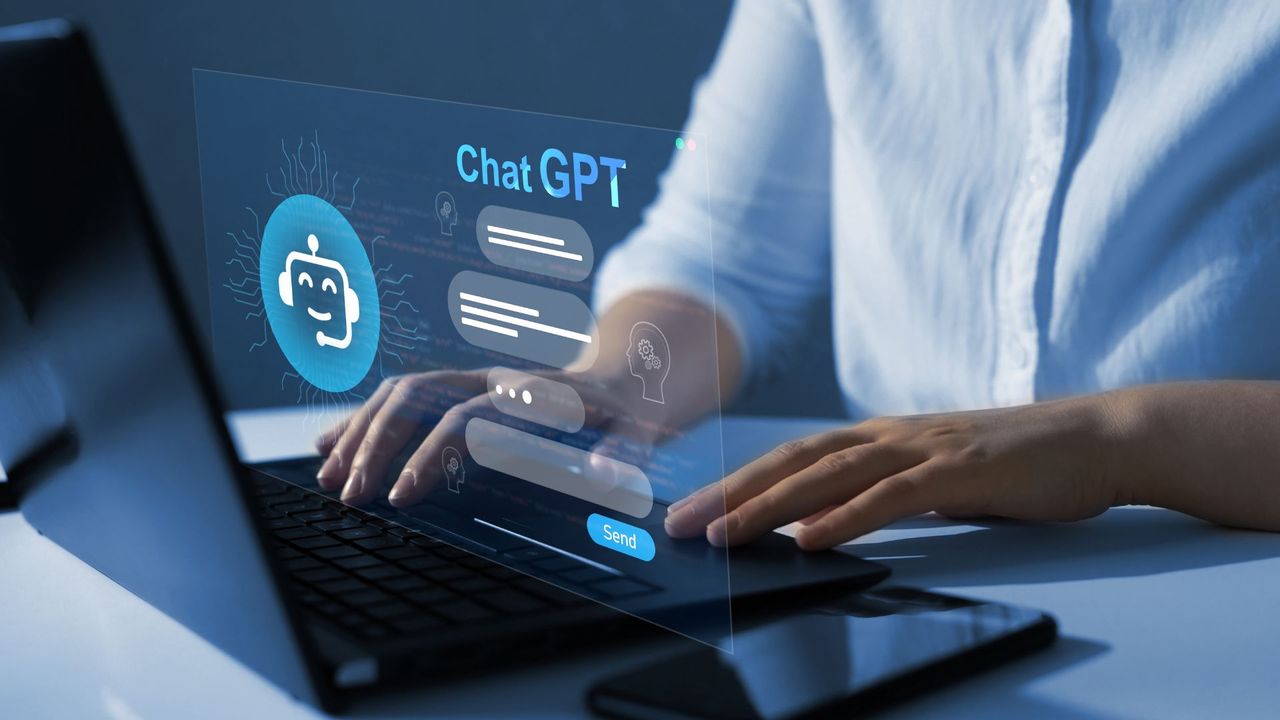
💡Learn why 'Shadow AI' is the biggest security threat to your company's IP and how to regain control.
⚡ 30-Second TL;DR
What Changed
Employees are bypassing enterprise tools for personal AI accounts due to better accessibility.
Why It Matters
Companies face increased vulnerability to IP theft and data breaches as AI adoption outpaces internal governance. IT departments must bridge the usability gap to bring AI usage back under secure enterprise control.
What To Do Next
Implement an enterprise-grade AI gateway or proxy that provides a user-friendly interface while enforcing data loss prevention (DLP) policies.
Key Points
- •Employees are bypassing enterprise tools for personal AI accounts due to better accessibility.
- •Shadow AI practices lead to unauthorized exposure of sensitive company data.
- •Organizations lack visibility into how their staff utilizes AI tools in daily workflows.
- •The gap between clunky enterprise AI and user-friendly personal tools drives this behavior.
🧠 Deep Insight
Background and context from public sources — not the original article. 22 sources cited.
🔑 Enhanced Key Takeaways
- •A significant portion (64.5%) of activity on personal and free-tier AI accounts is for business use, with 45.6% of personal AI activity even occurring on enterprise-licensed plans paid for by employers, indicating a blurred line between personal and corporate AI usage.
- •GenAI data leakage is a distinct security challenge from traditional data loss, often occurring through simple copy-paste actions of sensitive information into AI tools, bypassing conventional security controls like firewalls and Data Loss Prevention (DLP).
- •Beyond data exposure, Shadow AI introduces risks such as unauthorized model training, regulatory non-compliance (e.g., GDPR, HIPAA), expansion of the attack surface through unsecured APIs, and potential for intellectual property contamination.
- •The risk profile of Shadow AI varies significantly across departments; for instance, legal and governance teams are heavy AI users but more likely to utilize enterprise plans, whereas commercial and operational teams show lower enterprise plan usage, creating greater visibility gaps in areas like sales and marketing.
- •Shadow AI is a specific subset of the broader 'Shadow IT' phenomenon, but it introduces unique risks related to how AI models handle data, generate outputs, and influence decisions, requiring specialized governance beyond traditional IT management.
📊 Competitor Analysis▸ Show
| Feature / Platform | OneTrust AI Governance | Trustible Responsible AI Governance | IBM watsonx.governance | ServiceNow AI Control Tower | Asenion AI Management System |
|---|---|---|---|---|---|
| Core Functionality | Manage AI risk, automate compliance, enforce policy-driven controls across AI lifecycle. | Introduce, assess, and oversee AI across the enterprise. | Manage risk and ensure compliance across the full AI lifecycle. | Centralized management and oversight of AI operations and workflows. | Facilitate development, deployment, monitoring, and governance of AI models. |
| Key Capabilities | AI use case intake/approval, unified asset inventory, lifecycle checkpoints, centralized policy enforcement, real-time monitoring. | Centralized AI Inventory, automated workflows for intake/approvals, risk scoring, expert-curated taxonomies, vendor documentation analysis. | Proactively detects/mitigates AI risks, evaluates AI assets, secures deployments via Guardium AI security, robust regulatory library. | Monitoring, governance, performance analytics, AI model lifecycle tracing, versioning, bias/reliability addressing, dashboards, automated reporting. | Automate AI lifecycle processes, manage data integration, version control, access management, transparency in model operations. |
| Compliance Focus | Supports compliance with regulations like the EU AI Act. | Regulatory compliance. | Ensures compliance, aligns to industry standards. | Assists in compliance. | Supports traceability and audit requirements. |
| Risk Management | Monitors AI risk in real time, reduces model bias. | Attributes-based risk scoring engine, AI risks and mitigations. | Proactively detects and mitigates AI risks. | Addresses potential issues related to bias and reliability. | Provides tools for transparency in model operations. |
🛠️ Technical Deep Dive
- Data Leakage Mechanisms: Sensitive data often leaks through simple copy-paste actions into public AI models, which may then retain or use this data for training, making it potentially accessible to other users or competitors.
- AI-Specific Attack Vectors: Generative AI introduces new attack categories such as prompt injection (embedding malicious instructions in input data to hijack model behavior), data poisoning (corrupting training data so the model learns wrong patterns), and model extraction attacks (querying the AI system enough times to reverse engineer its weights or reconstruct sensitive training data).
- Lack of Traditional Security Visibility: AI data leakage is often an "endpoint problem" rather than a network or cloud problem, as data leaves from devices through tools not designed to be monitored by existing security stacks.
- Need for AI Governance Software: Effective AI governance requires specialized software platforms that provide centralized oversight, automate risk assessment, enforce regulatory requirements, track model performance, and maintain audit trails across the AI lifecycle.
- Data Handling Controls: Key technical controls to mitigate AI data leakage include data minimization, encryption at rest and in transit, robust access controls, differential privacy, synthetic data generation, and vendor policies that explicitly commit to not training on customer data.
🔮 Future ImplicationsAI analysis grounded in cited sources
⏳ Timeline
📎 Sources (22)
Factual claims are grounded in the sources below. Forward-looking analysis is AI-generated interpretation.
Weekly AI Recap
Read this week's curated digest of top AI events →
👉Related Updates
AI-curated news aggregator. All content rights belong to original publishers.
Original source: TechRadar AI ↗
This is a summary, not the original. Read the source, or get the weekly briefing.
Weekly AI briefing
One email a week. Unsubscribe anytime.