🐯虎嗅•Freshcollected in 20m
Embodied AI: Bridging the gap between cognition and action

💡Insight into the future of robotics: how embodied AI turns machines into agents that learn by doing.
⚡ 30-Second TL;DR
What Changed
Embodied AI is defined as the fusion of material science and computational science.
Why It Matters
This perspective shifts the focus of AI development from purely digital models to physical-world integration, essential for future robotics.
What To Do Next
If building robotics software, prioritize developing simulation-to-reality (Sim2Real) pipelines that allow models to learn from physical feedback.
Who should care:Researchers & Academics
Key Points
- •Embodied AI is defined as the fusion of material science and computational science.
- •Robots act as physical carriers that allow AI to interact with and learn from physical rules.
- •The goal is to achieve autonomous cognitive evolution through closed-loop interaction.
- •Cities are viewed as macro-level embodied carriers for large-scale resource and compute integration.
🧠 Deep Insight
AI-generated analysis for this event.
🔑 Enhanced Key Takeaways
- •The Shenzhen Institute of Artificial Intelligence and Robotics (AIRS) emphasizes the 'General Purpose Robot' (GPR) paradigm, focusing on foundation models that generalize across diverse physical tasks rather than task-specific programming.
- •Embodied AI research at this institution is increasingly leveraging 'Sim-to-Real' transfer learning, utilizing high-fidelity physics engines like NVIDIA Isaac Gym to accelerate training cycles before physical deployment.
- •A critical technical hurdle identified in recent AIRS research is the 'Sim-to-Real gap,' specifically regarding tactile sensing and high-frequency control loops that current vision-language models struggle to process in real-time.
- •The concept of 'City as a Robot' involves integrating heterogeneous IoT sensor networks and autonomous vehicle fleets into a unified digital twin architecture to optimize urban energy and traffic flow.
- •Recent developments in embodied AI at the institute have shifted toward 'World Models,' which allow robots to predict the physical consequences of their actions before executing them, reducing hardware wear and safety risks.
🛠️ Technical Deep Dive
- Architecture: Integration of Vision-Language-Action (VLA) models that map raw sensor inputs directly to motor control commands.
- Control Systems: Implementation of Whole-Body Control (WBC) frameworks to maintain stability during complex locomotion and manipulation tasks.
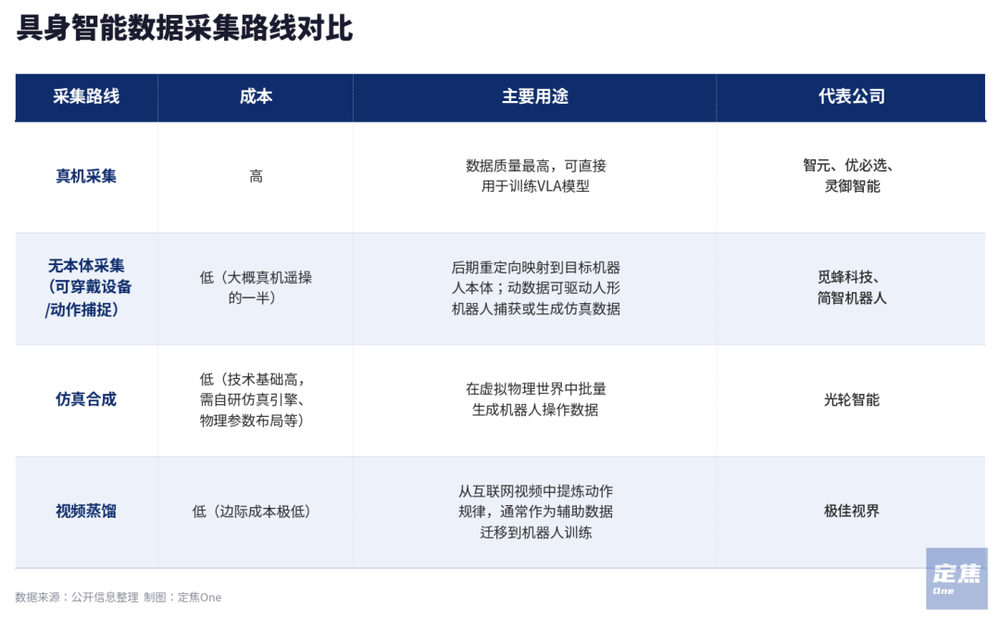
- Data Acquisition: Utilization of teleoperation and human-in-the-loop imitation learning to bootstrap policy training for unstructured environments.
- Compute Infrastructure: Deployment of edge-cloud hybrid architectures where heavy perception tasks are offloaded to local GPU clusters while low-latency control remains on-device.
🔮 Future ImplicationsAI analysis grounded in cited sources
Embodied AI will achieve human-level dexterity in unstructured environments by 2028.
The rapid convergence of tactile sensor integration and self-supervised learning from physical interaction is significantly shortening the time required for robots to master fine-motor skills.
Urban infrastructure will transition to autonomous, self-healing systems.
The application of embodied AI principles to city-scale resource management allows for real-time, closed-loop adjustments to infrastructure failures without human intervention.
⏳ Timeline
2019-12
Establishment of the Shenzhen Institute of Artificial Intelligence and Robotics (AIRS) to focus on intelligent robotics and embodied intelligence.
2023-05
AIRS researchers publish foundational work on large-scale embodied intelligence and its application in smart city frameworks.
2025-09
Ding Ning and the AIRS team demonstrate a multi-modal robot capable of autonomous navigation and interaction in complex, non-laboratory settings.
📰
Weekly AI Recap
Read this week's curated digest of top AI events →
👉Related Updates

AI-curated news aggregator. All content rights belong to original publishers.
Original source: 虎嗅 ↗