Embodied AI Moves Into Real Factories
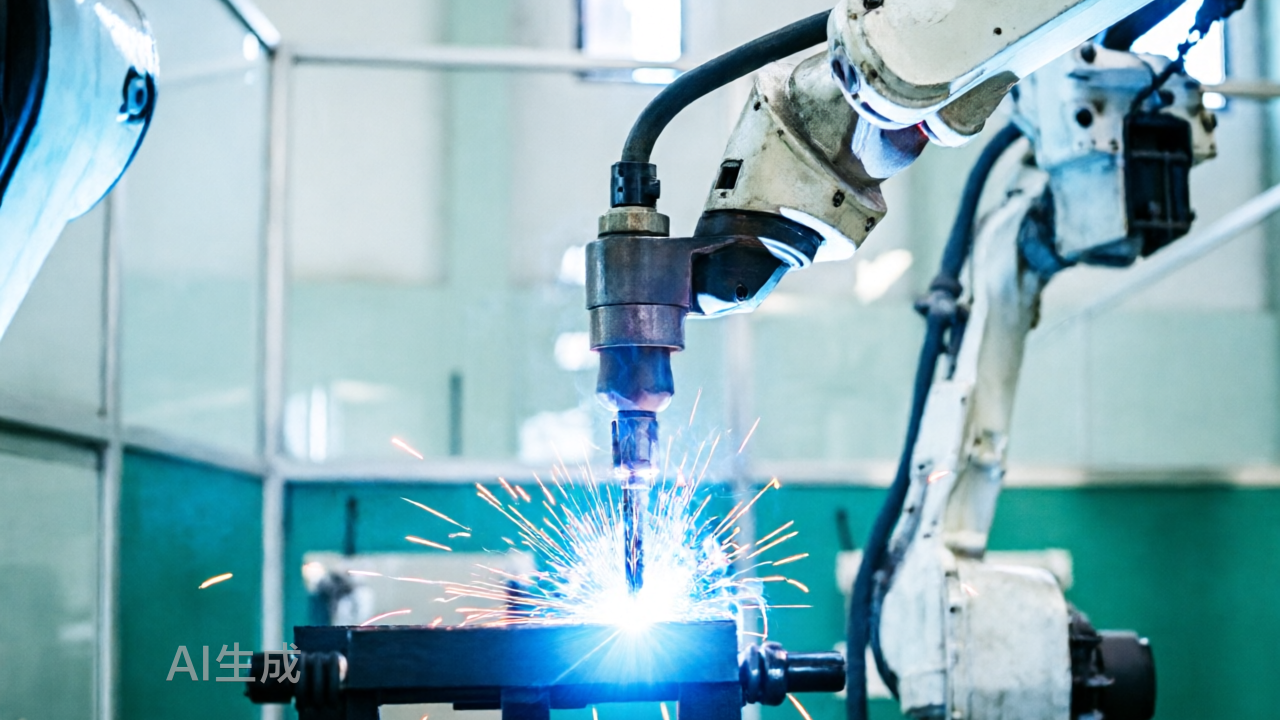
Industrial embodied AI is moving from demos to factory workflows where measurable value can be validated.
30-Second TL;DR
What Changed
Industrial applications are becoming a practical focus for embodied AI.
Why It Matters
Industrial deployment could accelerate adoption by tying embodied AI to measurable productivity, quality, and automation outcomes. For AI companies, factories may offer a more defensible path to revenue than general-purpose demonstrations.
What To Do Next
Use ROS 2 to prototype one constrained factory workflow and define success metrics for cycle time, task completion, and human intervention before scaling.
Key Points
- •Industrial applications are becoming a practical focus for embodied AI.
- •The sector is shifting from broad exploration toward clearer commercial use cases.
- •Factory deployments indicate that embodied AI is beginning to produce operational value.
Deep Insight
AI-generated analysis for this event — not the original article.
Enhanced Key Takeaways
- •The integration of Large World Models (LWMs) with industrial robotic controllers is enabling zero-shot task generalization in unstructured factory environments.
- •Major industrial players are shifting from traditional rigid automation to 'General Purpose Humanoid' deployments to reduce the high cost of reconfiguring assembly lines.
- •Edge computing architectures are being prioritized to ensure sub-10ms latency for real-time safety-critical embodied AI operations in manufacturing.
- •Data synthesis via high-fidelity digital twins (e.g., NVIDIA Omniverse) is currently the primary method for training embodied agents to avoid the risks of real-world factory testing.
- •Standardization efforts, such as the adoption of ROS 2 (Robot Operating System) and specialized middleware, are accelerating the interoperability between embodied AI models and legacy PLC (Programmable Logic Controller) systems.
Competitor Analysis
- Tesla (Optimus)
- Mass-market manufacturing
- Figure AI
- Humanoid labor
- Sanctuary AI
- General-purpose tasks
- Boston Dynamics
- Logistics/Inspection
- Tesla (Optimus)
- End-to-end neural nets
- Figure AI
- OpenAI-powered vision-language
- Sanctuary AI
- Carbon-based/Hybrid
- Boston Dynamics
- Hydraulic/Electric hybrid
- Tesla (Optimus)
- Internal pilot
- Figure AI
- Commercial pilot
- Sanctuary AI
- Commercial pilot
- Boston Dynamics
- Commercial pilot
| Feature | Tesla (Optimus) | Figure AI | Sanctuary AI | Boston Dynamics |
|---|---|---|---|---|
| Primary Focus | Mass-market manufacturing | Humanoid labor | General-purpose tasks | Logistics/Inspection |
| Architecture | End-to-end neural nets | OpenAI-powered vision-language | Carbon-based/Hybrid | Hydraulic/Electric hybrid |
| Deployment Status | Internal pilot | Commercial pilot | Commercial pilot | Commercial pilot |
Technical Deep Dive
- Embodied AI models utilize Vision-Language-Action (VLA) architectures that map visual inputs directly to motor control commands.
- Implementation relies on Transformer-based policy networks trained via Reinforcement Learning from Human Feedback (RLHF) and teleoperation data.
- Systems incorporate Sim-to-Real transfer techniques, utilizing domain randomization to bridge the gap between virtual training environments and physical factory floors.
- Perception stacks often integrate 3D LiDAR and depth-sensing cameras with semantic segmentation models to identify objects in dynamic, cluttered workspaces.
Future ImplicationsAI analysis grounded in cited sources
Timeline
- 2023-05Initial shift toward foundation models for robotics research.
- 2024-03First large-scale commercial pilots of humanoid robots in automotive manufacturing.
- 2025-06Introduction of industry-standard benchmarks for embodied AI in industrial settings.
- 2026-02Widespread adoption of digital twin-based training protocols in major manufacturing hubs.
Weekly AI Recap
Read this week's curated digest of top AI events →
AI-curated news aggregator. All content rights belong to original publishers.
Original source: 钛媒体 ↗
This is a summary, not the original. Read the source, or get the weekly briefing.
The weekly digest
One email a week. Unsubscribe anytime.