🐯虎嗅•Stalecollected in 21m
Embodied AI Craves Human Motion Data
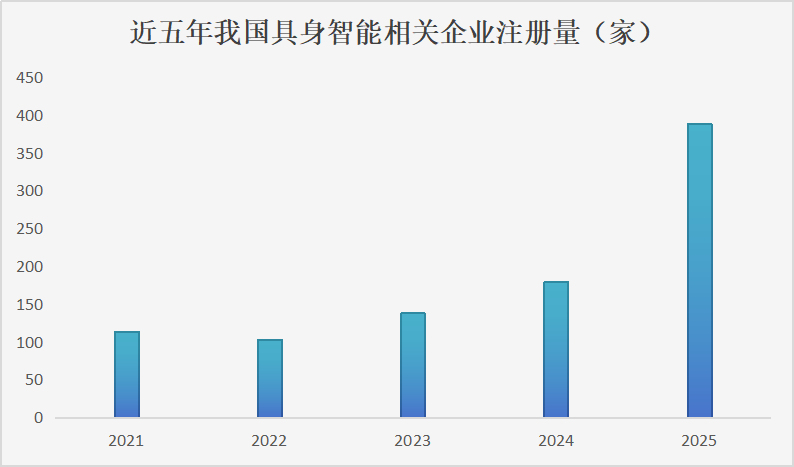
💡Robot giants drop $100M/yr on human chores data—embodied AI data rush starts now
⚡ 30-Second TL;DR
What Changed
AI generates realistic Buffett voice/image without his presence
Why It Matters
Accelerates humanoid robot development but commoditizes human labor as 'live sensors,' sparking privacy and job displacement concerns. Data gold rush mirrors early LLM annotation outsourcing.
What To Do Next
Explore Micro1 platform for sourcing affordable human motion datasets to train embodied AI models.
Who should care:Researchers & Academics
Key Points
- •AI generates realistic Buffett voice/image without his presence
- •DoorDash pays couriers to video wash dishes for motion data
- •Micro1 hires thousands in 50+ countries to record chores via iPhone head-mounts
- •High-quality embodied data scarce at 500k hours; true-machine teleop costs $500-1000/hr
- •China firms like Zhiyuan, JD build massive data collection factories
🧠 Deep Insight
AI-generated analysis for this event.
🔑 Enhanced Key Takeaways
- •The 'data moat' for embodied AI is shifting from static internet video to proprietary, high-fidelity 'action-state' datasets, where the cost of annotating physical interactions is significantly higher than traditional computer vision labeling.
- •Major robotics firms are increasingly adopting 'Sim-to-Real' transfer learning pipelines, utilizing synthetic data generated in high-fidelity physics engines (like NVIDIA Isaac Sim) to augment the scarce real-world human motion data.
- •Regulatory scrutiny regarding data privacy in China is accelerating the development of 'federated learning' and on-device processing for embodied AI, aiming to train models on sensitive household data without transferring raw video to centralized servers.
🛠️ Technical Deep Dive
- •Data collection utilizes 'Teleoperation-as-a-Service' (TaaS) models, where human operators use VR headsets or haptic gloves to control robots, capturing high-frequency joint state data (proprioception) alongside RGB-D video.
- •Training architectures often employ 'Behavior Cloning' (BC) or 'Diffusion Policies' to map visual observations directly to robot action sequences, requiring precise time-alignment between video frames and actuator commands.
- •Data cleaning pipelines involve automated 'quality filtering' algorithms that discard clips with occlusions, lighting artifacts, or non-human-like motion trajectories to ensure the training data is suitable for policy learning.
🔮 Future ImplicationsAI analysis grounded in cited sources
The cost of high-quality embodied training data will drop by 40% by 2028.
Advances in automated data labeling and synthetic data generation will reduce the reliance on expensive human-in-the-loop teleoperation.
General-purpose household robots will achieve a 90% success rate on basic chores by 2027.
The current massive investment in diverse, global motion datasets is directly addressing the 'long-tail' problem that previously hindered robot generalization.
⏳ Timeline
2023-09
Rise of large-scale teleoperation data collection initiatives for foundation models in robotics.
2024-05
Industry-wide shift toward 'Embodied AI' as the primary focus for venture capital in robotics.
2025-02
Emergence of specialized data-labeling startups focusing exclusively on 3D motion and physical interaction data.
📰
Weekly AI Recap
Read this week's curated digest of top AI events →
👉Related Updates

AI-curated news aggregator. All content rights belong to original publishers.
Original source: 虎嗅 ↗