Embodied AI Talent Market Trends 2026
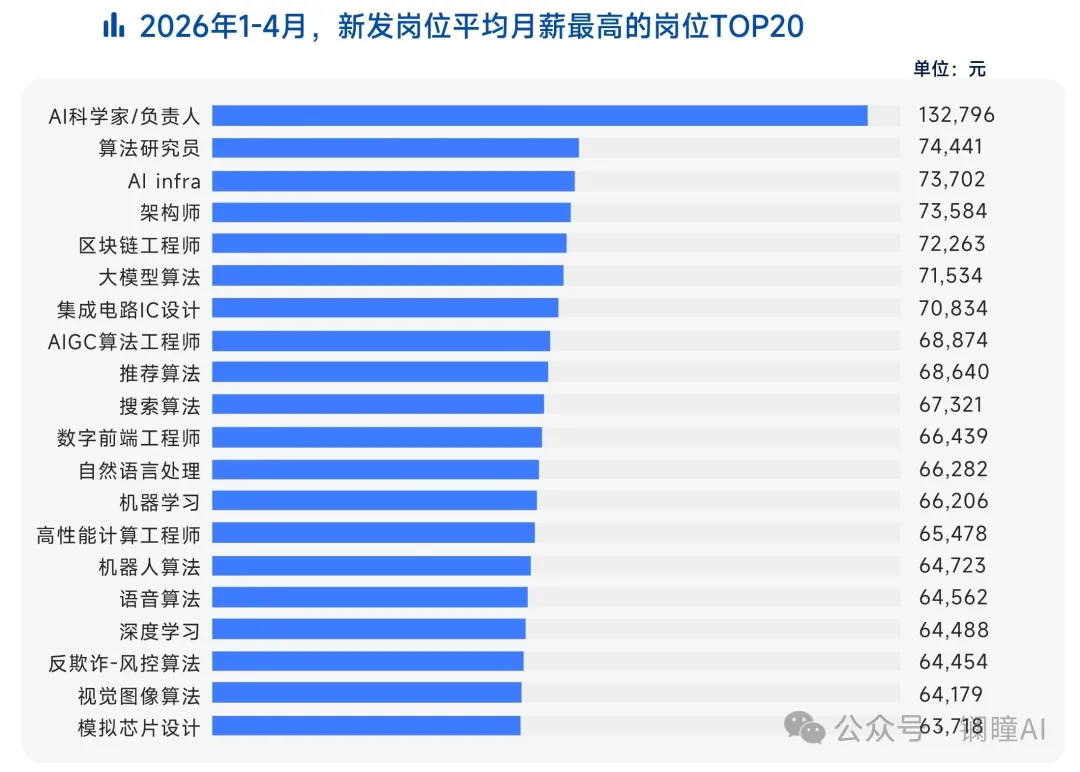
💡Understand the salary benchmarks and talent requirements for the rapidly growing embodied AI sector.
⚡ 30-Second TL;DR
What Changed
Starting monthly salary for embodied AI roles hits 62,000 RMB
Why It Matters
The professionalization of embodied AI education suggests a long-term talent pipeline, signaling that the industry is moving from experimental R&D to large-scale commercialization.
What To Do Next
Update your resume with specific experience in robot control stacks or multimodal LLM integration to command premium salaries.
Key Points
- •Starting monthly salary for embodied AI roles hits 62,000 RMB
- •High demand for 'Chief Scientist' roles in unicorn startups
- •Universities launching dedicated undergraduate majors for embodied intelligence
🧠 Deep Insight
Web-grounded analysis with 19 cited sources.
🔑 Enhanced Key Takeaways
- •The demand for embodied AI talent in China saw a 15-fold year-on-year increase from January to April 2026, significantly outpacing the overall AI field's 8.7-fold growth.
- •Beyond starting salaries, top-tier roles like AI scientists and managers in China's embodied intelligence sector command an average monthly salary of 132,796 RMB, making it the highest-paying position in the new economy industry.
- •Chinese companies, such as Ubtech Robotics, are offering exceptionally high annual salaries for Chief Scientist roles in embodied intelligence, ranging from 15 million to 124 million RMB (USD 2.2 million to USD 18 million), to secure top global talent.
- •The global embodied AI market was valued at approximately $4.44 billion in 2025 and is projected to reach $23 billion by 2030, demonstrating a compound annual growth rate of around 39%.
- •China is actively integrating industry and academia, exemplified by Beijing Polytechnic University and JD.com launching a targeted education program for embodied intelligence robots in March 2026, offering direct employment opportunities to graduates.
🛠️ Technical Deep Dive
- Embodied AI systems integrate multiple disciplines, including computer vision, environment modeling, prediction, planning, control, reinforcement learning, and physics-based simulation.
- Key technological advancements driving embodied AI include sophisticated Computer Vision (CV) models (e.g., AlexNet, ResNet), Natural Language Processing (NLP) models (e.g., Transformer, ChatGPT), and Reinforcement Learning (RL) algorithms (e.g., DQN, AlphaGo).
- Vision-Language-Action (VLA) models are emerging as a dominant paradigm, enabling robots to generate actions directly from multimodal inputs like images and textual descriptions.
- The integration of Large Language Models (LLMs) and World Models (WMs) is considered crucial for next-generation embodied AI architectures, allowing for semantic reasoning, task decomposition, and ensuring physical law compliance in interactions.
- Foundational frameworks and platforms supporting embodied AI development include NVIDIA Isaac Lab (an open-source, simulation-based framework for robot learning), NVIDIA Omniverse (for industrial digital twins and multi-robot fleet testing), ROS 2 (Robot Operating System), and PyTorch/JAX-based RL frameworks.
- Significant technical challenges persist, such as achieving robust perception in unstructured environments, bridging the "sim-to-real" transfer gap, effectively handling edge cases, optimizing energy efficiency, and ensuring the safety of physical AI systems.
🔮 Future ImplicationsAI analysis grounded in cited sources
⏳ Timeline
📎 Sources (19)
Factual claims are grounded in the sources below. Forward-looking analysis is AI-generated interpretation.
- Google Search Source
- Google Search Source
- Google Search Source
- Google Search Source
- Google Search Source
- Google Search Source
- Google Search Source
- Google Search Source
- Google Search Source
- Google Search Source
- Google Search Source
- Google Search Source
- Google Search Source
- Google Search Source
- Google Search Source
- Google Search Source
- Google Search Source
- Google Search Source
- Google Search Source
Weekly AI Recap
Read this week's curated digest of top AI events →
👉Related Updates
SpaceX Falcon 9 rocket stage to impact the Moon
Monthly Machine Learning Job Board and Hiring Thread
Google Announces Gemini Robotics 2 for Advanced Humanoid Control
Alibaba nears AI coding dominance with upcoming release
AI-curated news aggregator. All content rights belong to original publishers.
Original source: 钛媒体 ↗