Electricity Costs Dictate AI Data Center Locations
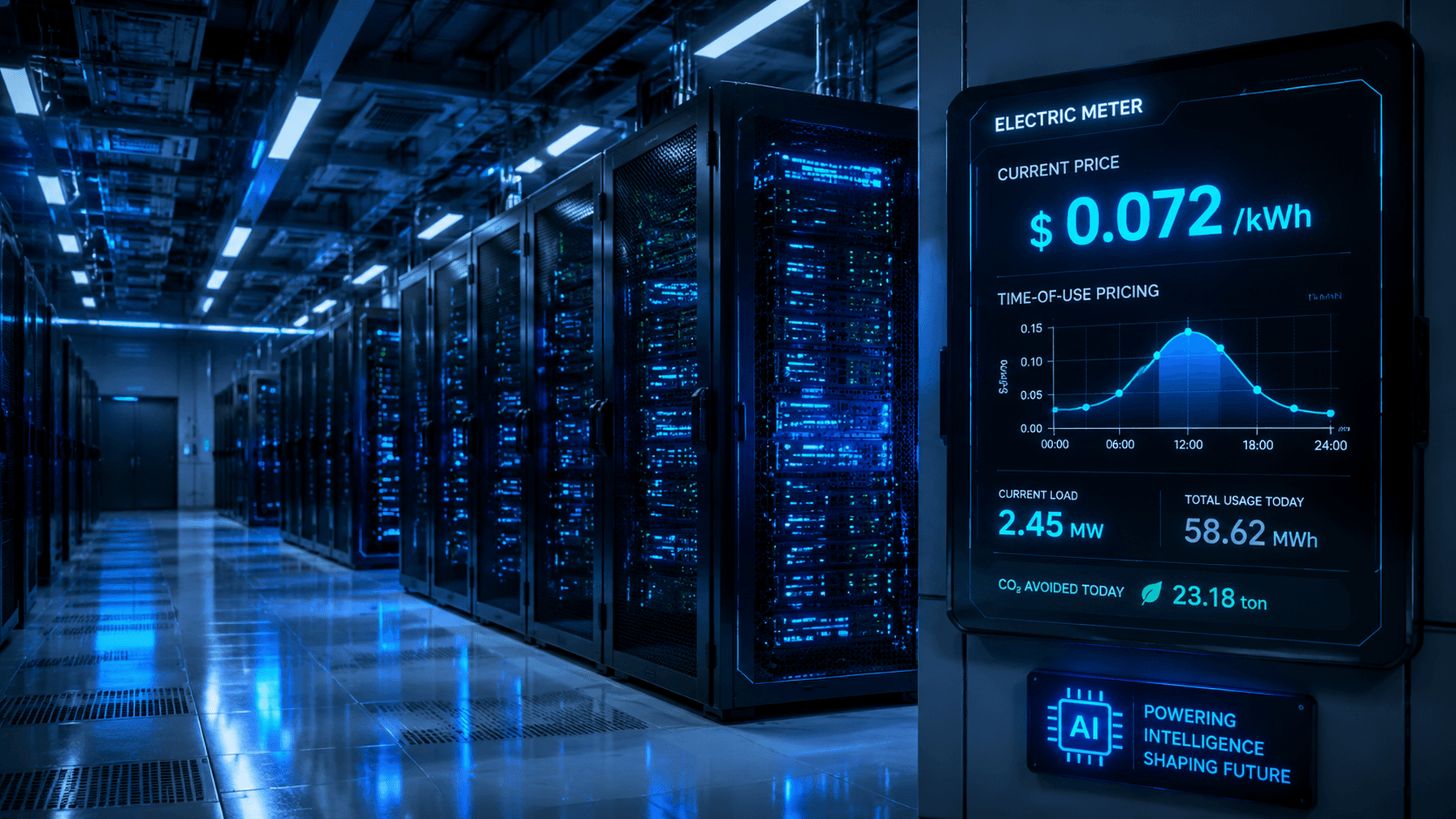
💡Learn how electricity pricing policies are forcing a shift in AI infrastructure and data center deployment strategies.
⚡ 30-Second TL;DR
What Changed
Time-of-use electricity pricing is forcing AI data centers to optimize for energy costs.
Why It Matters
AI infrastructure developers must now integrate energy-aware scheduling into their deployment strategies to maintain profitability amidst fluctuating power costs.
What To Do Next
Evaluate your data center's energy consumption profile and implement automated workload shifting to align with off-peak electricity pricing windows.
Key Points
- •Time-of-use electricity pricing is forcing AI data centers to optimize for energy costs.
- •Power cost differentials are now a primary driver for infrastructure location strategy.
- •Energy storage investments are becoming critical for AI infrastructure sustainability.
🧠 Deep Insight
Background and context from public sources — not the original article. 25 sources cited.
🔑 Enhanced Key Takeaways
- •Global electricity consumption by AI data centers is projected to double or more by 2030, with AI workloads being the primary driver, significantly increasing overall global electricity demand and putting strain on existing grids.
- •China is implementing national strategies, such as the 'East Data, West Computing' initiative, to relocate AI data centers to regions with abundant renewable energy and has set mandatory energy efficiency targets, including a Power Usage Effectiveness (PUE) of less than 1.3 by 2025 for government-procured facilities.
- •AI data centers require significantly higher power densities, ranging from 50-150 kilowatts per rack compared to traditional data centers' 10-15 kilowatts, necessitating advanced cooling solutions like liquid cooling to manage extreme heat loads and improve efficiency.
- •Battery Energy Storage Systems (BESS) are becoming essential for AI data centers to provide reliable backup power, enable faster grid interconnection, perform peak shaving during high-cost periods, and integrate renewable energy sources, thereby addressing grid strain and long interconnection timelines.
- •The escalating AI-driven energy demand is causing grid stress and reliability risks in established data center hubs globally, leading to project delays and prompting regulatory interventions, such as strict grid connection policies in regions like Ireland and the US.
🛠️ Technical Deep Dive
- Power Density: AI data centers typically require 50-150 kilowatts (kW) per rack, a substantial increase compared to traditional data centers which average 10-15 kW per rack.
- Cooling Systems: To manage the extreme heat generated by high-density AI workloads, advanced cooling solutions are becoming critical. These include liquid cooling methods such as rear-door heat exchangers and direct-to-chip cooling, which can reduce cooling energy consumption by 30-40% compared to traditional air cooling.
- Energy Storage Systems (BESS): BESS are integrated systems comprising battery cells, power conversion systems (PCS) inverters, advanced telemetry, and dynamic control schemes. They function as grid-interactive control assets to buffer fast load swings, improve power quality, support low-voltage ride-through, coordinate with onsite generation, and enable flexible interconnection. Suitable battery types for hybrid systems in AI data centers include lithium titanate oxide (LTO) and lithium iron phosphate (LFP) batteries, often paired with supercapacitors or flywheels for varying discharge durations.
- Power Usage Effectiveness (PUE) Targets: China has implemented specific PUE targets for data centers, mandating a PUE of less than 1.4 from June 2023 and less than 1.3 from 2025 onward for government procurement.
- Workload Management: Intelligent power management systems can limit processor consumption to 60-80% of maximum capacity while maintaining performance, and dynamic workload scheduling can allocate computing resources based on real-time power availability and cost.
🔮 Future ImplicationsAI analysis grounded in cited sources
⏳ Timeline
📎 Sources (25)
Factual claims are grounded in the sources below. Forward-looking analysis is AI-generated interpretation.
- brookings.edu
- iea.org
- globalelectricity.org
- scmp.com
- aljazeera.com
- eco-business.com
- enviliance.com
- carbonbrief.org
- actgroup.com
- cushmanwakefield.com
- nih.gov
- oneroinstitute.org
- deloitte.com
- hanwhadatacenters.com
- ashrae.org
- eaton.com
- bloomenergy.com
- redwoodmaterials.com
- nvidia.com
- ul.com
- energystorage.org
- belfercenter.org
- goldmansachs.com
- arxiv.org
- mdpi.com
Weekly AI Recap
Read this week's curated digest of top AI events →
👉Related Updates

AI-curated news aggregator. All content rights belong to original publishers.
Original source: Pandaily ↗
This is a summary, not the original. Read the source, or get the weekly briefing.
Weekly AI briefing
One email a week. Unsubscribe anytime.