Early land animals skipped the tadpole phase
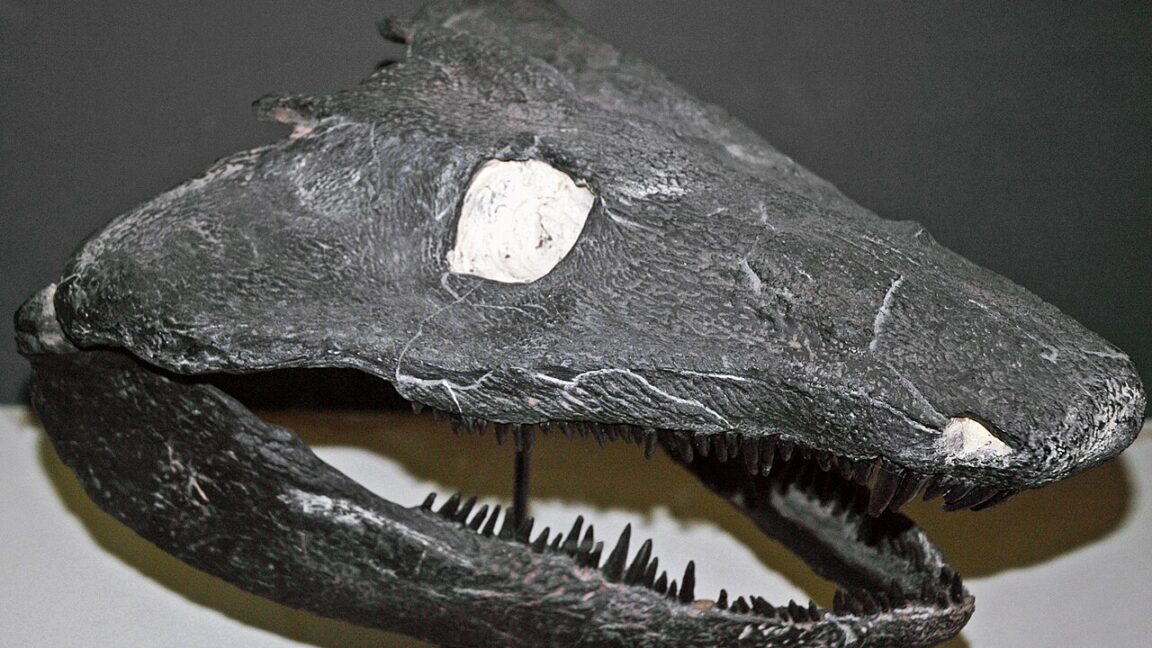
New biological findings can inspire more efficient evolutionary algorithms.
30-Second TL;DR
What Changed
Re-evaluation of vertebrate evolutionary history
Why It Matters
Advances biological understanding, which informs biomimetic research and evolutionary modeling in AI.
What To Do Next
If working on evolutionary algorithms or bio-inspired AI, update your models to reflect non-linear developmental stages.
Key Points
- •Re-evaluation of vertebrate evolutionary history
- •Evidence against universal tadpole-like larval stages
- •Implications for early land colonization
Deep Insight
AI-generated analysis for this event — not the original article.
Enhanced Key Takeaways
- •The study focuses on the analysis of bone histology in early tetrapods like Acanthostega and Ichthyostega, revealing growth patterns inconsistent with a metamorphic larval stage.
- •Researchers utilized synchrotron microtomography to examine the internal bone structure, which provides a high-resolution look at growth rates and developmental transitions.
- •The findings suggest that the biphasic life cycle (aquatic larva to terrestrial adult) seen in modern amphibians may be a derived trait rather than the ancestral condition for all tetrapods.
- •Evidence indicates that some early stem tetrapods may have exhibited direct development, where juveniles resemble miniature adults, bypassing the specialized larval morphology.
- •This research shifts the evolutionary narrative by suggesting that the transition to land was not dependent on the evolution of a metamorphic stage, but rather occurred in lineages that may have been fully aquatic or fully terrestrial throughout their life cycle.
Technical Deep Dive
- Synchrotron radiation X-ray tomographic microscopy (SRXTM) was employed to non-destructively image fossilized bone cross-sections.
- Histological analysis focused on lines of arrested growth (LAGs) and vascularization patterns to determine if growth was continuous or interrupted by metamorphosis.
- Comparative analysis of bone microstructure was conducted against extant amphibians (anurans and urodeles) to identify signatures of metamorphic remodeling.
- Data modeling of growth curves was used to differentiate between rapid larval growth phases and the more stable growth rates associated with direct developers.
Future ImplicationsAI analysis grounded in cited sources
Timeline
- 2024-05Initial publication of histological findings regarding early tetrapod growth patterns in major scientific journals.
- 2025-02Peer-reviewed synthesis confirms that metamorphic signatures are absent in key stem tetrapod specimens.
- 2026-06Widespread academic consensus begins to shift regarding the ancestral nature of the biphasic life cycle.
Weekly AI Recap
Read this week's curated digest of top AI events →
AI-curated news aggregator. All content rights belong to original publishers.
Original source: Ars Technica ↗
This is a summary, not the original. Read the source, or get the weekly briefing.
The weekly digest
One email a week. Unsubscribe anytime.