Dynamic Island: The New AI Interaction Hub
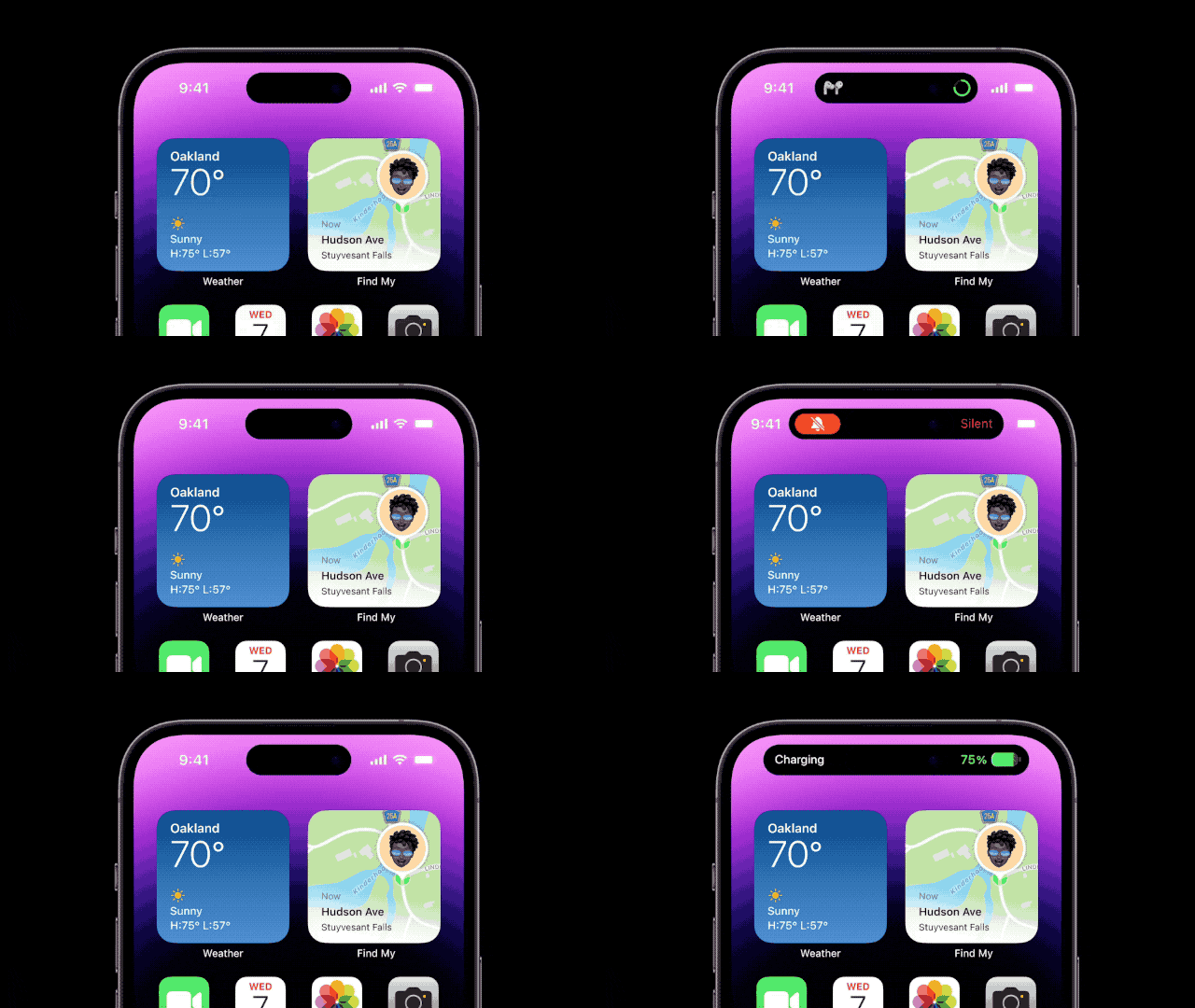
Discover how the Dynamic Island is becoming the primary UI for AI agents on mobile and desktop.
30-Second TL;DR
What Changed
Apple Intelligence integrates Siri directly into the Dynamic Island interface.
Why It Matters
The Dynamic Island is setting a new standard for mobile AI interaction, shifting from full-screen apps to lightweight, persistent status-based interfaces.
What To Do Next
If building a mobile AI app, design a 'Live Activity' or 'Dynamic Island' widget to provide persistent, low-friction status updates for your agent.
Key Points
- •Apple Intelligence integrates Siri directly into the Dynamic Island interface.
- •Android manufacturers are adopting similar 'island' UI patterns for AI assistants.
- •Developers are using the island for real-time AI agent status updates and coding assistance.
- •The feature is becoming a 'gold mine' for traffic, leading to concerns over marketing abuse.
Deep Insight
AI-generated analysis for this event — not the original article.
Enhanced Key Takeaways
- •Apple has introduced 'Live Activities' API enhancements that allow AI agents to maintain persistent, low-latency connections to the Dynamic Island, reducing the need for full-app context switching.
- •The Dynamic Island utilizes a dedicated 'Live Activity' process space in iOS that prioritizes AI-driven UI updates over background tasks to ensure fluid animations during real-time processing.
- •Privacy-preserving 'On-Device' AI processing is now a requirement for Dynamic Island interactions involving sensitive user data, ensuring that agent status updates do not leak information to the cloud.
- •Apple's Human Interface Guidelines (HIG) were updated in 2025 to strictly limit the frequency of Dynamic Island 'bouncing' or 'alert' animations to prevent user fatigue and UI clutter from aggressive AI agents.
- •Third-party developers are increasingly utilizing the 'ActivityKit' framework to bridge Large Language Model (LLM) outputs directly into the Dynamic Island, enabling 'glanceable' AI reasoning steps without opening the main application.
Competitor Analysis
- Apple Dynamic Island
- System-level (Hardware/Software)
- Samsung Galaxy AI (Edge Panel)
- App-level overlay
- Xiaomi Smart Island
- System-level (UI overlay)
- Apple Dynamic Island
- Agentic UI / Contextual
- Samsung Galaxy AI (Edge Panel)
- Generative / Productivity
- Xiaomi Smart Island
- Notification / Status
- Apple Dynamic Island
- Ultra-low (Native)
- Samsung Galaxy AI (Edge Panel)
- Moderate
- Xiaomi Smart Island
- Low
- Apple Dynamic Island
- High (ActivityKit)
- Samsung Galaxy AI (Edge Panel)
- Limited
- Xiaomi Smart Island
- Moderate
| Feature | Apple Dynamic Island | Samsung Galaxy AI (Edge Panel) | Xiaomi Smart Island |
|---|---|---|---|
| Integration | System-level (Hardware/Software) | App-level overlay | System-level (UI overlay) |
| AI Focus | Agentic UI / Contextual | Generative / Productivity | Notification / Status |
| Latency | Ultra-low (Native) | Moderate | Low |
| Developer Access | High (ActivityKit) | Limited | Moderate |
Technical Deep Dive
- The Dynamic Island operates as a specialized view controller that manages a dynamic layer above the system UI, utilizing the 'ActivityKit' framework for state management.
- It leverages the 'Live Activities' API, which uses a push-token mechanism to update the UI state from background processes without waking the entire application.
- AI agents interact with the island via 'ActivityAttributes' and 'ActivityContent' objects, which define the UI layout and data payload for the expanded and compact states.
- The system employs a 'Z-order' management strategy to ensure that AI-driven notifications do not obstruct critical system alerts like FaceID or incoming calls.
Future ImplicationsAI analysis grounded in cited sources
Timeline
- 2022-09Apple introduces Dynamic Island with the iPhone 14 Pro series.
- 2023-06Apple expands Live Activities API to support more third-party app integration.
- 2024-06Apple announces Apple Intelligence, signaling the shift toward agentic AI integration.
- 2025-09iOS 19 updates include dedicated hooks for AI agents to persist in the Dynamic Island.
Weekly AI Recap
Read this week's curated digest of top AI events →
AI-curated news aggregator. All content rights belong to original publishers.
Original source: 虎嗅 ↗
This is a summary, not the original. Read the source, or get the weekly briefing.
The weekly digest
One email a week. Unsubscribe anytime.