⚛️Ars Technica•Stalecollected in 53m
Dutch Push for EU FSD Approval?
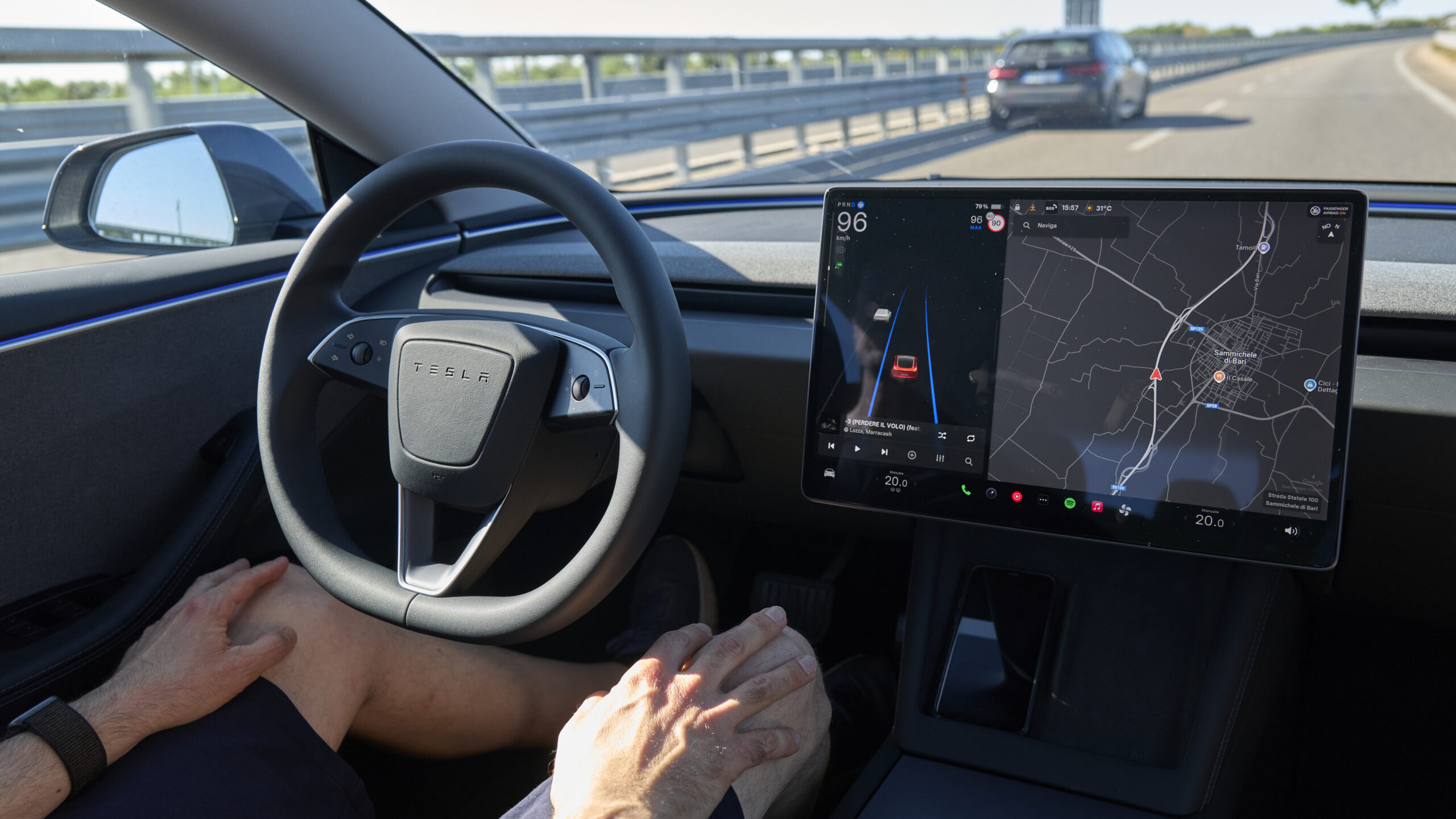
💡EU FSD greenlight may unlock Tesla autonomy data for AI training
⚡ 30-Second TL;DR
What Changed
Dutch authority approves Tesla FSD locally.
Why It Matters
EU FSD approval could accelerate Tesla's autonomous rollout, pressuring competitors. It highlights regulatory divergence in AV tech across Europe.
What To Do Next
Test Tesla FSD beta v12 in simulator for EU compliance benchmarks.
Who should care:Developers & AI Engineers
Key Points
- •Dutch authority approves Tesla FSD locally.
- •Requesting EU-wide approval from other regulators.
- •Musk's strategy to roll out FSD in Europe.
- •Focus on advanced driver assistance features.
🧠 Deep Insight
AI-generated analysis for this event.
🔑 Enhanced Key Takeaways
- •The Dutch RDW (Road and Traffic Authority) approval is specifically contingent on Tesla's compliance with the EU's new General Safety Regulation (GSR2), which mandates strict cybersecurity and software update protocols for automated vehicles.
- •Tesla's European FSD rollout strategy relies on the 'UNECE R157' regulation framework, which governs Automated Lane Keeping Systems (ALKS), requiring Tesla to adapt its US-centric FSD stack to meet European operational design domain (ODD) limitations.
- •The push for EU-wide approval faces significant resistance from German regulators (KBA), who have historically demanded higher transparency regarding Tesla's neural network training data and 'black box' decision-making processes compared to the Dutch approach.
📊 Competitor Analysis▸ Show
| Feature | Tesla FSD (EU) | Mercedes-Benz Drive Pilot | Waymo (EU/Global) |
|---|---|---|---|
| Autonomy Level | SAE Level 2+ (Supervised) | SAE Level 3 (Conditional) | SAE Level 4 (Unsupervised) |
| Operational Domain | Urban/Highway (Pending) | Highway (Traffic Jam Pilot) | Geofenced Urban (Limited) |
| Pricing Model | Subscription/One-time | Subscription (Annual) | N/A (Robotaxi Service) |
| Sensor Suite | Vision-only (Tesla Vision) | LiDAR, Radar, Cameras | LiDAR, Radar, Cameras |
🛠️ Technical Deep Dive
- Neural Network Architecture: Tesla utilizes a 'Vision-only' end-to-end neural network, transitioning from C++ based heuristic code to a transformer-based architecture trained on massive video datasets.
- Compute Hardware: European vehicles are equipped with Hardware 4.0 (HW4), featuring higher resolution cameras and increased processing power compared to previous iterations.
- Regulatory Compliance Layer: Implementation of a 'Safety Policy' module that acts as a supervisory layer, overriding FSD commands if they violate pre-defined EU safety constraints (e.g., speed limits, lane keeping boundaries).
🔮 Future ImplicationsAI analysis grounded in cited sources
Tesla will be forced to implement a geofencing mechanism for FSD in Europe.
EU regulators are unlikely to approve an unconstrained system, necessitating software-level restrictions based on high-definition map data.
The RDW approval will trigger a formal review by the European Commission's technical committee.
To prevent regulatory fragmentation, the EU typically initiates a centralized review process when a single member state approves a controversial autonomous technology.
⏳ Timeline
2021-01
Tesla begins limited FSD Beta testing in the United States.
2022-07
UNECE R157 regulation update expands ALKS capabilities for European vehicles.
2024-03
Tesla releases FSD v12, transitioning to an end-to-end neural network architecture.
2025-11
Dutch RDW grants initial local approval for Tesla's updated FSD software stack.
📰
Weekly AI Recap
Read this week's curated digest of top AI events →
👉Related Updates


AI-curated news aggregator. All content rights belong to original publishers.
Original source: Ars Technica ↗