Doubao Denies Paid Hotel Ranking
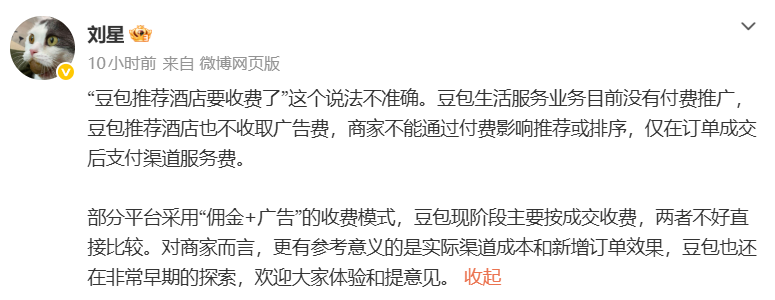
Doubao’s hotel case highlights the trust and disclosure standards AI recommendation products must meet.
30-Second TL;DR
What Changed
Doubao says the claim that hotel recommendations now require payment is inaccurate.
Why It Matters
The statement addresses trust and monetization concerns surrounding AI assistants that recommend businesses. Transparent ranking policies will be important for developers and founders building agentic commerce or local-search products.
What To Do Next
Add a merchant-influence audit to your recommendation system and log whether payments or commercial relationships affect ranking outputs.
Key Points
- •Doubao says the claim that hotel recommendations now require payment is inaccurate.
- •Hotels are reportedly not charged advertising fees for being recommended.
- •Merchants cannot determine or alter the recommendation order.
Deep Insight
AI-generated analysis for this event — not the original article.
Enhanced Key Takeaways
- •The controversy originated from social media allegations suggesting that Doubao's travel recommendation engine had introduced a 'pay-to-rank' model similar to traditional OTA (Online Travel Agency) platforms.
- •Doubao's parent company, ByteDance, has been aggressively expanding its local services and travel ecosystem to compete directly with established players like Meituan and Trip.com.
- •Industry analysts note that Doubao's recommendation algorithm relies on a combination of user reviews, historical booking data, and sentiment analysis rather than direct merchant bidding.
- •The denial was issued specifically to maintain user trust in the AI's neutrality, as Doubao positions itself as an 'intelligent assistant' rather than a commercial marketplace.
- •Regulatory scrutiny in China regarding AI-generated recommendations has increased, requiring platforms to clearly label commercial content and ensure algorithmic transparency.
Competitor Analysis
- Doubao (AI Assistant)
- AI/LLM Sentiment Analysis
- Meituan (Local Services)
- User Ratings/Paid Ads
- Trip.com (OTA)
- Paid Ranking/Volume
- Doubao (AI Assistant)
- Ecosystem/Ad-supported
- Meituan (Local Services)
- Commission/Ad-bidding
- Trip.com (OTA)
- Commission/Ad-bidding
- Doubao (AI Assistant)
- Conversational Chat
- Meituan (Local Services)
- Map/List View
- Trip.com (OTA)
- Search/Filter View
| Feature | Doubao (AI Assistant) | Meituan (Local Services) | Trip.com (OTA) |
|---|---|---|---|
| Recommendation Basis | AI/LLM Sentiment Analysis | User Ratings/Paid Ads | Paid Ranking/Volume |
| Monetization Model | Ecosystem/Ad-supported | Commission/Ad-bidding | Commission/Ad-bidding |
| Primary Interface | Conversational Chat | Map/List View | Search/Filter View |
Technical Deep Dive
- Doubao utilizes ByteDance's proprietary Doubao large language model (formerly known as Skylark) for natural language understanding and intent recognition.
- The recommendation engine integrates real-time data feeds from third-party travel databases to provide current availability and pricing.
- The system employs a multi-stage ranking architecture: candidate retrieval based on semantic matching, followed by a deep learning-based re-ranking model that optimizes for user satisfaction metrics rather than revenue per click.
Future ImplicationsAI analysis grounded in cited sources
Timeline
- 2023-08ByteDance launches Doubao as a standalone AI chatbot app in China.
- 2024-05Doubao undergoes a major rebranding and model upgrade to become ByteDance's flagship AI product.
- 2025-02Doubao begins integrating travel and local life service features into its conversational interface.
- 2026-08Doubao PR issues a formal denial regarding paid hotel ranking allegations.
Weekly AI Recap
Read this week's curated digest of top AI events →
Related Updates

AI-curated news aggregator. All content rights belong to original publishers.
Original source: cnBeta (Full RSS) ↗
This is a summary, not the original. Read the source, or get the weekly briefing.
The weekly digest
One email a week. Unsubscribe anytime.