Don't Overhype AI Lobster OpenClaw
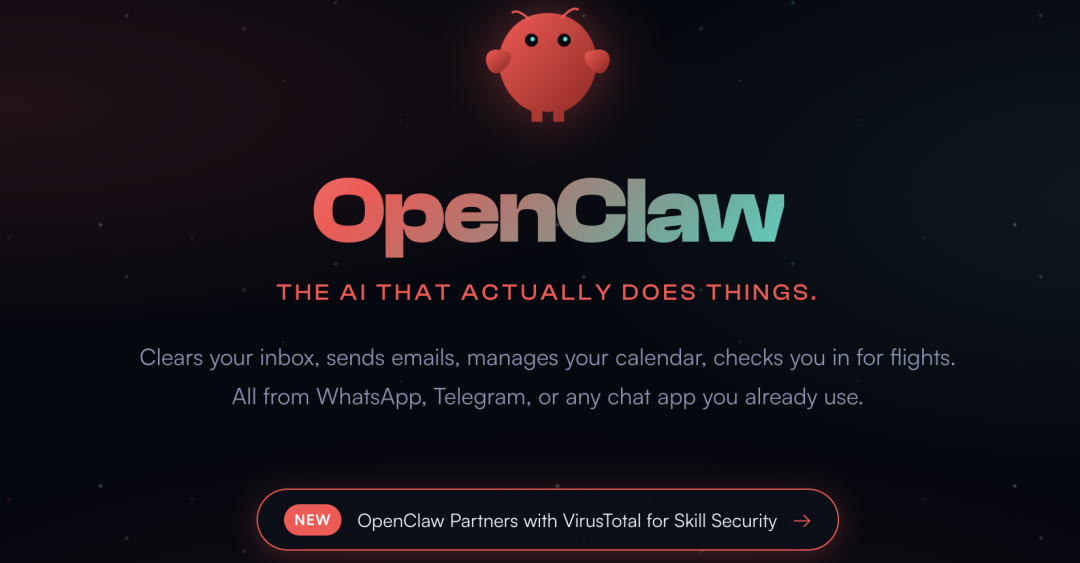
💡Reality check on hot OpenClaw AI agents—avoid hype pitfalls in your builds.
⚡ 30-Second TL;DR
What Changed
OpenClaw dubbed 'AI lobster' gaining attention.
Why It Matters
Tempered expectations could refocus AI agent development on practical benchmarks over viral hype.
What To Do Next
Clone OpenClaw repo on GitHub and benchmark it against your agent workflows.
Key Points
- •OpenClaw dubbed 'AI lobster' gaining attention.
- •Warning against mythologizing its capabilities.
- •Prompts check on actual user adoption.
🧠 Deep Insight
Background and context from public sources — not the original article. 5 sources cited.
🔑 Enhanced Key Takeaways
- •OpenClaw, created by Austrian developer Peter Steinberger, evolved from Clawdbot (inspired by Anthropic’s Claude) to Moltbot and then OpenClaw, achieving over 145,000 GitHub stars and 2 million weekly visitors before its acquisition by OpenAI in February 2026[2][3][4].
- •It functions as a meta-application layer using natural language understanding for agent orchestration, enabling autonomous actions like managing emails, calendars, reservations, and file operations via a deterministic shell around probabilistic LLMs[1][2][4].
- •Derivatives like Clawra (viral AI girlfriend with 600,000+ views) and Moltbook (1.7 million agents) sparked an agent economy, including Rentahuman.ai where agents hire humans; Chinese government subsidies up to 5 million yuan boosted cloud stocks by 20%[1][3].
- •Privacy risks include data breaches from broad permissions and improper configuration, termed a 'lethal trifecta' by experts, prompting warnings from China's MIIT[3][4].
🛠️ Technical Deep Dive
- •Localized AI intelligent agent orchestration framework operating as a meta-application layer with system-level permissions to control other applications.
- •Uses natural language understanding to interpret interfaces, comprehend user intentions, and execute operations, surpassing rule-based RPA, scripts, or macros.
- •Features a 'deterministic shell' (lobster hard shell) protecting and directing probabilistic LLMs (soft interior), enabling real-world actions like inbox clearing, reservations, and flight check-ins.
- •Includes Heartbeat Mechanism for proactive behavior instead of reactive responses.
- •Connects to LLMs like Claude, GPT, or Gemini; supports persistent memory, multi-modal interactions (chat, selfies, video calls), and multi-step task chaining.
🔮 Future ImplicationsAI analysis grounded in cited sources
⏳ Timeline
📎 Sources (5)
Factual claims are grounded in the sources below. Forward-looking analysis is AI-generated interpretation.
Weekly AI Recap
Read this week's curated digest of top AI events →
👉Related Updates



AI-curated news aggregator. All content rights belong to original publishers.
Original source: 钛媒体 ↗
This is a summary, not the original. Read the source, or get the weekly briefing.
Weekly AI briefing
One email a week. Unsubscribe anytime.