Domestic Puncture Robot Rivals Compete in County Markets
Understand the commercial scaling strategy for specialized medical robotics in China's lower-tier markets.
30-Second TL;DR
What Changed
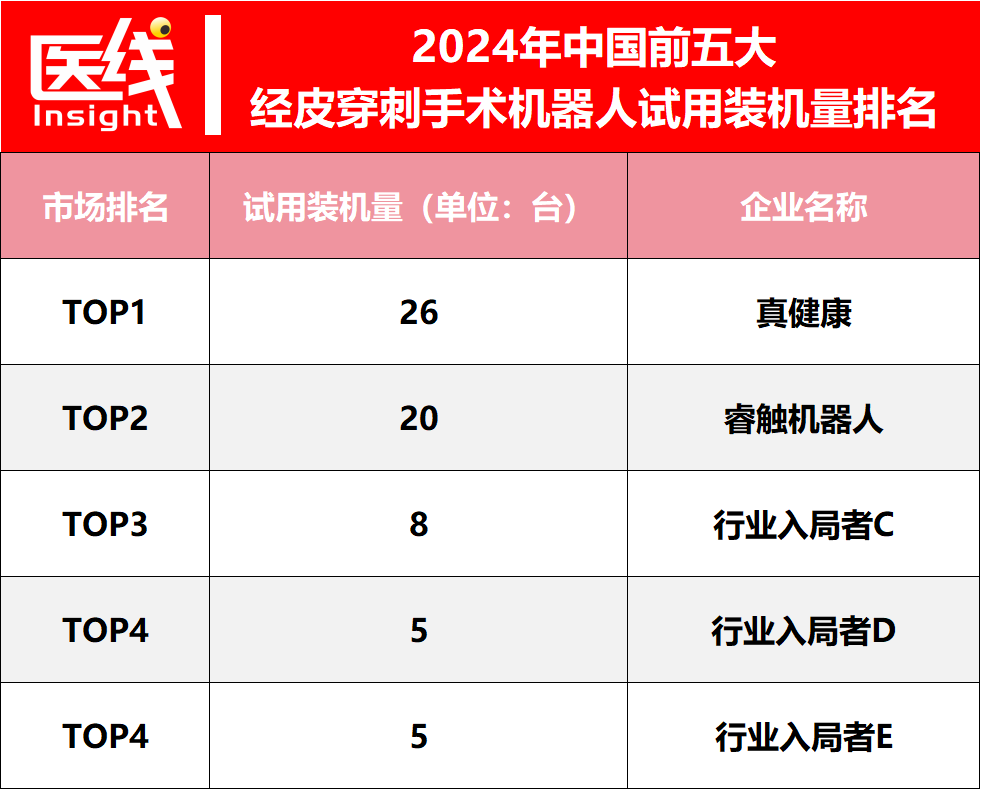
Zhenjian and Ruichu are the two leading domestic puncture robot brands.
Why It Matters
This highlights the commercialization path for specialized medical robotics in China, emphasizing the importance of the 'razor-and-blade' model in healthcare.
What To Do Next
Analyze the supply chain and consumable integration strategies of medical robotics companies if you are building B2B healthcare AI solutions.
Key Points
- •Zhenjian and Ruichu are the two leading domestic puncture robot brands.
- •The competition is shifting focus to county-level medical markets.
- •Business model relies on surgical volume to secure consumable revenue.
Deep Insight
AI-generated analysis for this event — not the original article.
Enhanced Key Takeaways
- •The puncture robot market in China is heavily influenced by the 'National Medical Equipment Localization' policy, which incentivizes county-level hospitals to adopt domestic surgical robotics to reduce reliance on imported systems.
- •Zhenjian (Zhenjian Medical) has historically focused on orthopedic and neurosurgical navigation, leveraging its proprietary optical tracking technology to achieve sub-millimeter precision in puncture procedures.
- •Ruichu (Ruichu Robotics) differentiates its strategy by emphasizing 'intelligent puncture planning' software that integrates with existing hospital PACS (Picture Archiving and Communication Systems) to lower the barrier to entry for rural clinicians.
- •The shift to county-level markets is driven by the 'DRG/DIP' (Diagnosis Related Groups/Diagnosis-Intervention Packet) payment reform, which forces hospitals to optimize surgical costs by utilizing domestic equipment with lower depreciation and consumable costs.
- •Both companies are increasingly adopting a 'Robot-as-a-Service' (RaaS) or leasing model to mitigate the high upfront capital expenditure (CAPEX) barriers typically faced by lower-tier county hospitals.
Competitor Analysis
- Zhenjian Medical
- Orthopedic/Neuro Navigation
- Ruichu Robotics
- Intelligent Puncture Planning
- International Incumbents (e.g., Medtronic/Globus)
- Multi-specialty Robotics
- Zhenjian Medical
- Sub-millimeter (Optical)
- Ruichu Robotics
- High (AI-assisted)
- International Incumbents (e.g., Medtronic/Globus)
- Sub-millimeter (High-end)
- Zhenjian Medical
- Mid-range / Volume-based
- Ruichu Robotics
- Competitive / Software-focused
- International Incumbents (e.g., Medtronic/Globus)
- Premium / High CAPEX
- Zhenjian Medical
- Tier 2/3 Hospitals
- Ruichu Robotics
- County/Community Hospitals
- International Incumbents (e.g., Medtronic/Globus)
- Tier 1/Academic Hospitals
| Feature | Zhenjian Medical | Ruichu Robotics | International Incumbents (e.g., Medtronic/Globus) |
|---|---|---|---|
| Core Focus | Orthopedic/Neuro Navigation | Intelligent Puncture Planning | Multi-specialty Robotics |
| Precision | Sub-millimeter (Optical) | High (AI-assisted) | Sub-millimeter (High-end) |
| Pricing Strategy | Mid-range / Volume-based | Competitive / Software-focused | Premium / High CAPEX |
| Market Segment | Tier 2/3 Hospitals | County/Community Hospitals | Tier 1/Academic Hospitals |
Technical Deep Dive
- Optical Tracking System: Utilizes high-frequency infrared cameras to monitor surgical tools and patient anatomy in real-time, ensuring dynamic compensation for patient movement.
- AI-Driven Segmentation: Employs deep learning algorithms to automatically segment CT/MRI images, reducing the time required for pre-operative puncture path planning.
- Robotic Arm Kinematics: Features 6-DOF (Degrees of Freedom) robotic arms designed for high-stiffness and vibration damping during needle insertion.
- Integration Protocols: Supports DICOM standard connectivity, allowing seamless data exchange with hospital-wide imaging networks.
Future ImplicationsAI analysis grounded in cited sources
Timeline
- 2021-05Zhenjian Medical receives NMPA approval for its core surgical navigation and puncture system.
- 2022-11Ruichu Robotics completes a significant financing round to accelerate R&D for county-level clinical applications.
- 2024-03Both companies begin aggressive expansion into the county-level hospital market following updated national healthcare procurement guidelines.
Weekly AI Recap
Read this week's curated digest of top AI events →
AI-curated news aggregator. All content rights belong to original publishers.
Original source: 钛媒体 ↗
This is a summary, not the original. Read the source, or get the weekly briefing.
The weekly digest
One email a week. Unsubscribe anytime.