Docker Offload Now GA for All Devs
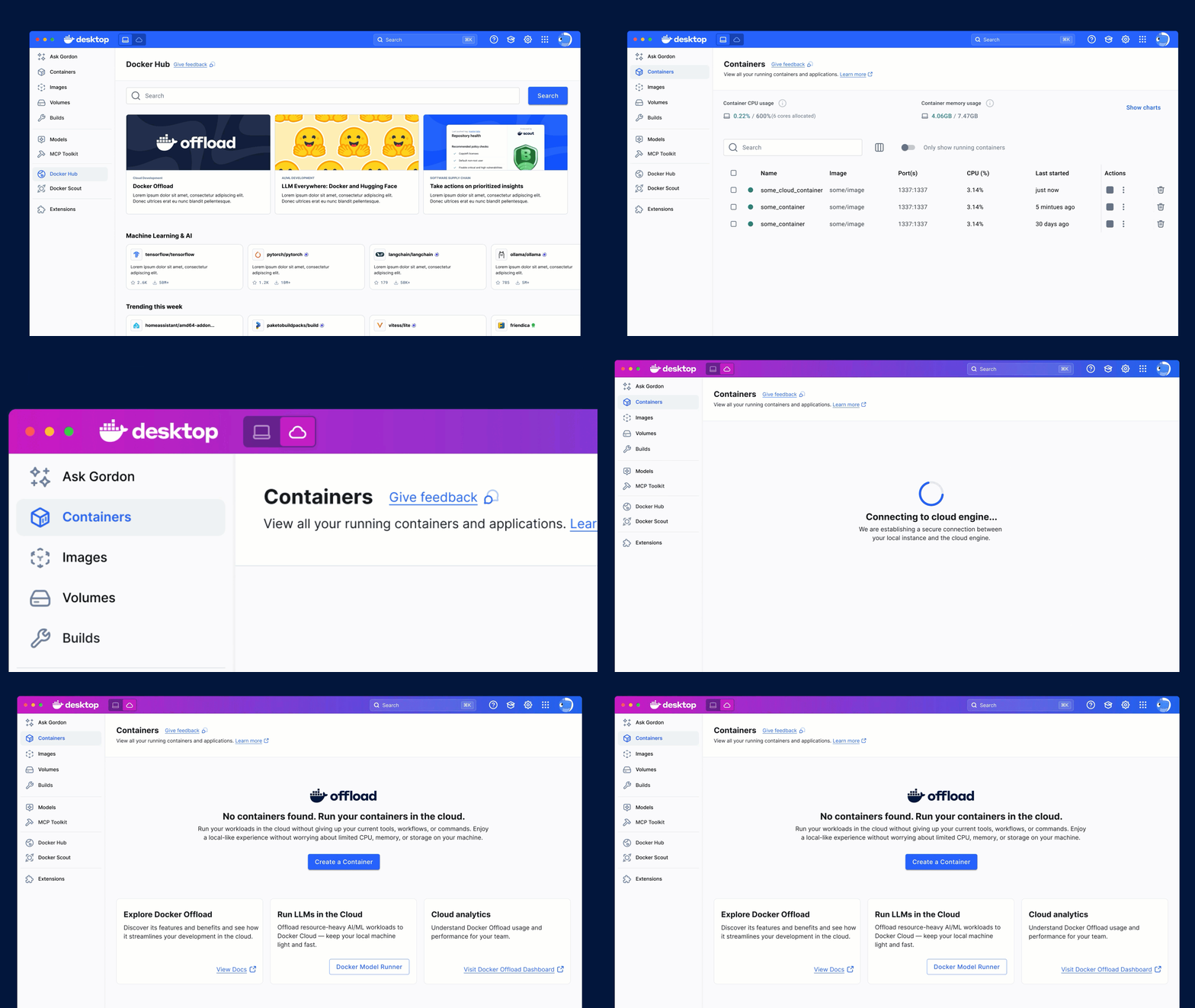
💡Unlock Docker in VDI for enterprise AI container workflows
⚡ 30-Second TL;DR
What Changed
Docker Offload achieves general availability status.
Why It Matters
This launch removes barriers for enterprise AI/ML devs using containers in restricted setups, speeding up prototyping and deployment. It promotes standardized Docker workflows, enhancing reproducibility in AI experiments across orgs.
What To Do Next
Test Docker Offload in your enterprise VDI to containerize ML models seamlessly.
Key Points
- •Docker Offload achieves general availability status.
- •Enables Docker Desktop in VDI and managed desktop environments.
- •Addresses resource limitations blocking enterprise Docker use.
- •Expands access to millions of developers worldwide.
🧠 Deep Insight
AI-generated analysis for this event — not the original article.
🔑 Enhanced Key Takeaways
- •Docker Offload utilizes a remote execution architecture that decouples the Docker engine from the local desktop environment, offloading compute-intensive container builds and runtime tasks to centralized, high-performance infrastructure.
- •The solution integrates directly with existing enterprise identity providers and VDI orchestration layers, allowing IT administrators to enforce security policies and resource quotas centrally while maintaining the local Docker Desktop developer experience.
- •By shifting the container workload to server-side resources, Docker Offload significantly reduces the local hardware requirements for developers, effectively eliminating the need for high-spec laptops in organizations relying on thin-client or virtualized desktop infrastructure.
📊 Competitor Analysis▸ Show
| Feature | Docker Offload | Remote Development Environments (e.g., GitHub Codespaces) | Local-Only VM/Container Solutions |
|---|---|---|---|
| Architecture | Hybrid (Local UI/Remote Engine) | Fully Remote (Browser/IDE-based) | Fully Local |
| Resource Usage | Offloaded to Server | Fully Server-side | Fully Local Hardware |
| VDI Compatibility | Native/Optimized | Requires Browser/Network Access | Often High Latency/Resource Heavy |
🛠️ Technical Deep Dive
- •Uses a gRPC-based communication protocol to bridge the local Docker Desktop client with the remote Docker engine instance.
- •Implements a transparent proxy layer that intercepts Docker API calls from the local client and routes them to the offload server.
- •Supports persistent volume mapping between the local VDI environment and the remote container host to ensure data consistency during development cycles.
- •Includes an automated resource-balancing controller that manages container lifecycle and cleanup on the remote infrastructure to prevent resource exhaustion.
🔮 Future ImplicationsAI analysis grounded in cited sources
⏳ Timeline
Weekly AI Recap
Read this week's curated digest of top AI events →
👉Related Updates
AI-curated news aggregator. All content rights belong to original publishers.
Original source: Docker Blog ↗
This is a summary, not the original. Read the source, or get the weekly briefing.
The weekly digest
One email a week. Unsubscribe anytime.