DJI Unveils Roadmap for Pocket 4P Imaging Tech
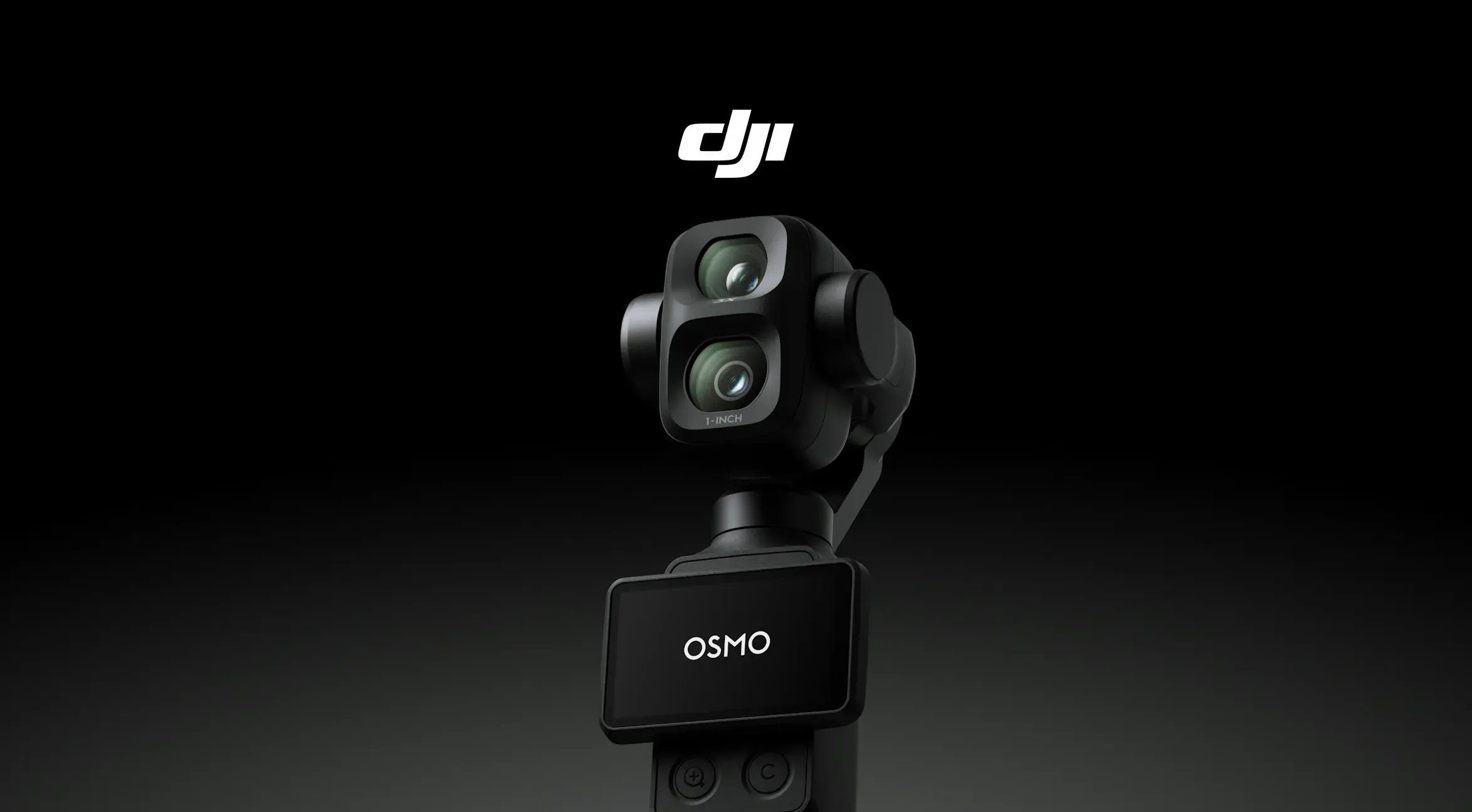
💡See how DJI is embedding advanced computational photography into consumer hardware to stay ahead in edge AI.
⚡ 30-Second TL;DR
What Changed
DJI is formalizing its handheld imaging technology roadmap.
Why It Matters
The integration of advanced imaging tech in consumer gimbals suggests a trend where edge AI becomes standard for mobile content creators. This forces competitors to accelerate their own AI-driven stabilization and processing features.
What To Do Next
Monitor DJI's developer documentation for new SDKs that might allow custom AI model deployment on their gimbal hardware.
Key Points
- •DJI is formalizing its handheld imaging technology roadmap.
- •The Pocket 4P will feature significant hardware and software upgrades.
- •The roadmap indicates a shift toward deeper AI-driven image processing in consumer hardware.
🧠 Deep Insight
Background and context from public sources — not the original article. 15 sources cited.
🔑 Enhanced Key Takeaways
- •The Pocket 4P will feature a dual-camera telephoto configuration, marking a significant evolution from the single-camera design of previous models in the series.
- •DJI's second-generation color science technology will be integrated into the Pocket 4P, aiming to reproduce film-like characteristics such as higher highlight latitude, natural texture, and richer color transitions while maintaining 10-bit encoding usability.
- •Rumored specifications for the Pocket 4P include a 1-inch main sensor (potentially an OmniVision 50MP sensor) and a dedicated telephoto lens (possibly a Sony IMX09A 50MP, 1/1.28-inch sensor) offering 3x optical zoom.
- •The upcoming device is expected to support D-Log 2, providing creators with enhanced flexibility for color grading and highlight recovery, and may offer video recording capabilities up to 6K at 60 frames per second and 4K at 240 frames per second for slow motion.
- •DJI's history in handheld imaging systems dates back to 2015 with the introduction of the original Osmo, which pioneered the integrated handheld gimbal camera form factor.
📊 Competitor Analysis▸ Show
Handheld Gimbal Camera Market Comparison (2026)
| Feature/Product | DJI Pocket 4P | Insta360 Luna Ultra | OPPO/Vivo Handheld Gimbal (Upcoming) | GoPro Hero 13 Black (Released Sep 2024) |
|---|---|---|---|---|
| Camera Setup | Dual-camera (1-inch main, 3x telephoto) | Dual-camera (1-inch main, 3x zoom telephoto) | Single camera (rumored 200MP 1/1.12-inch sensor) | Single camera (evolutionary improvements) |
| Sensor Size | 1-inch main, 1/1.28-inch telephoto | 1-inch main | 1/1.12-inch (rumored Sony LYT-901) | Undisclosed (smaller than 1-inch) |
| Key Imaging Tech | Second-gen color science, D-Log 2, ActiveTrack 7.0 | Leica partnership, "Cameraman photography robot" philosophy (deep tracking, gesture recognition) | Hasselblad tuning (OPPO), Zeiss tuning (Vivo), AI processing | HLG HDR video, improved thermal performance |
| Video Capabilities | Up to 6K/60fps, 4K/240fps (rumored) | Undisclosed (expected high-res) | Undisclosed (expected high-res) | 400fps burst slow-motion at 720p |
| Design/Form Factor | Rotating screen | Modular design (front detaches as remote controller), rotating screen | 3-axis gimbal, ecosystem integration with smartphones | Magnetic mounting |
| Market Share (2025) | DJI commands 62% of global handheld intelligent camera market | Growing competitor to DJI | Expected to launch Q4 2026, aiming to shake up market | Faces increasing pressure from larger sensor advantages of DJI and Insta360 |
| Pricing Strategy | DJI maintains pricing strategy will not change in response to competition | Wild price leaks suggest it could make DJI Pocket 4 look cheap | Expected competitive pricing | Evolutionary improvements, focus on modular accessories |
🛠️ Technical Deep Dive
- AI Processing & Computer Vision: DJI's AI integration in its drone platforms (e.g., Mavic 2, Matrice series) utilizes CEVA DSPs and platforms for on-device artificial intelligence, advanced computer vision, and deep learning, enabling real-time object identification and response.
- AI Module for Education: DJI offers an AI Module for educational purposes, featuring a built-in model optimized for AI computing chips, capable of performing recognition and reasoning in approximately 9 milliseconds. This module is equipped with a high-speed global shutter camera and supports custom AI model training, data collection, and offline recognition algorithms.
- Sensor Technology: The Pocket 4P is rumored to incorporate a 1-inch OmniVision 50-megapixel main sensor, potentially offering 17 stops of dynamic range, alongside a dedicated telephoto camera featuring a Sony IMX09A 50-megapixel, 1/1.28-inch sensor. These are considered flagship-level mobile sensors.
- Color Science: The device will feature DJI's second-generation color science technology, designed to emulate film imaging characteristics such as enhanced highlight latitude, more natural textures, and richer color transitions, while supporting 10-bit encoding for greater post-production flexibility.
- Stabilization and Tracking: The Pocket 4P is expected to include ActiveTrack 7.0, indicating advanced and refined subject tracking capabilities.
🔮 Future ImplicationsAI analysis grounded in cited sources
⏳ Timeline
📎 Sources (15)
Factual claims are grounded in the sources below. Forward-looking analysis is AI-generated interpretation.
Weekly AI Recap
Read this week's curated digest of top AI events →
👉Related Updates

AI-curated news aggregator. All content rights belong to original publishers.
Original source: Pandaily ↗
This is a summary, not the original. Read the source, or get the weekly briefing.
The weekly digest
One email a week. Unsubscribe anytime.