Disrupting the Outdoor Apparel Market with Tech
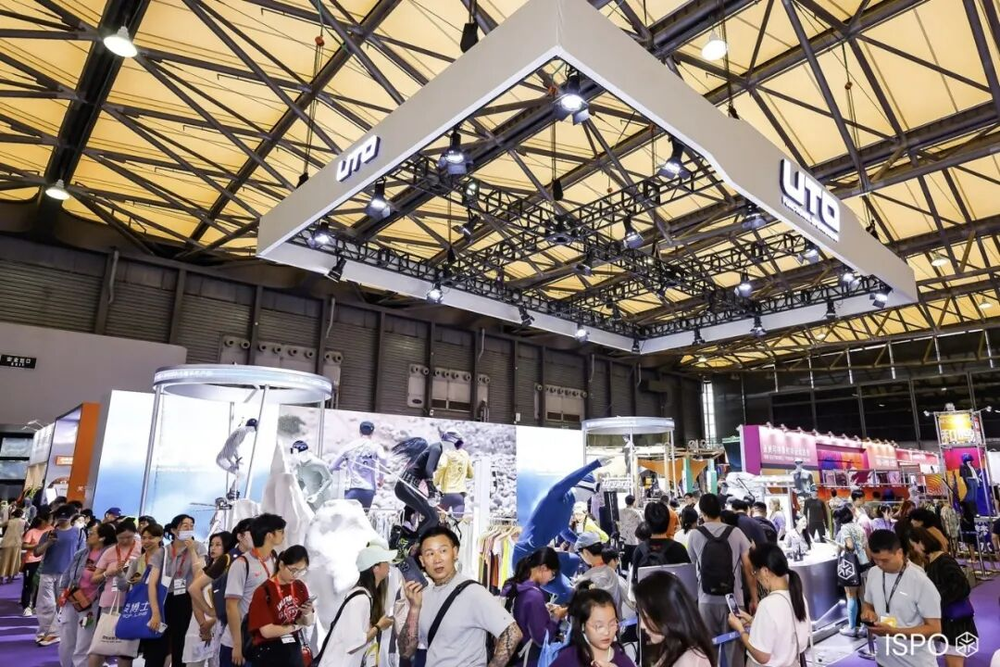
💡See how domestic R&D and supply chain optimization are challenging global tech/brand dominance.
⚡ 30-Second TL;DR
What Changed
Brands are moving from simple 'copying' to self-developed functional fabrics to lower costs.
Why It Matters
Demonstrates how vertical integration and local supply chain optimization can disrupt established high-margin industries.
What To Do Next
Analyze your AI stack to identify components where you can replace expensive, closed-source APIs with optimized, self-hosted open-source alternatives.
Key Points
- •Brands are moving from simple 'copying' to self-developed functional fabrics to lower costs.
- •Supply chain density in regions like Dongguan and Ningbo allows for rapid iteration and cost compression.
- •The market is shifting from elite-only to mass-market adoption, creating a need for 'National Outdoor Brands'.
- •Trust remains a hurdle; consumers still question the performance of domestic self-developed materials.
🧠 Deep Insight
AI-generated analysis for this event — not the original article.
🔑 Enhanced Key Takeaways
- •Chinese outdoor brands are increasingly utilizing 'Direct-to-Consumer' (DTC) digital platforms and livestreaming ecosystems to bypass traditional retail markups, further accelerating price competitiveness.
- •Government-backed industrial clusters in provinces like Zhejiang and Guangdong have begun providing subsidies for R&D in textile material science, specifically targeting the development of proprietary waterproof-breathable membranes to replace imported Gore-Tex.
- •The 'Outdoor Economy' in China has seen a shift toward 'Urban Outdoor' (Gorpcore) aesthetics, where brands prioritize fashion-forward silhouettes alongside technical performance to appeal to younger, non-professional demographics.
- •Leading domestic players are forming strategic partnerships with international chemical and fiber manufacturers (such as Toray or local equivalents) to co-develop high-performance synthetic fibers that meet international ISO standards.
- •Data analytics integration in supply chains now allows these brands to perform 'small-batch, fast-response' manufacturing, reducing inventory risk by up to 30% compared to traditional seasonal forecasting models.
📊 Competitor Analysis▸ Show
| Feature | Domestic 'National' Brands | International Premium (e.g., Arc'teryx) | Mass Market (e.g., Decathlon) |
|---|---|---|---|
| Pricing | Mid-Range (High Value) | Premium (High Margin) | Entry-Level (Low Cost) |
| Tech Focus | Proprietary/Hybrid Fabrics | Patented Membranes (Gore-Tex) | Functional Basics |
| Supply Chain | Localized/Rapid Iteration | Global/Long Lead Times | Global/Scale-Driven |
| Brand Positioning | Performance + Lifestyle | Elite/Professional | Utility/Accessibility |
🛠️ Technical Deep Dive
- Development of multi-layer composite fabrics using ePTFE (expanded Polytetrafluoroethylene) alternatives to achieve high hydrostatic head ratings (20,000mm+) and MVTR (Moisture Vapor Transmission Rate) metrics.
- Implementation of laser-cutting and ultrasonic welding techniques in garment assembly to reduce seam bulk and improve waterproof integrity.
- Utilization of PFC-free DWR (Durable Water Repellent) coatings to align with global sustainability regulations while maintaining performance benchmarks.
- Integration of body-mapping technology to optimize thermal regulation zones in base and mid-layers.
🔮 Future ImplicationsAI analysis grounded in cited sources
⏳ Timeline
Weekly AI Recap
Read this week's curated digest of top AI events →
👉Related Updates


AI-curated news aggregator. All content rights belong to original publishers.
Original source: 虎嗅 ↗
This is a summary, not the original. Read the source, or get the weekly briefing.
The weekly digest
One email a week. Unsubscribe anytime.