Director Lan Hongchun's persistent Teochew narrative style
💡Explores the limits of AI in creative storytelling and the enduring value of human-centric, culturally authentic content
⚡ 30-Second TL;DR
What Changed
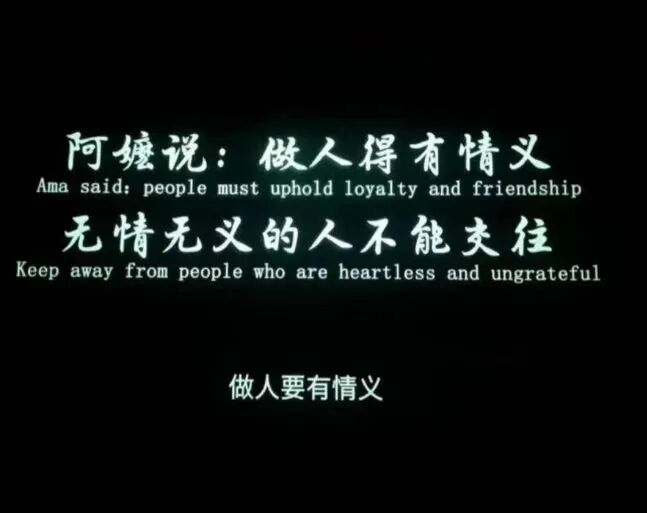
Lan Hongchun focuses on Teochew-language films using non-professional actors to maintain authenticity.
Why It Matters
The article suggests that human-centric, culturally specific storytelling remains a competitive advantage against AI-generated content, which often lacks deep emotional resonance.
What To Do Next
Analyze your content strategy to identify 'human-centric' narratives that AI cannot replicate, focusing on authentic, niche cultural experiences.
Key Points
- •Lan Hongchun focuses on Teochew-language films using non-professional actors to maintain authenticity.
- •His work, including the 'Teochew Trilogy', emphasizes cultural preservation over commercial efficiency.
- •The success of his films proves a market demand for localized, emotionally resonant storytelling in an era of AI-generated content.
🧠 Deep Insight
Web-grounded analysis with 12 cited sources.
🔑 Enhanced Key Takeaways
- •Lan Hongchun's latest film, "Dear You," released on April 30, 2026, has become a significant cinematic surprise in China, with box office forecasts revised upwards to exceed 1 billion yuan (approximately $146 million USD) after a modest initial opening.
- •"Dear You" achieved an impressive 9.1 rating on China's movie review platform Douban, making it the highest-rated domestic release of 2026 so far, a rare accomplishment for a low-budget film featuring a regional dialect and an almost entirely non-professional cast.
- •The narrative of "Dear You" is deeply rooted in the historical practice of "qiaopi," which refers to the letters and remittances sent home by earlier generations of overseas Chinese, a cultural heritage recognized by UNESCO in 2013.
- •Historically, Teochew-language films, alongside Amoy (Hokkien) films, constituted a notable dialect film industry in Hong Kong during the 1950s and 1960s, primarily catering to Taiwanese and Southeast Asian audiences with shared linguistic roots.
- •The use of dialects in Chinese cinema has a complex history, including periods of censorship (e.g., the Nationalist Party's ban on local dialects in 1927), but has recently experienced a resurgence, becoming a 'social currency' that enhances cultural authenticity and emotional resonance for audiences.
🔮 Future ImplicationsAI analysis grounded in cited sources
⏳ Timeline
📎 Sources (12)
Factual claims are grounded in the sources below. Forward-looking analysis is AI-generated interpretation.
Weekly AI Recap
Read this week's curated digest of top AI events →
👉Related Updates


AI-curated news aggregator. All content rights belong to original publishers.
Original source: 虎嗅 ↗