DingTalk's organizational challenges in the AI era
💡A cautionary tale on why organizational structure is as critical as technology for successful AI product deployment.
⚡ 30-Second TL;DR
What Changed
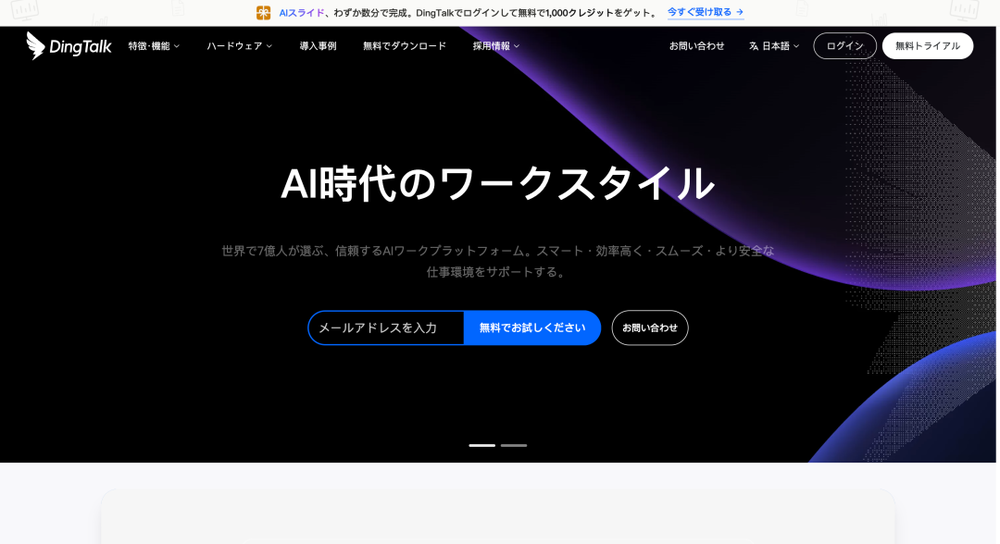
DingTalk's overseas product suffers from poor localization and broken core features like login.
Why It Matters
Reflects the common 'big organization disease' where internal silos and strategic misalignment hinder AI product innovation.
What To Do Next
Audit your internal AI product development lifecycle to ensure feedback loops between end-users and decision-makers are not blocked by organizational hierarchy.
Key Points
- •DingTalk's overseas product suffers from poor localization and broken core features like login.
- •The 'ONE' AI product failed to gain traction, moving to a secondary position after 10 months.
- •Large organizations struggle with the gap between high-level AI strategy and actual user needs.
🧠 Deep Insight
Web-grounded analysis with 22 cited sources.
🔑 Enhanced Key Takeaways
- •DingTalk's CEO, Chen Hang (also known as Wuzhao), was replaced by Chen Yusen on June 11, 2026, following intense internal debates over the platform's AI strategy and management style, which were criticized as unfocused and high-pressure.
- •The failure of the 'ONE' AI project is largely attributed to management shortcomings and a demanding work culture, rather than solely technical or product flaws, as highlighted in a 75,000-word internal essay by a former product manager and subsequent Alibaba leadership memos.
- •Alibaba's top leadership, through its Partnership Committee, issued a rare internal rebuke of DingTalk's management, emphasizing that innovation in the AI era requires passion and creativity, and a respect for individual employee value, contrasting with the previous '996' work system.
- •DingTalk's inherent product design, which historically emphasized management control features like read receipts and attendance tracking, creates a fundamental tension with AI's potential to act as an empowering assistant, risking the amplification of supervisory functions rather than fostering employee autonomy.
- •Despite internal challenges, DingTalk is actively pursuing an open AI ecosystem strategy, having launched the Wukong AI platform, new AI hardware products (like A1Pro and H1 headset), and an AI Innovation Workshop program to collaborate with external startups and partners.
🛠️ Technical Deep Dive
- DingTalk's AI assistant is powered by Alibaba's Tongyi Qianwen large language model.
- The platform features an AI agent named Wukong, which integrates with Alibaba's Bailian platform for deploying AI applications on enterprise data.
- Dingtalk-DeepResearch is a multi-agent intelligence framework designed for enterprise environments, comprising an Agent Studio layer for configurable agents, a Core layer for context compression, reasoning, planning, tool orchestration, memory, and human-in-the-loop control, and a Data Layer for multimodal data sources.
- AI capabilities include 'AI Minutes' for speech-to-text transcription, AI-generated summaries, and AI Q&A queries, as well as 'AI Table' for building AI-powered business apps, smart workflows, and real-time dashboards.
- DingTalk has expanded into AI hardware, launching products such as the DingTalk A1Pro and the AI headset H1.
🔮 Future ImplicationsAI analysis grounded in cited sources
⏳ Timeline
📎 Sources (22)
Factual claims are grounded in the sources below. Forward-looking analysis is AI-generated interpretation.
Weekly AI Recap
Read this week's curated digest of top AI events →
👉Related Updates

AI-curated news aggregator. All content rights belong to original publishers.
Original source: 虎嗅 ↗