Diamond Drills Target AI Server PCB Bottlenecks
💡Advanced AI servers are pushing PCB drills beyond tungsten carbide—see which diamond technology can scale.
⚡ 30-Second TL;DR
What Changed
Traditional tungsten-carbide drills may last only 100–200 holes on M9 boards, creating demand for diamond-based alternatives.
Why It Matters
For AI infrastructure companies, PCB material and drilling constraints could affect server manufacturing throughput, yield, and supply-chain costs. Diamond drill adoption may improve processing reliability for advanced boards, but supplier qualification and 12–18-month validation cycles make near-term capacity changes difficult.
What To Do Next
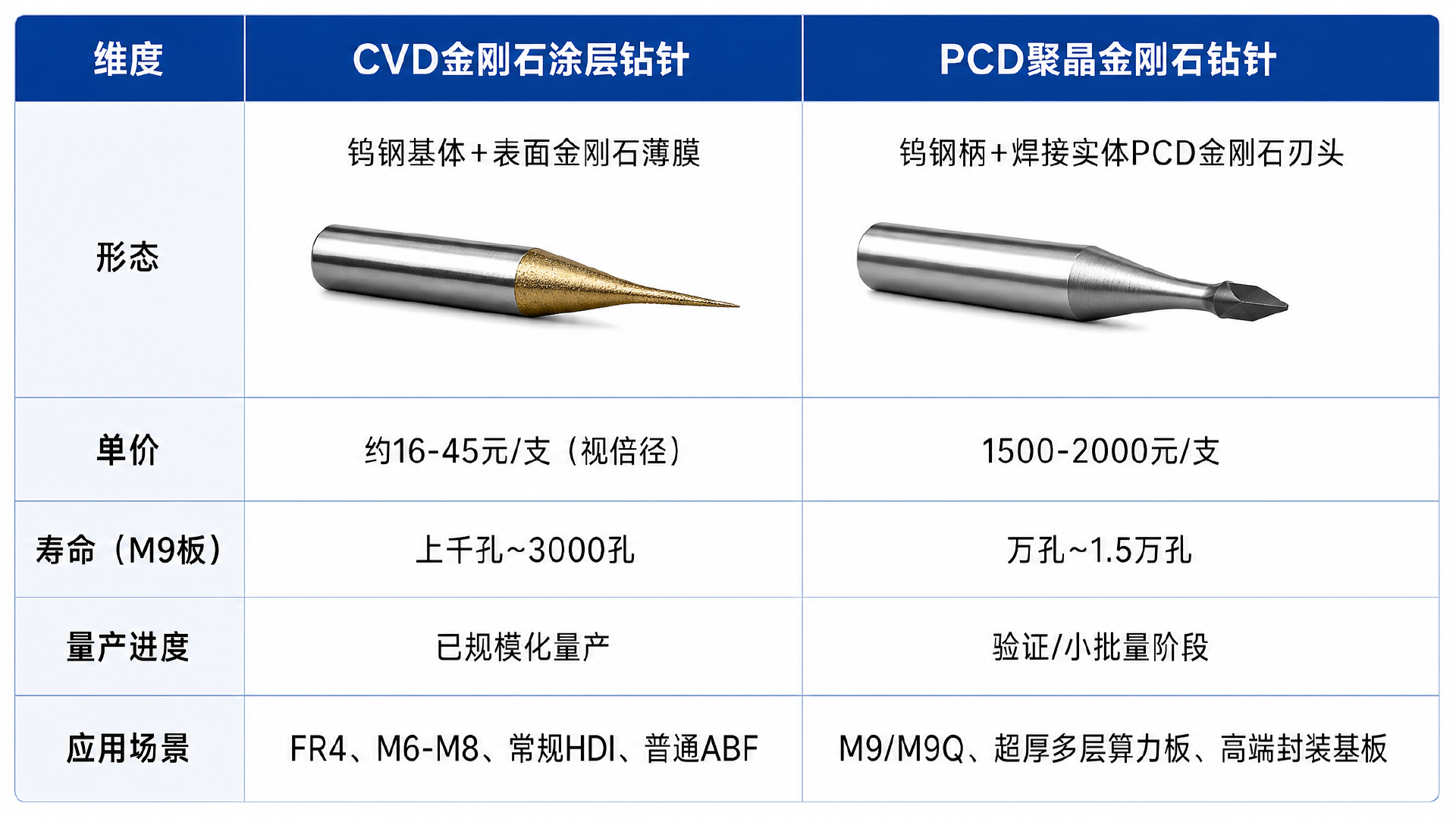
If you operate or procure AI servers, ask your ODM to compare PCD and CVD drill qualification data for M9/M9Q boards, including hole yield, drill life, downtime, and total cost per hole.
Key Points
- •Traditional tungsten-carbide drills may last only 100–200 holes on M9 boards, creating demand for diamond-based alternatives.
- •PCD drills combine a carbide body with a sintered diamond cutting layer and can last tens to hundreds of times longer in demanding applications.
- •CVD drills add a thin diamond coating to tungsten-carbide drills, offering lower cost and easier production-line integration but with coating-peel risks.
- •DingTai High-Tech and Jinzhou Precision dominate the conventional PCB drill market, while Sifangda is pursuing PCD micro-drill commercialization.
- •The actual market opportunity depends on AI server shipments, PCB drilling volume, M9 penetration, drill pricing, and usable drill life—not simply unit growth and price increases.
Weekly AI Recap
Read this week's curated digest of top AI events →
👉Related Updates

AI-curated news aggregator. All content rights belong to original publishers.
Original source: 虎嗅 ↗
This is a summary, not the original. Read the source, or get the weekly briefing.
Weekly AI briefing
One email a week. Unsubscribe anytime.