Dexterous Hands Raise $3.5B, But Standards Lag
A robotics funding boom is colliding with incompatible specs, inflated shipment claims, and costly hardware trade-offs.
30-Second TL;DR
What Changed
Dexterous hands may account for roughly 10%–20% of a humanoid robot’s hardware cost, with some estimates placing Tesla Optimus at 17.3%.
Why It Matters
For embodied-AI founders, the bottleneck is shifting from humanoid bodies to reliable, affordable end-effectors capable of fine manipulation. Investors and buyers should discount headline shipment claims until products are evaluated using consistent metrics and real-world task performance.
What To Do Next
Before integrating a dexterous hand, benchmark vendors on active motor count, independently controlled degrees of freedom, payload, thermal limits, repair rate, and delivered unit cost rather than advertised DoF.
Key Points
- •Dexterous hands may account for roughly 10%–20% of a humanoid robot’s hardware cost, with some estimates placing Tesla Optimus at 17.3%.
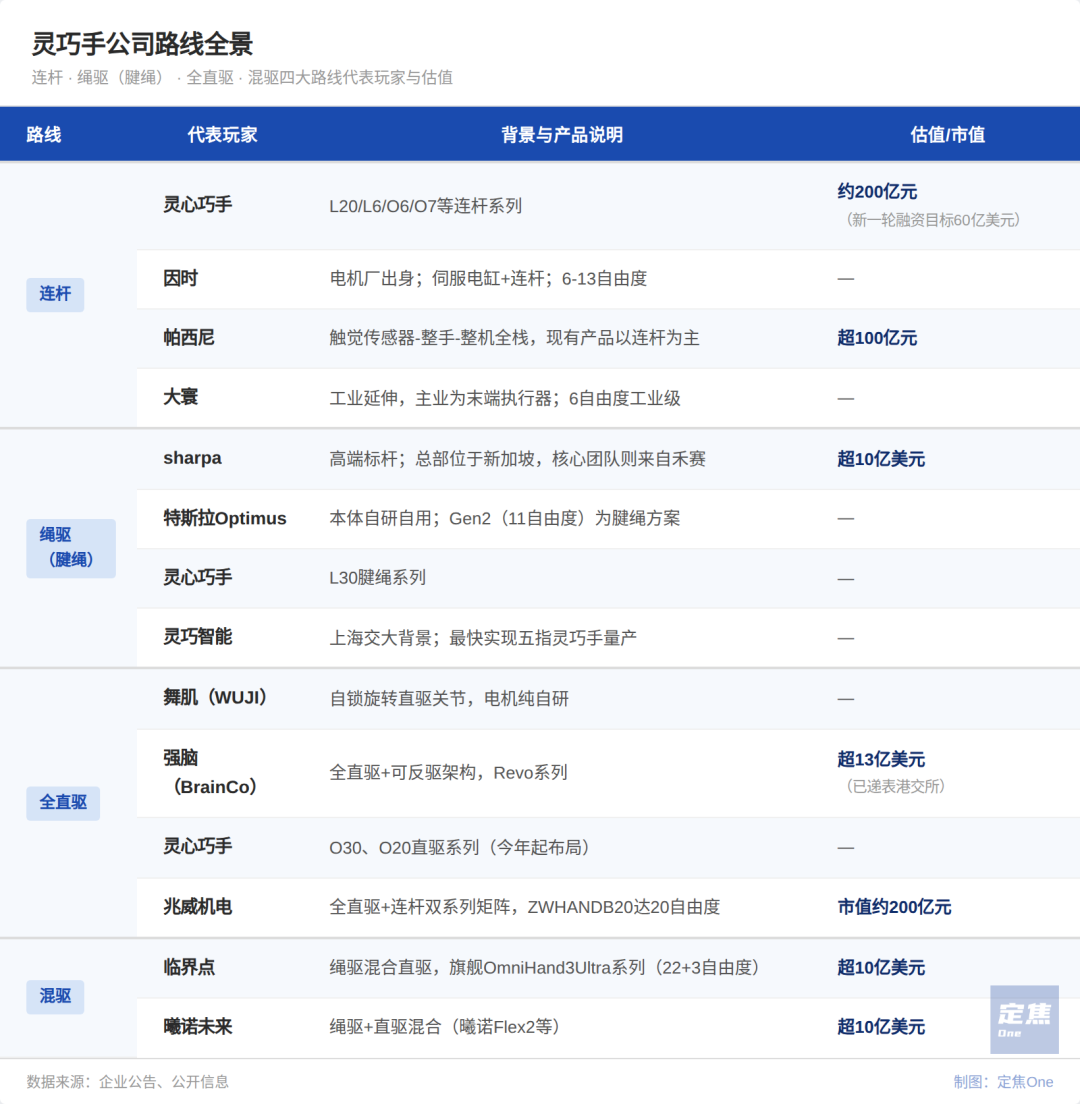
- •The main hardware approaches are direct-drive, tendon-driven, and linkage-based designs, each trading off dexterity, load capacity, reliability, and cost.
- •Reported market leadership is difficult to compare because companies use inconsistent definitions for shipments, market share, product categories, and degrees of freedom.
- •Direct-drive hands can cost at least 100,000 yuan and depend heavily on motors, screws, and encoders, while lower-cost tendon and linkage designs offer reduced dexterity.
Deep Insight
AI-generated analysis for this event — not the original article.
Enhanced Key Takeaways
- •The surge in funding is largely driven by the 'embodied AI' (Embodied AI) policy initiatives in major Chinese industrial hubs like Beijing and Shanghai, which provide subsidies for humanoid component localization.
- •Supply chain bottlenecks for high-precision harmonic drives and miniature force sensors are currently the primary limiting factor for mass-producing dexterous hands, rather than just capital availability.
- •Leading Chinese dexterous hand manufacturers are increasingly adopting 'modular' design architectures to allow for rapid swapping of end-effectors, aiming to solve the lack of standardization through hardware interoperability.
- •There is a growing trend of 'software-defined hands' where manufacturers are bundling proprietary tactile sensing algorithms with hardware to lock in customers, further complicating cross-platform benchmarking.
- •Recent industry reports indicate that the failure rate of tendon-driven systems in continuous 24/7 operation remains a significant hurdle, with many units requiring maintenance after fewer than 500 hours of use.
Competitor Analysis
- Direct-Drive Hands
- High (High DOF)
- Tendon-Driven Hands
- Medium
- Linkage-Based Hands
- Low
- Direct-Drive Hands
100,000 RMB
- Tendon-Driven Hands
- 20,000 - 50,000 RMB
- Linkage-Based Hands
- <20,000 RMB
- Direct-Drive Hands
- Low
- Tendon-Driven Hands
- Medium
- Linkage-Based Hands
- High
- Direct-Drive Hands
- High (Motor-heavy)
- Tendon-Driven Hands
- High (Cable routing)
- Linkage-Based Hands
- Low (Mechanical)
| Feature | Direct-Drive Hands | Tendon-Driven Hands | Linkage-Based Hands |
|---|---|---|---|
| Dexterity | High (High DOF) | Medium | Low |
| Cost | 100,000 RMB | 20,000 - 50,000 RMB | <20,000 RMB |
| Load Capacity | Low | Medium | High |
| Complexity | High (Motor-heavy) | High (Cable routing) | Low (Mechanical) |
Technical Deep Dive
- Direct-Drive Architecture: Utilizes high-torque density frameless motors coupled with miniature planetary gearboxes to achieve high back-drivability and precise force control.
- Tendon-Driven Systems: Employs high-strength synthetic fibers (e.g., Dyneema) routed through conduits to remote actuators, allowing for a lighter distal mass and improved inertia characteristics.
- Tactile Sensing Integration: Emerging designs are moving from simple pressure-sensitive resistors to vision-based tactile sensors (e.g., GelSight-inspired) embedded within silicone fingertips to provide high-resolution contact geometry.
- Communication Protocols: Most current systems rely on EtherCAT or CAN-FD for real-time control loops, though latency remains a challenge for high-frequency haptic feedback.
Future ImplicationsAI analysis grounded in cited sources
Timeline
- 2024-03Initial surge in Chinese humanoid robotics investment following government 'Embodied AI' policy announcements.
- 2025-06First major industry push for standardized communication interfaces for dexterous hands in the Chinese market.
- 2026-01Dexterous hand component shipments reach record highs as humanoid robot prototypes transition to pilot testing.
Weekly AI Recap
Read this week's curated digest of top AI events →
AI-curated news aggregator. All content rights belong to original publishers.
Original source: 虎嗅 ↗
This is a summary, not the original. Read the source, or get the weekly briefing.
The weekly digest
One email a week. Unsubscribe anytime.