DeepSeek Opens Agent Harness Beta
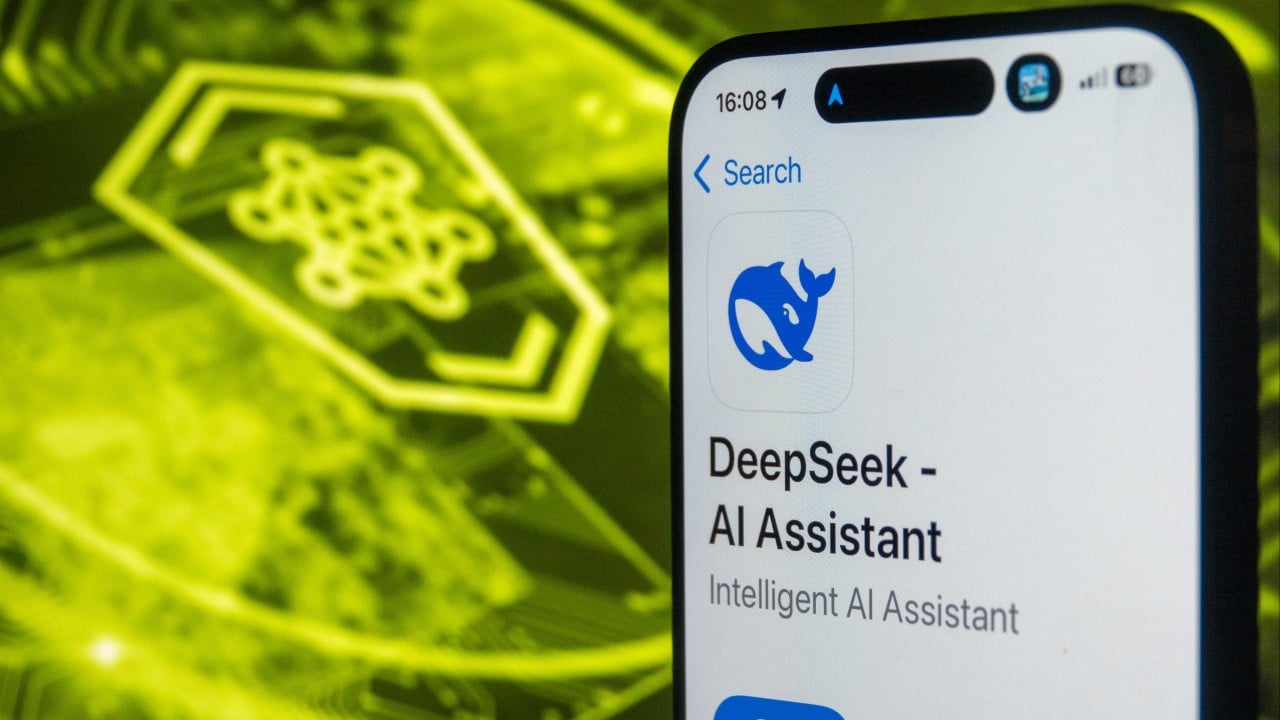
DeepSeek is testing a new layer for turning LLMs into agents—an early look at its open-source agent strategy.
30-Second TL;DR
What Changed
DeepSeek Harness is software intended to convert LLMs into AI agents.
Why It Matters
If the harness lowers the complexity of building reliable agents, it could increase adoption of DeepSeek models among open-source developers. It may also intensify competition around both agent frameworks and cost-efficient model deployment.
What To Do Next
Track the DeepSeek Harness beta announcement and prepare a small tool-use workflow to benchmark agent reliability, latency, and inference cost against your current framework.
Key Points
- •DeepSeek Harness is software intended to convert LLMs into AI agents.
- •DeepSeek is seeking open-source project developers for beta testing.
- •The initiative accelerates DeepSeek’s broader push into agentic AI technology.
- •The announcement comes as the DeepSeek V4 Flash model creates fresh interest in low-cost AI inference.
Deep Insight
AI-generated analysis for this event — not the original article.
Enhanced Key Takeaways
- •DeepSeek Harness utilizes a modular architecture specifically designed to integrate with DeepSeek-V4 and V4 Flash via a standardized API layer for autonomous task execution.
- •The beta program emphasizes 'low-latency reasoning loops,' allowing agents to perform multi-step tool use without the overhead typically associated with heavier agentic frameworks.
- •DeepSeek is positioning the Harness as a direct competitor to proprietary agent frameworks by offering native support for local deployment, aiming to reduce dependency on cloud-based agent platforms.
- •The initiative includes a dedicated 'Agent-Model Alignment' protocol, which optimizes the V4 Flash model's output specifically for function calling and error recovery in agentic workflows.
- •Early beta documentation suggests the Harness framework includes built-in memory management modules that allow agents to maintain context across long-running, asynchronous tasks.
Competitor Analysis
- DeepSeek Harness
- Low-cost, high-efficiency inference
- OpenAI Swarm
- Experimental multi-agent orchestration
- LangChain/LangGraph
- General-purpose agent development
- DeepSeek Harness
- Optimized for V4 Flash (low cost)
- OpenAI Swarm
- API-based (GPT-4o/o1 pricing)
- LangChain/LangGraph
- Framework-agnostic (BYO Model)
- DeepSeek Harness
- High throughput/low latency
- OpenAI Swarm
- High reasoning capability
- LangChain/LangGraph
- High flexibility/complexity
| Feature | DeepSeek Harness | OpenAI Swarm | LangChain/LangGraph |
|---|---|---|---|
| Primary Focus | Low-cost, high-efficiency inference | Experimental multi-agent orchestration | General-purpose agent development |
| Pricing | Optimized for V4 Flash (low cost) | API-based (GPT-4o/o1 pricing) | Framework-agnostic (BYO Model) |
| Benchmarks | High throughput/low latency | High reasoning capability | High flexibility/complexity |
Technical Deep Dive
- Architecture: Harness utilizes a lightweight middleware layer that sits between the LLM and external tools, minimizing token overhead during tool-use cycles.
- Tool Integration: Supports a JSON-schema based interface for tool definition, enabling rapid integration with existing RESTful APIs and Python functions.
- Memory Management: Implements a tiered memory system (Short-term context window vs. Long-term vector storage) to handle persistent agent state.
- Inference Optimization: Specifically tuned for DeepSeek-V4 Flash's Mixture-of-Experts (MoE) architecture to ensure agentic reasoning tasks utilize only the necessary active parameters.
Future ImplicationsAI analysis grounded in cited sources
Timeline
- 2024-01DeepSeek releases its first major open-weights model series.
- 2025-05DeepSeek introduces the V3 model architecture with enhanced reasoning capabilities.
- 2026-02DeepSeek launches the V4 model series, focusing on inference efficiency.
- 2026-06DeepSeek releases V4 Flash, optimized for high-throughput, low-cost applications.
- 2026-08DeepSeek announces the beta launch of DeepSeek Harness.
Weekly AI Recap
Read this week's curated digest of top AI events →
Related Updates



AI-curated news aggregator. All content rights belong to original publishers.
Original source: SCMP Technology ↗
This is a summary, not the original. Read the source, or get the weekly briefing.
The weekly digest
One email a week. Unsubscribe anytime.