DeepMind veteran Andrew Dai launches Elorian AI
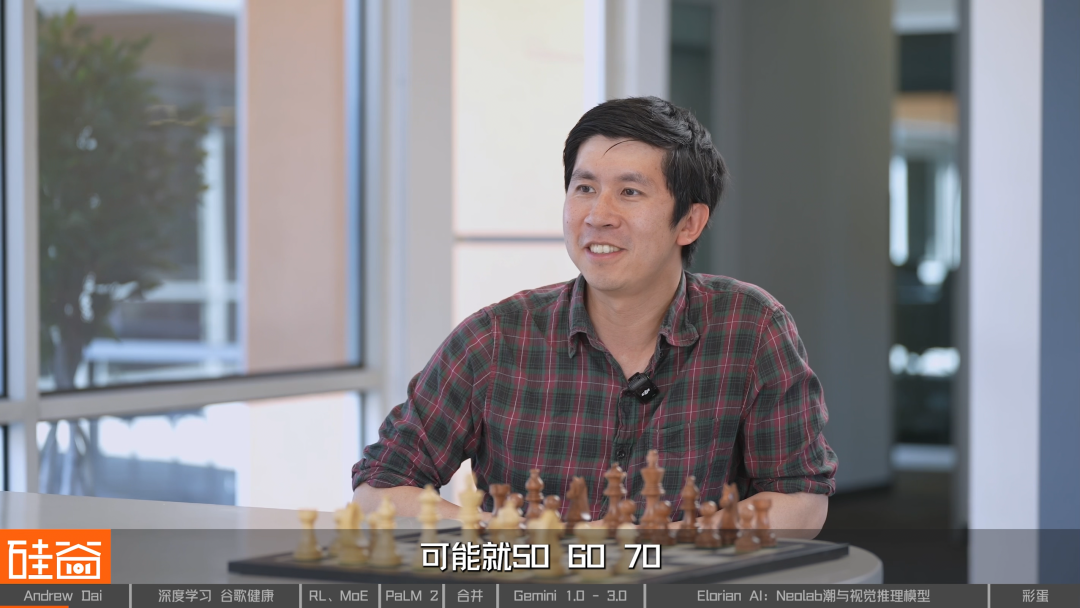
Google AI veteran leaves to build next-gen multi-modal visual reasoning models with Nvidia backing.
30-Second TL;DR
What Changed
Andrew Dai spent 14 years at Google, contributing to Brain and DeepMind projects.
Why It Matters
This move signals a shift in AI research toward specialized visual reasoning models, potentially challenging current SOTA LLM-centric approaches.
What To Do Next
Monitor Elorian AI's upcoming publications to understand their approach to integrating visual reasoning with language models.
Key Points
- •Andrew Dai spent 14 years at Google, contributing to Brain and DeepMind projects.
- •Elorian AI raised $55M at a $300M valuation from Menlo Ventures and Nvidia.
- •The company focuses on combining language and visual reasoning rather than pure LLMs.
- •The team plans to scale to 50-70 researchers and engineers within two years.
Deep Insight
Background and context from public sources — not the original article. 20 sources cited.
Enhanced Key Takeaways
- •Elorian AI's $55 million seed funding round at a $300 million valuation included additional investors such as Striker Venture Partners, Altimeter, 49 Palms, and prominent AI researcher Jeff Dean, alongside Menlo Ventures and Nvidia.
- •The startup's core mission extends beyond basic image analysis, aiming to achieve Artificial General Intelligence (AGI) by developing models that deeply understand the physical world, including spatial relationships and physical constraints, positioning it within the 'physical AI' market for applications like robotics and autonomous systems.
- •Andrew Dai co-founded Elorian AI with Yinfei Yang, a former Google and Apple researcher with extensive experience in multimodal systems, and Seth Neel, a former Harvard professor.
- •Elorian AI is focused on building native multimodal AI models that can simultaneously process text, images, video, and audio within a single, unified architecture, rather than relying on separate, stitched-together systems.
- •Andrew Dai's decision to leave Google was partly influenced by challenges related to accessing sufficient computing power and navigating bureaucratic hurdles within the company, which he felt hindered experimental projects and prioritized short-term gains.
Technical Deep Dive
- Elorian AI's core approach is to deeply integrate visual reasoning from the ground up, aiming to build native multimodal models capable of simultaneously understanding and processing text, images, videos, and audio.
- The company's foundational thesis posits that robust visual reasoning is essential for achieving more advanced forms of intelligence, addressing a perceived limitation where current AI models, despite language and coding strengths, struggle with fundamental visual tasks.
- The startup is developing specialized models to support real-world applications in areas such as robotics, autonomous systems, and industrial inspection, by enhancing AI's ability to interpret and reason about visual information.
- Elorian AI plans to innovate at the data level by reconstructing reasoning links within the visual space and extensively utilizing synthetic data for training.
- Funds raised are earmarked for establishing massive compute clusters, developing proprietary multimodal datasets, and building robust model training infrastructure.
- Early technical descriptions emphasize key focus areas including vision-language alignment and the creation of richer scene representations.
- Andrew Dai's prior work at Google, which included contributions to pre-training methods, Mixture of Experts (MoE) architecture, and core Gemini technologies, suggests these architectural principles may inform Elorian's model design.
Future ImplicationsAI analysis grounded in cited sources
Timeline
- 2006Andrew Dai obtained a bachelor's degree in computer science from the University of Cambridge.
- 2012Andrew Dai joined Google as a Principal Research Scientist, Director, after earning his PhD in Machine Learning from the University of Edinburgh.
- 2015A Google Brain team, including Andrew Dai, published a paper on pre-training and fine-tuning, a core paradigm for later GPT models.
- 2023Andrew Dai was recognized with a Tech Impact Award from Google.
- 2025Elorian AI was founded.
- 2026-04Elorian AI officially emerged from stealth, announcing $55 million in seed funding at a $300 million valuation.
Sources (20)
Factual claims are grounded in the sources below. Forward-looking analysis is AI-generated interpretation.
Weekly AI Recap
Read this week's curated digest of top AI events →
AI-curated news aggregator. All content rights belong to original publishers.
Original source: 虎嗅 ↗
This is a summary, not the original. Read the source, or get the weekly briefing.
The weekly digest
One email a week. Unsubscribe anytime.