Deep Economy: AI-Driven Micro-Segmentation and Reconfigurable Systems
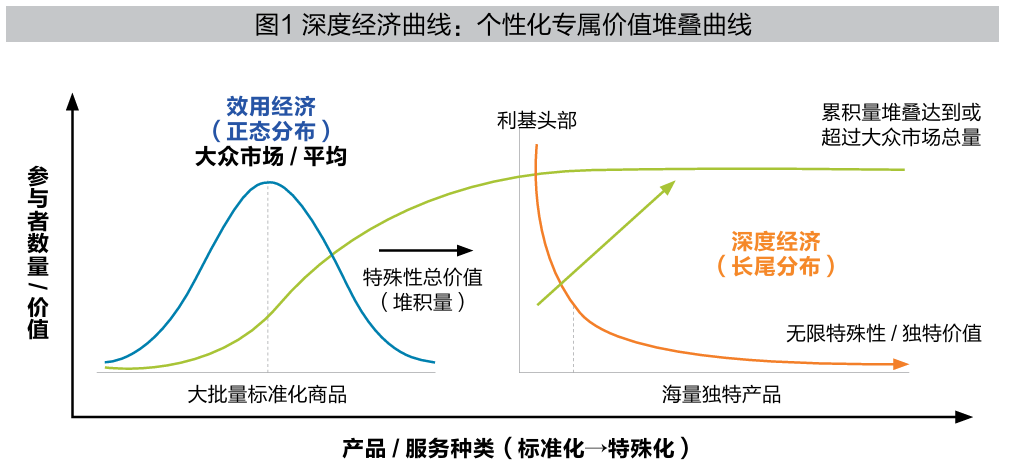
💡Learn how to transition from generic AI tools to high-value, context-aware 'Deep Economy' business models.
⚡ 30-Second TL;DR
What Changed
AI shifts economic value from mass efficiency to 'field adaptation' and context-aware responses.
Why It Matters
This framework provides a strategic roadmap for AI founders to build sustainable, high-margin business models by focusing on deep, context-specific integration rather than generic utility.
What To Do Next
Analyze your current product architecture to identify which core features can be modularized into 'reusable service blocks' to better serve specific user contexts.
Key Points
- •AI shifts economic value from mass efficiency to 'field adaptation' and context-aware responses.
- •Companies are building 'stacking capabilities' to transform one-off customizations into reusable service modules.
- •Market structures are evolving from broad segments to 'micro-segments' and eventually 'market-of-one' models.
- •The 'Deep Economy' relies on AI, digital twins, and modular data architectures to lower the cost of hyper-personalization.
🧠 Deep Insight
Background and context from public sources — not the original article. 35 sources cited.
🔑 Enhanced Key Takeaways
- •The 'Deep Economy' paradigm is significantly advanced by the evolution of digital twins from modeling physical assets to creating 'customer digital twins' (CDTs), which are AI-powered virtual representations that continuously mirror individual customer behaviors, preferences, and interactions in real-time across various channels.
- •AI-driven hyper-personalization represents a qualitative leap beyond traditional customer segmentation, enabling real-time, individual-level decision-making based on live behavioral signals, contextual data, and even emotional cues, rather than static audience groups.
- •The implementation of modular AI-native architectures is crucial for the 'Deep Economy', as they break down complex personalization systems into independent, API-communicating services, allowing for flexible scaling, specialized optimization of components (e.g., CPU for data processing, GPU for recommendations), and isolated updates.
- •Palantir's reconfigurable systems leverage an 'Ontology' that functions as a digital twin of an organization, structuring data into interconnected virtual objects and actions, and integrating Large Language Models (LLMs) to generate operational insights and drive agentic decision loops.
- •The economic value of AI, particularly generative AI, is projected to add trillions of dollars annually to the global economy by enhancing productivity across various sectors and enabling the creation of hyper-personalized content at scale.
📊 Competitor Analysis▸ Show
| Company/Platform | Key Features/Approach | Differentiators/Comparison to Palantir/Shein |
|---|---|---|
| Palantir Competitors | ||
| Databricks | Data and AI platform on lakehouse architecture, data engineering, warehousing, ML. | Focuses on openness and engineering control, often seen as an 'engineer's choice' vs. Palantir's 'black box' approach. |
| Snowflake | Cloud data and AI platform, unifies structured/unstructured data, analytics, ML workflows. | Unified AI Data Cloud for data agents and AI models where data lives, strong governance. |
| Microsoft (Fabric, Azure) | Cloud computing, enterprise data management, unified analytics, AI services. | Leverages ubiquity and ecosystem, offers 'good enough' analytics often bundled with other services. |
| AWS (SageMaker) | Cloud computing platform with data processing and AI tools. | 'DIY' AI stack, offering tools for building AI models, competing by encouraging self-building on AWS. |
| Google Cloud (BigQuery, Vertex AI) | Data warehouse, AI platform, integration with Google's AI (Gemini). | Strong data gravity with BigQuery, seamless workflow with integrated AI, Looker for semantic layer. |
| Dataiku | Platform for 'Everyday AI', democratizing data science, visual interface. | Excels at collaboration between coders and non-coders, significantly cheaper and less intense to deploy than Palantir. |
| Shein Competitors | ||
| Temu | Online marketplace with broad categories (clothing, home, electronics), ultra-low prices. | Replicates Shein's model with wider product variety, aggressive growth, and gamification for engagement. |
| H&M | Global fast-fashion retailer with physical stores and online presence. | Offers 'Conscious Collection' with sustainable materials, better quality, and ethical sourcing claims, weekly new drops. |
| Zara | Fast-fashion retailer, known for quick turnaround. | Slower new item launches than Shein (thousands annually vs. thousands daily), but still a major fast-fashion player. |
| Boohoo | UK-based fast-fashion retailer, aggressive sales and value perception. | Competes on constant sales (50-70% off), wide size range, and faster shipping (5-7 business days) than Shein's average. |
| ROMWE | Sister brand to Shein, focuses on affordable clothing and runway trends. | Shares parent company with Shein but positions with a slightly different aesthetic and exclusive flash sales. |
🛠️ Technical Deep Dive
- Customer Digital Twins (CDTs): These are AI-powered virtual replicas that continuously learn from diverse data streams including CRM systems, POS terminals, browsing patterns, social media interactions, and IoT devices. They enable real-time consumer modeling, simulation of entire customer journeys, and highly accurate predictive insights into future behavior. CDTs are built with privacy-by-design principles, using anonymized data, strict access controls, and compliance checks.
- Modular AI-Native Architectures: These architectures decompose AI personalization systems into smaller, independent services that communicate via well-defined APIs. This design allows for independent scaling of high-traffic services, specialized optimization of each component (e.g., using CPU-intensive work for data processing and GPU acceleration for recommendations), and isolated updates without redeploying the entire system.
- Palantir's Ontology and AIP: Palantir's core architecture centers on an 'Ontology,' which creates a digital replica of an organization by organizing complex data and logic into interconnected virtual objects, links, and actions representing real-world concepts and their relationships. The Palantir Artificial Intelligence Platform (AIP) integrates Large Language Models (LLMs) and other AI to generate insights, summaries, and drive 'agentic decision loops' that continuously learn and adjust. This often involves leveraging NVIDIA's accelerated computing stack for GPU-accelerated data processing and AI.
- Shein's AI-Powered Supply Chain: Shein utilizes proprietary AI algorithms for instant trend prediction by analyzing billions of data points from social media, search trends, and user behavior. Machine learning models accurately predict demand, enabling an ultra-fast supply chain with initial production runs as small as 50-100 units per SKU to test demand. AI also drives personalized product recommendations, promotions, and dynamic pricing for individual customers.
- AI-Enhanced Micro-Segmentation (General): In contexts like network security, AI systems continuously learn and optimize segmentation policies, reducing manual operational overhead and error rates. They use unsupervised learning to discover hidden traffic dependencies, enabling adaptive, context-sensitive, and scalable defense models for dynamic IT environments by enforcing identity-based policies between individual workloads.
🔮 Future ImplicationsAI analysis grounded in cited sources
⏳ Timeline
📎 Sources (35)
Factual claims are grounded in the sources below. Forward-looking analysis is AI-generated interpretation.
- genesys.com
- researchworld.com
- tigeranalytics.com
- aidigital.com
- insiderone.com
- kuble.com
- rbmsoft.com
- shaped.ai
- modularmanagement.com
- teradata.com
- al-kindipublishers.org
- thebrandhopper.com
- substack.com
- medium.com
- nvidia.com
- mckinsey.com
- medium.com
- europa.eu
- nurix.ai
- distillintelligence.com
- sellthetrend.com
- mobileappdevelopmentcompany.us
- nielseniq.com
- globalsources.com
- logisticsnavigators.com
- dell.com
- steadypace.sa
- project-aeon.com
- time.com
- monetate.com
- researchgate.net
- sentinelone.com
- paloaltonetworks.com
- sparklin.com
- multidisciplinaryfrontiers.com
Weekly AI Recap
Read this week's curated digest of top AI events →
👉Related Updates

AI-curated news aggregator. All content rights belong to original publishers.
Original source: 虎嗅 ↗
This is a summary, not the original. Read the source, or get the weekly briefing.
The weekly digest
One email a week. Unsubscribe anytime.