Deep Dive: 6 Leading AI Video Generation Models Compared
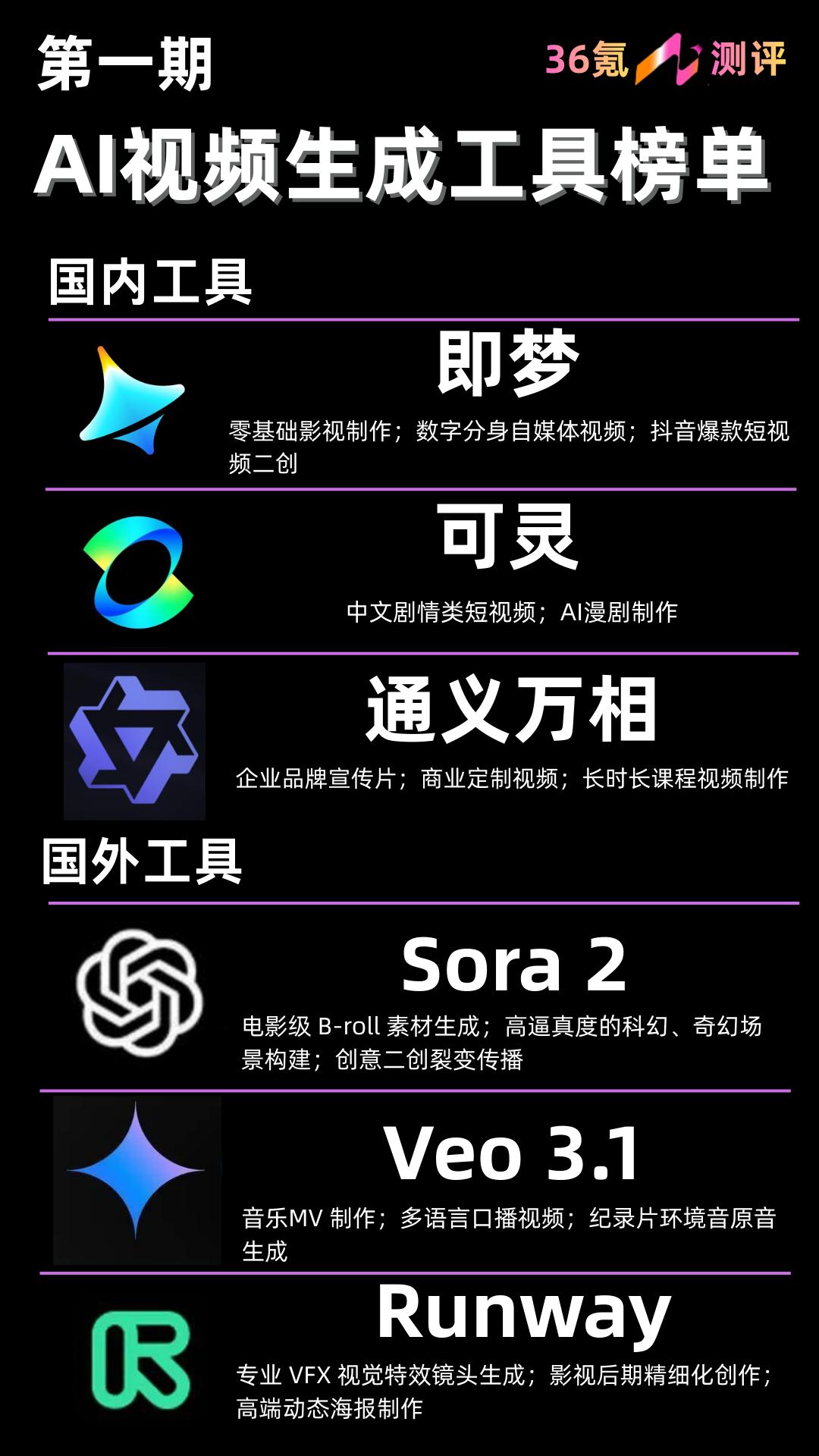
💡Compare the top 6 AI video models to choose the right tool for your specific production workflow.
⚡ 30-Second TL;DR
What Changed
Seedance 2.0 leads in multi-modal input and professional-grade director-style scene scheduling.
Why It Matters
The maturity of these tools significantly lowers the barrier for high-quality video production, enabling rapid prototyping for filmmakers and scalable content creation for brands.
What To Do Next
Evaluate your project's data security needs: choose Wan 2.2 for private deployment or Seedance 2.0 for high-end creative storytelling.
Key Points
- •Seedance 2.0 leads in multi-modal input and professional-grade director-style scene scheduling.
- •Kling 3.0 excels in realistic human movement and physics-based interactions for Chinese storytelling.
- •Wan 2.2 offers open-source, private deployment options specifically for enterprise data security.
- •Sora 2.0 focuses on world-building and long-form consistency, while Veo 3.1 specializes in audio-visual synchronization.
🧠 Deep Insight
AI-generated analysis for this event — not the original article.
🔑 Enhanced Key Takeaways
- •Seedance 2.0 utilizes a proprietary 'Director-Agent' architecture that allows users to define camera movement, lighting, and character blocking through natural language scripts.
- •Kling 3.0 has integrated a new 'Physics-Engine-in-the-Loop' (PEIL) module, significantly reducing common AI artifacts like limb distortion and object clipping during complex motion.
- •Wan 2.2's enterprise deployment model includes a specialized 'Data-Sanitization Layer' that prevents proprietary corporate assets from being ingested into the base model's training set.
- •Sora 2.0 has introduced 'Temporal-Anchoring' technology, which allows the model to maintain character identity and environmental consistency across video sequences exceeding 10 minutes.
- •Veo 3.1 features a native 'Audio-to-Motion' synchronization engine that maps sound wave frequencies directly to facial muscle movements and environmental sound effects in real-time.
📊 Competitor Analysis▸ Show
| Feature | Seedance 2.0 | Kling 3.0 | Wan 2.2 | Sora 2.0 | Veo 3.1 |
|---|---|---|---|---|---|
| Primary Focus | Director Control | Realistic Motion | Enterprise Security | World Building | Audio-Visual Sync |
| Deployment | Cloud/API | Cloud/API | Private/On-Prem | Cloud | Cloud/API |
| Open Source | No | No | Yes | No | No |
| Max Duration | 2 min | 3 min | 5 min | 10+ min | 2 min |
🛠️ Technical Deep Dive
- Seedance 2.0: Employs a hierarchical latent diffusion model with a dedicated scene-graph controller for spatial consistency.
- Kling 3.0: Utilizes a 3D-aware transformer architecture that explicitly models depth and occlusion to improve physics accuracy.
- Wan 2.2: Built on a modular transformer backbone allowing for fine-tuning on specific enterprise datasets without catastrophic forgetting.
- Sora 2.0: Implements a spatio-temporal patch-based diffusion approach that treats video as a sequence of 3D tokens for long-form coherence.
- Veo 3.1: Uses a dual-stream architecture where audio and visual tokens are processed in parallel and fused via a cross-attention mechanism.
🔮 Future ImplicationsAI analysis grounded in cited sources
⏳ Timeline
Weekly AI Recap
Read this week's curated digest of top AI events →
👉Related Updates

AI-curated news aggregator. All content rights belong to original publishers.
Original source: 36氪 ↗
This is a summary, not the original. Read the source, or get the weekly briefing.
Weekly AI briefing
One email a week. Unsubscribe anytime.