DataHub launches Context Intelligence to stop AI agent hallucinations
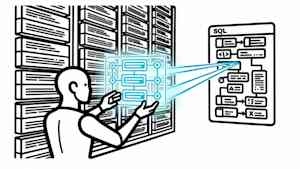
💡Stop AI agents from hallucinating SQL joins by using your own validated historical query logs as a semantic index.
⚡ 30-Second TL;DR
What Changed
Mines historical SQL query logs to build a semantic index for AI agents.
Why It Matters
This feature allows enterprises to turn years of analyst query history into a reliable knowledge base for AI agents. It effectively bridges the gap between raw data schemas and the semantic understanding required for autonomous data analysis.
What To Do Next
If you are building data-heavy AI agents, integrate DataHub's new Context Intelligence layer via MCP to provide your agents with validated SQL join patterns.
Key Points
- •Mines historical SQL query logs to build a semantic index for AI agents.
- •Integrates with MCP, LangChain, Google’s Agent Development Kit, and CrewAI.
- •Leverages existing DataHub lineage infrastructure to validate join logic.
- •Addresses the 'context gap' that causes AI agents to fail in complex data environments.
🧠 Deep Insight
Background and context from public sources — not the original article. 16 sources cited.
🔑 Enhanced Key Takeaways
- •DataHub's Context Intelligence extracts 'semantic anchors' from validated SQL query history, which are structured text definitions of proven query patterns, including joins, filters, and aggregation logic, forming the retrieval basis for AI agents before SQL generation.
- •The effectiveness of DataHub's approach is demonstrated by Pinterest, where an analytics agent leveraging DataHub's semantic context achieved 10x the usage of any other internal tool and reduced manual documentation effort by approximately 40%.
- •DataHub positions its offering as a comprehensive 'context layer' that unifies technical metadata, business knowledge, and documentation, differentiating it from traditional semantic layers that primarily focus on standardizing metric definitions.
- •The system incorporates a human validation loop, enabling domain experts to review AI-proposed context, resolve conflicting definitions, and simulate the impact of changes before publishing, thereby enhancing trust and accuracy in AI agent outputs.
- •DataHub's Context Intelligence is designed for platform-neutral provisioning, integrating context into existing endpoints such as Snowflake semantic views and Microsoft Fabric IQ, rather than replacing them, which allows for broader compatibility across diverse enterprise data stacks.
📊 Competitor Analysis▸ Show
While direct feature-by-feature pricing and benchmark comparisons are not readily available from public web searches, several platforms offer capabilities in data governance, cataloging, and semantic layers that can be considered competitive or complementary to DataHub's Context Intelligence:
| Feature / Platform | DataHub Context Intelligence | Atlan | Collibra | OpenMetadata |
|---|---|---|---|---|
| Core Focus | AI agent context, semantic indexing from query logs, hallucination reduction | Active metadata management, collaborative data intelligence, AI/human shared network | Enterprise data governance, data catalog, lineage, compliance, workflow engine | Open-source metadata platform, discovery, lineage, observability, collaboration |
| Key Differentiator | Mines historical SQL query logs to build semantic index for AI agents, leveraging existing lineage infrastructure | Emphasizes collaborative workflows and user-friendly interfaces for analytics and business teams | Strong focus on enterprise-wide data stewardship, policy enforcement, and auditable lineage for regulated environments | Open-source first, broad ingestion connectors, balances usability, governance, and extensibility |
| AI Agent Support | Provides semantic context via MCP, Agent Context Kit for various AI agent types (analytics, quality, steward, engineering) | Designed as a shared network between data experts and AI systems | Context provided to AI users has auditable and traceable origin, critical for compliance | Supports active metadata use cases, integrates with modern data systems for context |
| Integration Ecosystem | Integrates with MCP, LangChain, Google’s Agent Development Kit, CrewAI, Snowflake Intelligence, Vertex AI, Microsoft Copilot Studio; provisions context to Snowflake semantic views, Microsoft Fabric IQ | Seamlessly connects with dbt, Fivetran, major warehouses, BI tools | Enterprise-scale workflow engine, strong compliance controls | Integrates well with dbt, Airflow, major warehouses |
| Deployment Options | Managed SaaS (DataHub Cloud), self-hosted via Docker, Kubernetes (Helm) | Managed SaaS experience | Enterprise-wide deployment, strong compliance controls | Self-managed deployment flexibility |
🛠️ Technical Deep Dive
- Semantic Indexing from Query Logs: DataHub's Context Intelligence mines historical SQL query logs to extract 'semantic anchors.' These are structured text definitions of validated query patterns, including proven joins, filters, and aggregation logic, which form the retrieval basis for AI agents before they generate SQL.
- Comprehensive Metadata Graph: The platform maintains a robust metadata graph that interconnects various data entities such as datasets, columns, dashboards, ML models, business glossaries, people, and systems. This graph captures critical contextual information like lineage, ownership, documentation, and data quality metrics.
- Event-Driven Architecture: DataHub utilizes an event-based, stream-first architecture for real-time metadata management. This design continuously syncs metadata from over 100 data systems and documentation sources, ensuring that the context provided to AI agents always reflects the current operational reality rather than stale documentation.
- AI-Powered Semantic Search: For natural language queries, DataHub employs AI-generated embeddings. It uses a dual-index approach, with a primary index for standard keyword search and a semantic index for vector-enabled search. OpenSearch is utilized to perform k-NN (k-nearest neighbors) vector similarity searches, with results ranked by cosine similarity to the query embedding.
- Model Context Protocol (MCP) Server: DataHub exposes its semantic layer through a hosted Model Context Protocol (MCP) server. This allows AI agents (e.g., Claude, ChatGPT) and MCP-compatible frameworks to access DataHub's tools for data search and reference query retrieval as native tool calls.
- Agent Context Kit: DataHub provides an 'Agent Context Kit,' which is a Python package accompanied by runbooks. This kit facilitates the development of various enterprise data agents, including Data Analytics Agents, Data Quality Agents, Data Steward Agents, and Data Engineering Agents, by grounding them with real enterprise context.
- Human-in-the-Loop Validation: The system incorporates a mechanism for human validation, allowing domain experts to review AI-proposed context, resolve conflicting definitions, and simulate the impact of changes before publishing, thereby integrating human oversight into the context generation process.
🔮 Future ImplicationsAI analysis grounded in cited sources
⏳ Timeline
📎 Sources (16)
Factual claims are grounded in the sources below. Forward-looking analysis is AI-generated interpretation.
Weekly AI Recap
Read this week's curated digest of top AI events →
👉Related Updates
AI-curated news aggregator. All content rights belong to original publishers.
Original source: VentureBeat ↗
This is a summary, not the original. Read the source, or get the weekly briefing.
The weekly digest
One email a week. Unsubscribe anytime.