Data Labeling Industry Booms Despite Robotics Lag
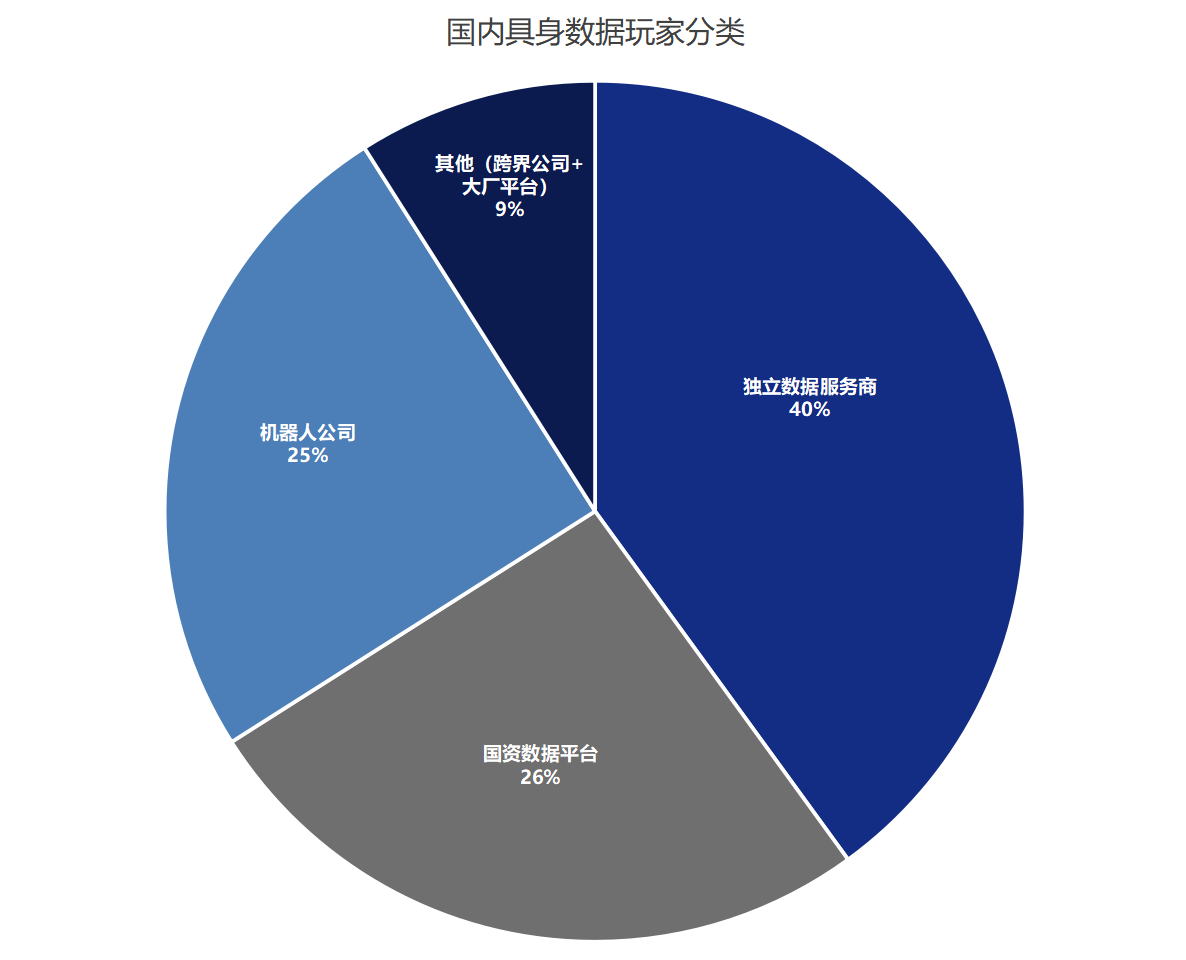
💡Understand why data labeling is currently more profitable than building physical robots.
⚡ 30-Second TL;DR
What Changed
High market valuation for data labeling services
Why It Matters
The high valuation of data companies suggests that the 'data moat' is becoming the most valuable asset in the AI race. Investors are prioritizing data infrastructure over immediate hardware deployment.
What To Do Next
Evaluate your data pipeline and consider outsourcing or automating labeling tasks to improve model training efficiency.
Key Points
- •High market valuation for data labeling services
- •Discrepancy between AI model training progress and physical robot capabilities
- •Data as the primary bottleneck for embodied AI development
🧠 Deep Insight
AI-generated analysis for this event — not the original article.
🔑 Enhanced Key Takeaways
- •The rise of 'Embodied AI' has shifted data labeling requirements from 2D image/text annotation to complex 3D spatial-temporal data, including video-based manipulation sequences.
- •Synthetic data generation is increasingly being used to bridge the 'sim-to-real' gap, though human-in-the-loop (HITL) verification remains essential for edge-case handling in robotics.
- •Major AI labs are moving toward 'data-centric AI' strategies, where the quality and diversity of labeled datasets are prioritized over model parameter scaling to improve robot generalization.
- •The data labeling industry is experiencing a transition toward specialized 'robotics-as-a-service' annotation platforms that integrate directly with simulation environments like NVIDIA Isaac Sim.
- •Labor costs for high-fidelity robotics data labeling are significantly higher than traditional NLP labeling due to the requirement for annotators to possess domain expertise in kinematics and spatial reasoning.
📊 Competitor Analysis▸ Show
| Feature | Scale AI | Labelbox | CloudFactory |
|---|---|---|---|
| Primary Focus | RLHF & Embodied AI | Data Management/Ops | Managed Workforce |
| Robotics Support | High (3D/Video) | Medium (Workflow) | Low (General) |
| Pricing Model | Enterprise/Usage | SaaS/Tiered | Per-Task/Hourly |
| Key Benchmark | Industry Standard | Workflow Efficiency | Cost Optimization |
🛠️ Technical Deep Dive
- Annotation formats for robotics have evolved to include URDF (Unified Robot Description Format) alignment and point-cloud segmentation.
- Implementation of 'Active Learning' loops where models flag low-confidence frames for human review to optimize labeling budgets.
- Use of temporal consistency algorithms to reduce manual frame-by-frame labeling in video-based robot training data.
- Integration of multimodal alignment techniques to synchronize sensor data (LiDAR, RGB-D, IMU) with natural language instructions.
🔮 Future ImplicationsAI analysis grounded in cited sources
⏳ Timeline
Weekly AI Recap
Read this week's curated digest of top AI events →
👉Related Updates



AI-curated news aggregator. All content rights belong to original publishers.
Original source: 钛媒体 ↗
This is a summary, not the original. Read the source, or get the weekly briefing.
The weekly digest
One email a week. Unsubscribe anytime.