Daniel Dines’ AI-Agent Framework Challenges Enterprises
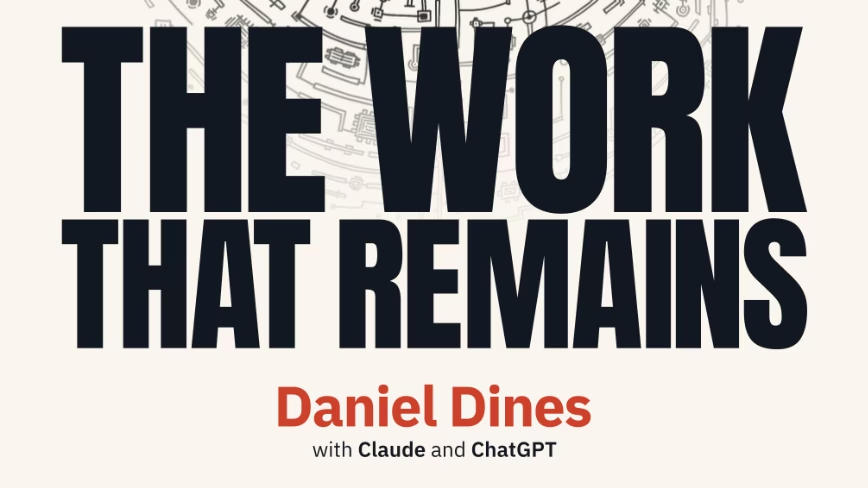
💡See how UiPath’s founder proposes combining AI agents, human judgment, and deterministic automation.
⚡ 30-Second TL;DR
What Changed
The book separates enterprise work into AI-assisted preparation, human-owned consequential decisions, and deterministic execution.
Why It Matters
The framework gives enterprise AI teams a practical division of responsibility: agents can accelerate preparation, but governance should keep humans accountable for high-impact choices. It may also encourage organizations to combine agentic systems with reliable deterministic automation instead of replacing both with unconstrained autonomy.
What To Do Next
Map one enterprise workflow into agent preparation, human approval, and deterministic execution stages, then define metrics for accuracy, escalation rate, and decision latency.
Key Points
- •The book separates enterprise work into AI-assisted preparation, human-owned consequential decisions, and deterministic execution.
- •Daniel Dines anchors the framework to a dated 2028 prediction, making it testable rather than purely speculative.
- •The proposal reflects UiPath’s automation heritage while extending it toward agentic enterprise workflows.
Weekly AI Recap
Read this week's curated digest of top AI events →
👉Related Updates


AI-curated news aggregator. All content rights belong to original publishers.
Original source: The Next Web (TNW) ↗
This is a summary, not the original. Read the source, or get the weekly briefing.
Weekly AI briefing
One email a week. Unsubscribe anytime.