DAMO LiON Finds 15 Missed Liver Cancer Cases
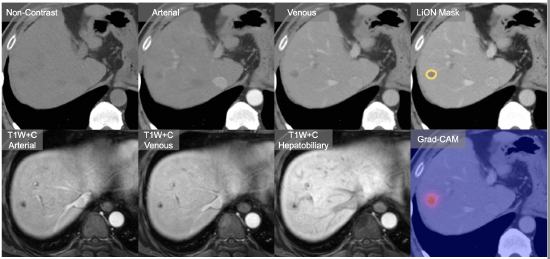
💡A real-world trial shows an AI model catching 15 liver cancers missed in routine diagnosis.
⚡ 30-Second TL;DR
What Changed
DAMO LiON analyzes CT scans to identify small liver cancer lesions.
Why It Matters
The results suggest that AI-assisted imaging could improve the detection of subtle liver cancer lesions in clinical workflows. However, practitioners should treat the model as decision support and validate performance across hospitals, scanners, populations, and clinical protocols.
What To Do Next
Read the Nature Medicine study and design a site-specific validation set to measure DAMO LiON's sensitivity, specificity, and false-positive burden before clinical integration.
Key Points
- •DAMO LiON analyzes CT scans to identify small liver cancer lesions.
- •The model found 15 previously missed malignant tumors during a two-month prospective real-world trial.
- •Most detected lesions were approximately one centimeter in size.
- •The findings were published in Nature Medicine and supported timely surgery or drug treatment.
🧠 Deep Insight
Background and context from public sources — not the original article. 7 sources cited.
🔑 Enhanced Key Takeaways
- •The LiON system demonstrated a significant workflow efficiency gain, reducing radiologist image reading time by 27% while increasing overall diagnostic sensitivity by 11.5%.
- •The clinical trial involved a large-scale cohort of 10,333 patients, providing robust statistical validation for the model's performance in real-world settings.
- •Beyond the 15 missed malignant cases, the AI's intervention triggered 37 amended medical reports and 22 escalations to multidisciplinary tumor boards.
- •The model achieved an area under the curve (AUC) of 0.952, significantly exceeding the study's pre-specified primary endpoint of 0.900.
- •Development was a global collaborative effort involving institutions including Shengjing Hospital, Zhejiang University, King’s College London, and EURECOM.
📊 Competitor Analysis▸ Show
| Feature | DAMO LiON | HelioLiver |
|---|---|---|
| Modality | CT Imaging | Blood-based (cfDNA/Protein) |
| Primary Use | Lesion detection | Early screening/Risk assessment |
| Validation | 10,333 patient trial | CLiMB trial |
| Regulatory Status | Research-only | Clinical/Commercial focus |
🛠️ Technical Deep Dive
- Model Architecture: LiON (Liver DiagnOsis Network) utilizes deep learning frameworks optimized for contrast-enhanced CT scan analysis.
- Performance Metric: Achieved an AUC of 0.952 in prospective clinical testing.
- Integration: Designed as a secondary diagnostic safety net to augment human radiologist performance rather than replace it.
- Data Processing: Specifically tuned for the detection of small, sub-centimeter malignant lesions that are frequently overlooked in standard clinical review.
🔮 Future ImplicationsAI analysis grounded in cited sources
⏳ Timeline
📎 Sources (7)
Factual claims are grounded in the sources below. Forward-looking analysis is AI-generated interpretation.
Weekly AI Recap
Read this week's curated digest of top AI events →
👉Related Updates



AI-curated news aggregator. All content rights belong to original publishers.
Original source: cnBeta (Full RSS) ↗
This is a summary, not the original. Read the source, or get the weekly briefing.
Weekly AI briefing
One email a week. Unsubscribe anytime.