Daihatsu automates internal hole inspection using AI
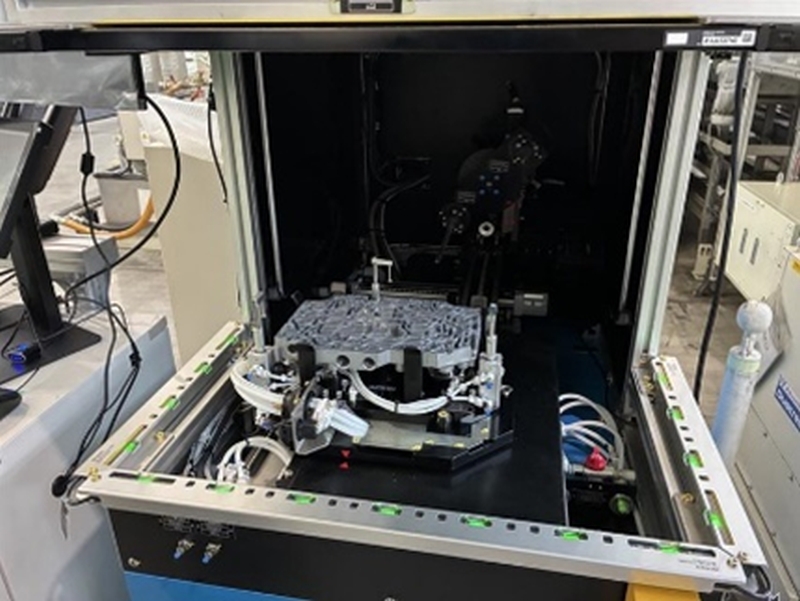
See how Daihatsu is using AI to automate complex internal visual inspections in automotive manufacturing.
30-Second TL;DR
What Changed
Automates visual inspection of internal aluminum machined holes using AI.
Why It Matters
This deployment demonstrates how traditional automotive manufacturing can leverage specialized AI startups to solve complex visual inspection challenges. It signals a shift toward automating high-precision quality control tasks that were previously reliant on manual labor.
What To Do Next
If you are building industrial AI, evaluate VRAIN Solution's approach to edge-based visual inspection for high-precision manufacturing environments.
Key Points
- •Automates visual inspection of internal aluminum machined holes using AI.
- •Co-developed with manufacturing AI startup VRAIN Solution.
- •Deployed at Daihatsu's Shiga (Ryuo) factory to enhance quality control efficiency.
Deep Insight
AI-generated analysis for this event — not the original article.
Enhanced Key Takeaways
- •The system utilizes VRAIN Solution's proprietary 'VRAIN AI' platform, which is designed to detect minute defects such as burrs, scratches, or machining errors that are difficult to identify with traditional rule-based image processing.
- •This implementation is part of Daihatsu's broader 'DX Strategy' aimed at addressing labor shortages and the aging workforce in Japanese manufacturing by reducing reliance on manual visual inspection.
- •The inspection process integrates high-resolution industrial cameras and specialized lighting setups to capture images of internal hole surfaces, which are often obstructed or poorly lit, posing a challenge for standard machine vision.
- •Daihatsu selected VRAIN Solution due to the startup's expertise in 'edge-AI' deployment, allowing the inspection system to operate with low latency directly on the factory floor without requiring constant cloud connectivity.
- •The project specifically targets the reduction of 'false positives' in quality control, a common issue in automated inspection that previously forced Daihatsu to perform secondary manual checks on parts flagged by older automated systems.
Competitor Analysis
- VRAIN Solution (Daihatsu)
- Deep Learning/Edge AI
- Keyence (Standard Vision)
- Rule-based/Traditional
- Cognex (In-Sight)
- Hybrid/Deep Learning
- VRAIN Solution (Daihatsu)
- High (Tailored for internal holes)
- Keyence (Standard Vision)
- Medium (Configurable)
- Cognex (In-Sight)
- High (Platform-based)
- VRAIN Solution (Daihatsu)
- Factory-specific integration
- Keyence (Standard Vision)
- Off-the-shelf hardware
- Cognex (In-Sight)
- Modular software/hardware
- VRAIN Solution (Daihatsu)
- Project-based (High CAPEX)
- Keyence (Standard Vision)
- Unit-based (Moderate)
- Cognex (In-Sight)
- License/Unit-based (Variable)
| Feature | VRAIN Solution (Daihatsu) | Keyence (Standard Vision) | Cognex (In-Sight) |
|---|---|---|---|
| Core Tech | Deep Learning/Edge AI | Rule-based/Traditional | Hybrid/Deep Learning |
| Customization | High (Tailored for internal holes) | Medium (Configurable) | High (Platform-based) |
| Deployment | Factory-specific integration | Off-the-shelf hardware | Modular software/hardware |
| Pricing | Project-based (High CAPEX) | Unit-based (Moderate) | License/Unit-based (Variable) |
Technical Deep Dive
- Architecture: Utilizes a Convolutional Neural Network (CNN) optimized for anomaly detection in restricted geometries (internal cylinders).
- Lighting: Employs ring-light and coaxial illumination techniques to eliminate shadows within deep-hole structures.
- Edge Computing: Runs on industrial-grade edge servers capable of real-time inference at production line speeds (cycle time < 5 seconds per part).
- Training Data: Leverages a 'few-shot learning' approach, allowing the model to achieve high accuracy with a limited set of defect samples.
Future ImplicationsAI analysis grounded in cited sources
Timeline
- 2020-04VRAIN Solution established to focus on manufacturing-specific AI.
- 2023-01Daihatsu announces comprehensive digital transformation (DX) roadmap for production facilities.
- 2024-11Initial proof-of-concept (PoC) testing for internal hole inspection begins at Shiga plant.
- 2026-05Full-scale deployment of the AI-powered inspection system at the Ryuo production line.
Weekly AI Recap
Read this week's curated digest of top AI events →
Related Updates
AI-curated news aggregator. All content rights belong to original publishers.
Original source: ITmedia AI+ (日本) ↗
This is a summary, not the original. Read the source, or get the weekly briefing.
The weekly digest
One email a week. Unsubscribe anytime.