CXMT’s Revenue Surges 716%, Challenging Memory Giants
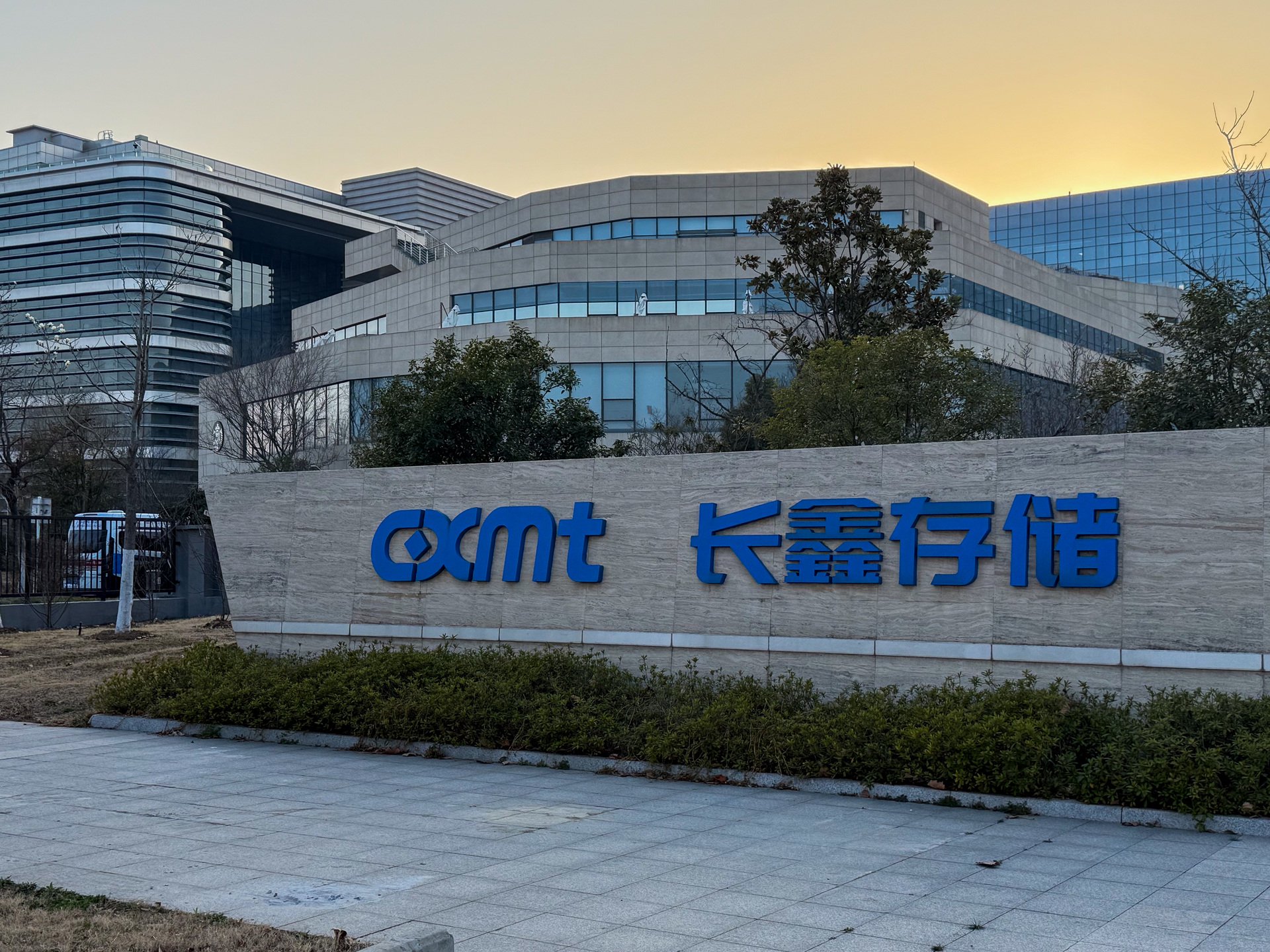
💡CXMT’s explosive growth could reshape memory sourcing for AI servers and data centers.
⚡ 30-Second TL;DR
What Changed
CXMT recorded 716% quarterly revenue growth in Q2 2026.
Why It Matters
For AI infrastructure buyers, a stronger CXMT could diversify memory sourcing and increase competition in a strategically important component market. However, revenue growth alone does not establish parity with the leading vendors in process technology, product breadth, or supply reliability.
What To Do Next
Review your AI server bill of materials and qualify at least one alternative memory supplier, including validation of capacity, availability, and lifecycle support.
Key Points
- •CXMT recorded 716% quarterly revenue growth in Q2 2026.
- •Counterpoint Research identified CXMT as the world’s fastest-growing memory manufacturer by revenue.
- •Capacity expansion and strong Chinese demand are driving the company’s momentum.
- •CXMT is increasingly positioned as a potential challenger to Samsung, SK hynix, and Micron.
🧠 Deep Insight
AI-generated analysis for this event.
🔑 Enhanced Key Takeaways
- •CXMT's growth is heavily supported by the Chinese government's 'Big Fund' (Phase III), which has prioritized domestic self-sufficiency in DRAM production to mitigate US-led export restrictions.
- •The company has successfully transitioned to 17nm and 18.5nm process nodes, allowing it to compete in the mainstream DDR4 and LPDDR4X markets previously dominated by foreign firms.
- •CXMT has begun pilot production of HBM (High Bandwidth Memory) samples, aiming to address the critical supply bottleneck for AI accelerators within the Chinese domestic market.
- •Despite rapid revenue growth, CXMT faces significant yield rate challenges compared to the mature 10nm-class (1a/1b) processes utilized by Samsung and SK hynix.
- •The company is aggressively expanding its footprint in the automotive and industrial memory sectors, where lower-tier process nodes are sufficient and less susceptible to advanced lithography sanctions.
📊 Competitor Analysis▸ Show
| Feature | CXMT | Samsung | SK hynix | Micron |
|---|---|---|---|---|
| Primary DRAM Node | 17nm / 18.5nm | 10nm-class (1b/1c) | 10nm-class (1b/1c) | 10nm-class (1b/1g) |
| HBM Capability | Pilot / Early Stage | Market Leader | Market Leader | Major Player |
| Market Focus | Domestic China / Legacy | Global / High-End | Global / High-End | Global / High-End |
| Pricing Strategy | Aggressive / Subsidized | Premium | Premium | Market-Driven |
🛠️ Technical Deep Dive
- CXMT utilizes a proprietary DRAM architecture that relies on non-EUV lithography, leveraging multi-patterning techniques to achieve 17nm density.
- The company's LPDDR4X and DDR4 products are optimized for Chinese mobile and consumer electronics ecosystems, focusing on power efficiency rather than raw clock speed.
- Recent technical reports indicate the integration of 3D-stacked DRAM research, though commercialization remains behind the 3D DRAM roadmaps of global leaders.
- CXMT's manufacturing process relies heavily on DUV (Deep Ultraviolet) immersion lithography, necessitating complex process steps to compensate for the lack of EUV access.
🔮 Future ImplicationsAI analysis grounded in cited sources
⏳ Timeline
Weekly AI Recap
Read this week's curated digest of top AI events →
👉Related Updates
AI-curated news aggregator. All content rights belong to original publishers.
Original source: cnBeta (Full RSS) ↗