CXMT Gains Ground Amid Global Memory Supply Disruptions
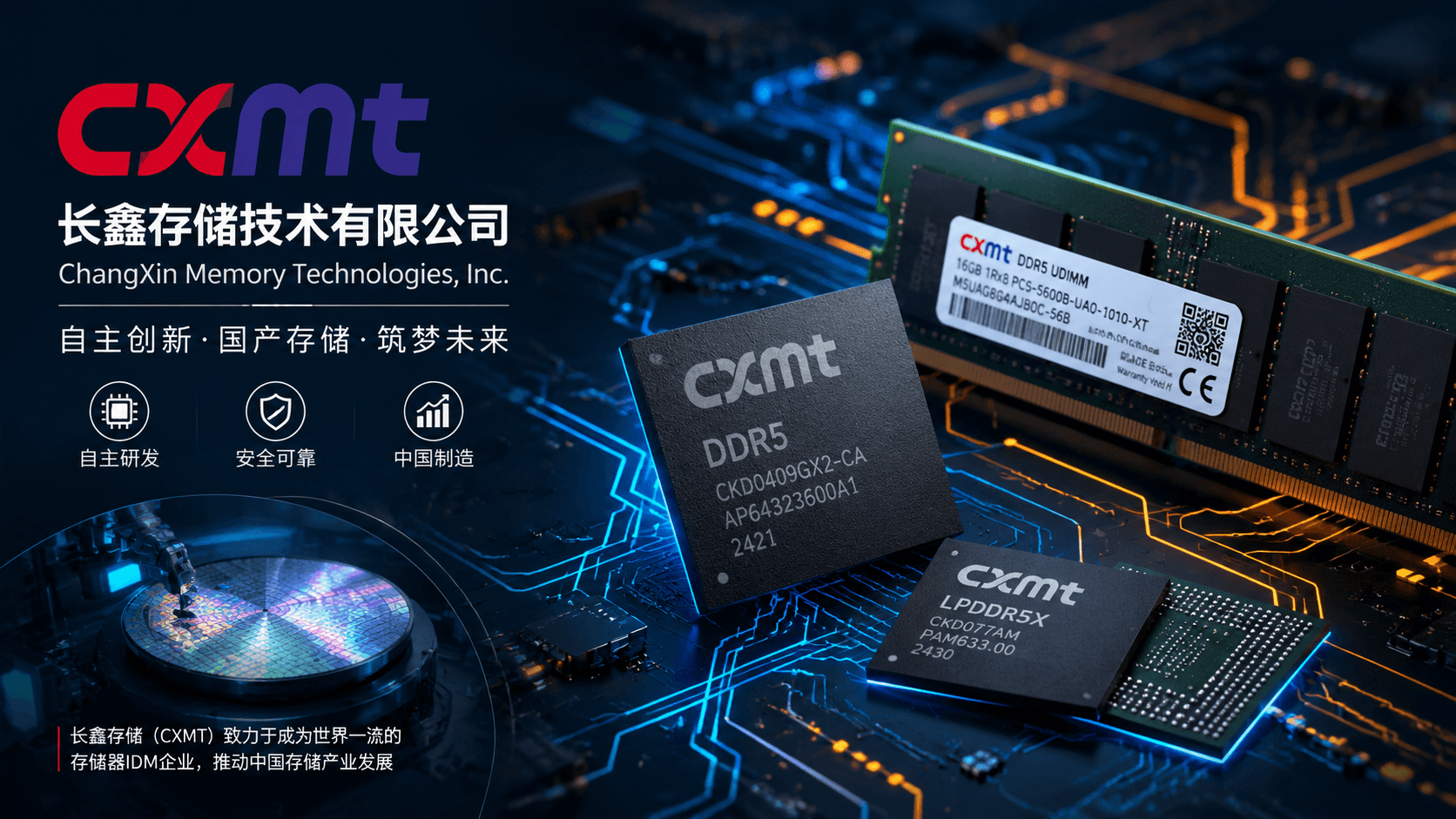
💡Understand how memory supply chain shifts could impact your AI hardware costs and infrastructure availability.
⚡ 30-Second TL;DR
What Changed
Global memory raw material supply is currently facing significant disruption.
Why It Matters
The rise of alternative memory suppliers like CXMT may influence hardware procurement strategies for AI data centers. Practitioners should monitor how these supply chain shifts affect the availability and cost of high-bandwidth memory (HBM) and DRAM.
What To Do Next
Review your hardware procurement pipeline and evaluate the risk of memory supply dependency for your upcoming GPU cluster deployments.
Key Points
- •Global memory raw material supply is currently facing significant disruption.
- •CXMT is capturing market share as a result of shifting semiconductor supply chain dynamics.
- •The disruption highlights the increasing importance of regional memory manufacturers in the global AI infrastructure stack.
🧠 Deep Insight
Background and context from public sources — not the original article. 30 sources cited.
🔑 Enhanced Key Takeaways
- •ChangXin Memory Technologies (CXMT) has rapidly increased its global DRAM market share, reaching 7.67% in Q4 2025 and 8% in Q1 2026, establishing itself as the world's fourth-largest DRAM producer behind Samsung, SK Hynix, and Micron.
- •The company achieved a significant financial turnaround, reporting Q1 2026 revenue of 50.8 billion yuan (approximately $7.1 billion) and a net profit of 33 billion yuan, effectively erasing cumulative losses since its founding, largely driven by the AI-fueled memory supercycle and rising DRAM prices.
- •CXMT has advanced its manufacturing technology to a 16nm node (G4 DRAM generation) for DDR5 chips, narrowing the technology gap with leading global rivals to approximately three years for commodity DDR5, despite ongoing U.S. export controls.
- •The strategic pivot of major global memory manufacturers (Samsung, SK Hynix, Micron) towards higher-margin High-Bandwidth Memory (HBM) for AI applications has created a supply vacuum in mainstream DDR4 and DDR5, which CXMT is actively filling with its expanding production capacity.
- •CXMT's DRAM chips are now being integrated into mainstream consumer products, such as Corsair Vengeance DDR5 memory kits sold in the Chinese market, signaling a growing acceptance and penetration into global supply chains for non-AI-specific memory.
📊 Competitor Analysis▸ Show
| Feature/Metric | CXMT (ChangXin Memory Technologies) | Samsung Electronics | SK Hynix | Micron Technology |
|---|---|---|---|---|
| Global DRAM Market Share (Q1 2026) | 8% | 38% | Second largest | Third largest |
| Latest DDR5 Process Node | 16nm (G4 DRAM, D1z equivalent) | 12-14nm (D1a/D1α, D1b/D1β) | 12-14nm (D1a/D1α, D1b/D1β) | 12-14nm (D1a/D1α, D1b/D1β) |
| Technology Gap (DDR5) | ~3 years behind leaders | Leading | Leading | Leading |
| Product Focus | Mainstream DDR4/DDR5, developing HBM3 | Prioritizing HBM for AI | Prioritizing HBM for AI | Prioritizing HBM for AI |
| DDR5 Pricing (32GB) | ~$150 (Chinese market, previously), now close to competitors | ~$300-$400 (previously) | Higher-end pricing | Higher-end pricing |
🛠️ Technical Deep Dive
- Specializes in Dynamic Random-Access Memory (DRAM) chips for mobile devices, PCs, tablets, and servers.
- Mass production on 19nm and 17nm technologies, with 16nm DRAM (G4 DRAM generation) in mass production since early 2025.
- 16Gb DDR5 chips feature a die size of 66.99 mm² and a bit density of 0.239 Gb/mm².
- G4 DRAM technology incorporates memory cells that are 20% smaller than those in its preceding G3 (18nm) node.
- Product portfolio includes DDR4, LPDDR4X, DDR5, and LPDDR5/5X.
- Developing High-Bandwidth Memory (HBM3), with initial samples shipped to clients like Huawei and plans to allocate 20% of total production to HBM3.
- Has a roadmap for DDR5 capabilities up to 8,000 MT/s across 16 Gb and 24 Gb densities.
- Utilizes proprietary processes, emphasizing domestic supply chain integration.
🔮 Future ImplicationsAI analysis grounded in cited sources
⏳ Timeline
📎 Sources (30)
Factual claims are grounded in the sources below. Forward-looking analysis is AI-generated interpretation.
- chosun.com
- phemex.com
- counterpointresearch.com
- economy.ac
- koreatimes.co.kr
- businesstimes.com.sg
- gasgoo.com
- grokipedia.com
- semiwiki.com
- tomshardware.com
- semiwiki.com
- versalogic.com
- axelliant.com
- idc.com
- everstream.ai
- youtube.com
- tomshardware.com
- wccftech.com
- 36kr.com
- wikipedia.org
- leadiq.com
- cxmt.com
- cxmt.com
- openthemagazine.com
- stellarmr.com
- wikipedia.org
- quora.com
- idtechex.com
- sedaily.com
- reddit.com
Weekly AI Recap
Read this week's curated digest of top AI events →
👉Related Updates


AI-curated news aggregator. All content rights belong to original publishers.
Original source: Pandaily ↗
This is a summary, not the original. Read the source, or get the weekly briefing.
The weekly digest
One email a week. Unsubscribe anytime.