Ctrip faces regulatory headwinds and slowing growth
Learn how regulatory scrutiny of pricing algorithms impacts the profitability of large-scale platform businesses.
30-Second TL;DR
What Changed
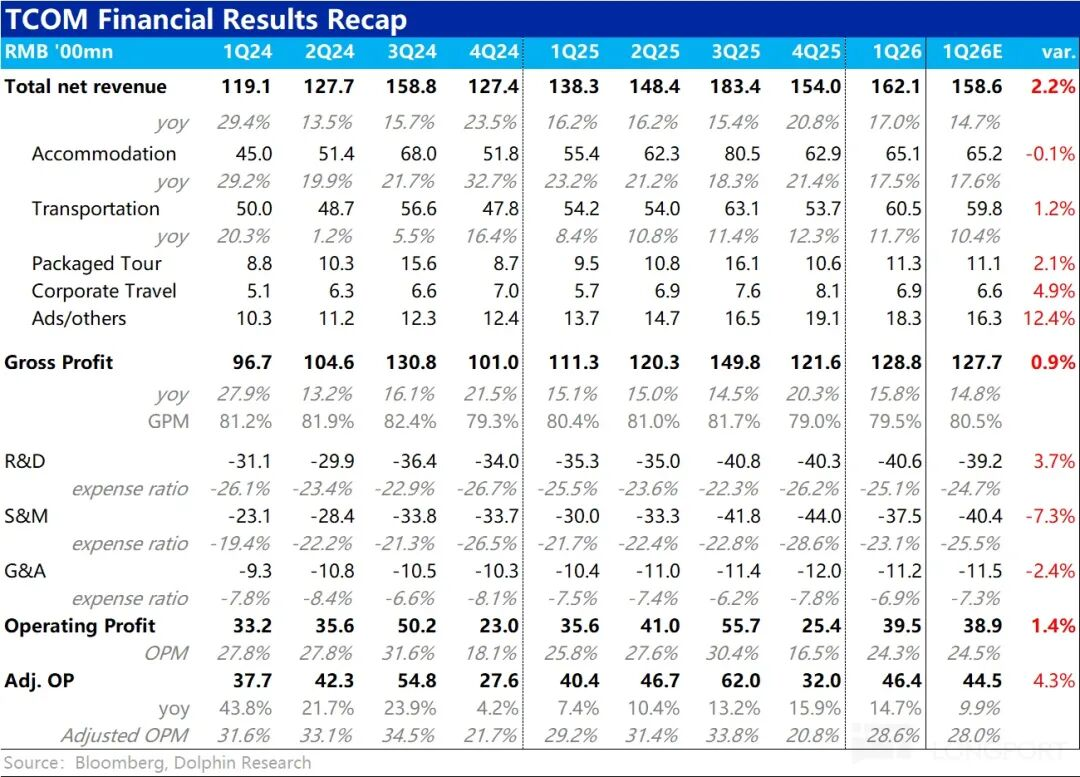
Q1 revenue grew 17%, but growth is slowing due to domestic regulatory impacts.
Why It Matters
Regulatory changes in the platform economy are forcing a shift from high-margin 'add-on' revenue models to more transparent, lower-margin service models.
What To Do Next
If you are building AI-driven pricing engines, ensure your algorithms prioritize transparency and user consent to avoid regulatory intervention.
Key Points
- •Q1 revenue grew 17%, but growth is slowing due to domestic regulatory impacts.
- •Regulatory scrutiny targets 'add-on' services like train ticket 'acceleration packages' and dynamic pricing.
- •The company faces a significant margin squeeze as it adjusts its business model to comply with new pricing rules.
- •Overseas and inbound travel remain strong growth drivers, partially offsetting domestic headwinds.
Deep Insight
AI-generated analysis for this event — not the original article.
Enhanced Key Takeaways
- •Ctrip (Trip.com Group) has increasingly pivoted toward AI-driven travel planning, launching 'TripGenie' to automate itinerary creation and reduce reliance on traditional manual booking flows.
- •The Chinese government's 'Anti-Monopoly Guidelines for the Platform Economy' have specifically targeted Ctrip's historical practice of 'big data price discrimination,' forcing the company to overhaul its algorithmic pricing engines.
- •To mitigate domestic regulatory pressure, Ctrip has accelerated its 'Trip.com' international brand expansion, which now contributes a significantly higher percentage of total transaction volume compared to pre-2023 levels.
- •The company has faced increased operational costs due to mandatory compliance upgrades in its customer service infrastructure, which now requires more transparent disclosure of service fees and cancellation policies.
- •Ctrip's recent financial reports indicate a strategic shift toward 'high-frequency, low-margin' services to maintain user retention while regulatory bodies monitor 'high-margin' bundled product sales.
Competitor Analysis
- Ctrip (Trip.com)
- Global inventory/High-end travel
- Meituan
- Local services/Budget travel
- Fliggy (Alibaba)
- Ecosystem integration/Gen-Z focus
- Ctrip (Trip.com)
- Dynamic/Premium-focused
- Meituan
- Aggressive discounting/Bundling
- Fliggy (Alibaba)
- Membership-based/Platform-driven
- Ctrip (Trip.com)
- High (Pricing/Bundling)
- Meituan
- Moderate (Market dominance)
- Fliggy (Alibaba)
- Moderate (Data privacy)
| Feature | Ctrip (Trip.com) | Meituan | Fliggy (Alibaba) |
|---|---|---|---|
| Core Strength | Global inventory/High-end travel | Local services/Budget travel | Ecosystem integration/Gen-Z focus |
| Pricing Strategy | Dynamic/Premium-focused | Aggressive discounting/Bundling | Membership-based/Platform-driven |
| Regulatory Risk | High (Pricing/Bundling) | Moderate (Market dominance) | Moderate (Data privacy) |
Technical Deep Dive
- Ctrip utilizes a proprietary large language model (LLM) architecture integrated into its 'TripGenie' assistant, optimized for real-time travel inventory retrieval and multi-modal data processing.
- The company employs a distributed microservices architecture to handle high-concurrency booking requests, utilizing a hybrid cloud strategy to manage cross-border latency.
- Pricing algorithms have been re-engineered to incorporate 'Explainable AI' (XAI) modules, ensuring that dynamic pricing adjustments can be audited by regulatory bodies for compliance with fair-trade laws.
- Data infrastructure relies on a unified data lake that aggregates user behavior, historical booking patterns, and real-time supply-side availability to power its recommendation engines.
Future ImplicationsAI analysis grounded in cited sources
Timeline
- 2017-11Ctrip acquires Skyscanner to bolster its global travel technology footprint.
- 2021-04Ctrip completes a secondary listing on the Hong Kong Stock Exchange.
- 2023-02Ctrip launches 'TripGenie,' an AI-powered travel assistant, to modernize user interaction.
- 2024-09Chinese regulators issue new guidance on platform pricing transparency, impacting Ctrip's bundled service offerings.
- 2026-03Ctrip reports Q1 earnings reflecting significant margin pressure from regulatory compliance costs.
Weekly AI Recap
Read this week's curated digest of top AI events →
AI-curated news aggregator. All content rights belong to original publishers.
Original source: 虎嗅 ↗
This is a summary, not the original. Read the source, or get the weekly briefing.
The weekly digest
One email a week. Unsubscribe anytime.