Creators leverage AI short dramas for new livelihoods
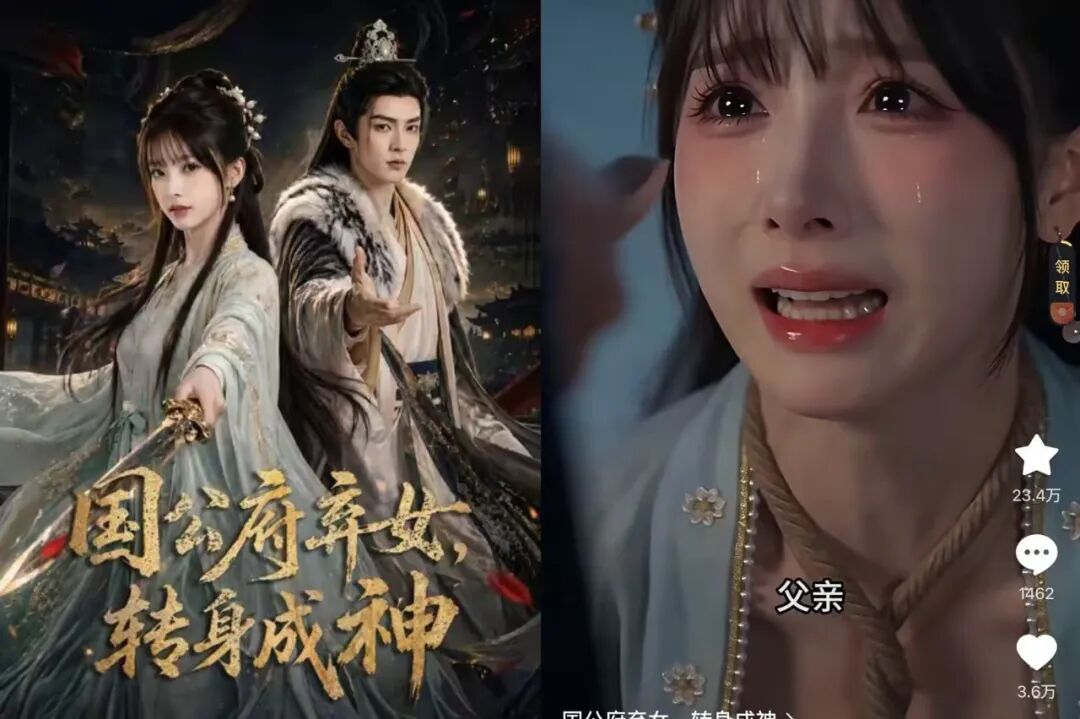
💡See how AI avatar tools are enabling a new wave of creators to build businesses with minimal overhead.
⚡ 30-Second TL;DR
What Changed
AI-generated avatars lowering barriers to content creation
Why It Matters
The rise of AI-generated content (AIGC) in the creative sector is creating new low-cost production models that challenge traditional media workflows.
What To Do Next
Experiment with HeyGen or similar avatar platforms to automate your own video content production workflow.
Key Points
- •AI-generated avatars lowering barriers to content creation
- •New economic opportunities for marginalized groups
- •Rapid growth of the AI short drama industry
🧠 Deep Insight
Background and context from public sources — not the original article. 21 sources cited.
🔑 Enhanced Key Takeaways
- •The AI short drama market, particularly in China, is experiencing explosive growth, with revenues projected to exceed 120 billion yuan ($16.5 billion) in 2026, surpassing the country's theatrical box office for the first time.
- •AI tools have drastically reduced the cost and time of short drama production, cutting timelines from months to weeks and costs by 80-90%, with some per-minute costs falling from thousands to hundreds of yuan.
- •The industry is seeing a massive output, with an average of 470 AI-generated short dramas released daily in China in January 2026, and tens of thousands of AI-native titles appearing across major platforms within a single month by March 2026.
- •Chinese short-drama platforms are actively expanding globally, targeting overseas audiences in the US, Southeast Asia, Japan, and Korea through localization efforts like translated subtitles, dubbing, and adapted storylines.
- •Government subsidies and an emerging ecosystem of AI tools and platforms in China are further accelerating the growth and global competitiveness of its AI micro-drama industry.
📊 Competitor Analysis▸ Show
While the article focuses on the broader industry, several AI avatar and video generation platforms are key enablers. Here's a comparison of some prominent ones:
| Feature/Platform | HeyGen | Synthesia | Creatify AI | Higgsfield | Crreo AI | RunwayML | Sora (OpenAI) | Kling (Kuaishou) |
|---|---|---|---|---|---|---|---|---|
| Primary Focus | Realistic video avatars, multilingual content | Enterprise training, corporate comms | Performance marketing, realistic avatars | Cinematic AI video, character consistency | Vertical episodic dramas, character continuity | Advanced AI creation tools, filmmaking | High-quality video synthesis from text | Long-duration video generation, human/animal emotions |
| Key Strengths | Best-in-class lip-sync, clean interface, translation | 230+ avatars, 140+ languages, enterprise scale | 1500+ avatars, Aurora model for realism, 75+ languages | Cinematic control, ByteDance's Seedance 2.0, multi-shot sequences | Character & scene continuity, multi-character dialogue, 9:16 export | Cinematic quality, professional motion control, consistent style | Superior physics understanding, 60-sec continuous generation, photorealism | Up to 5 min per generation, improved movement, prompt-following |
| Pricing Model | $29-119/month (compounds at volume) | $30-100+/month (enterprise-focused) | Plans start at $19/month (flat, no per-video fees) | Subscription plans (Seedance 2.0 accessible on all) | From $0 (Free) or $14/month (flat, not per-credit) | $12-76/month (credits consumed quickly) | $20-200/month (expensive, limited availability) | $5-66/month |
| Avatar Realism | Highly realistic, natural expressions/gestures | Professional AI presenters, reliable (less cutting-edge realism) | Ultra-realistic lip-sync (24 fps), full-body movements | Industry-leading character consistency | Holds character identity at project level | Cinematic quality output | Photorealistic images and videos | Improved movement, lip-syncing |
| Max Video Duration | Minutes (script-dependent) | Minutes (script-dependent) | Minutes (script-dependent) | Multi-shot sequences | Up to 15 minutes per episode | 16 seconds per generation | 60 seconds continuous generation | 5 minutes per generation |
🛠️ Technical Deep Dive
- AI Avatar Generation: AI avatars are digital human presenters trained on real actors (with consent) in controlled environments. AI models analyze facial movements, speech patterns, and body language to create a digital twin. When text is input, the model generates natural lip movements synchronized to speech, contextually appropriate facial expressions, authentic micro-expressions, eye contact, and language-specific pronunciation and accents.
- Underlying Models: Many AI avatar and video generators leverage diffusion transformers, the same architecture powering tools like Sora and Midjourney. These models learn realistic human features and motion from massive video datasets.
- Text-to-Speech & Voice Cloning: Modern systems use neural voice synthesis to capture prosody, emotion, and accent, offering numerous voice options across many languages.
- Lip-Sync & Facial Motion Models: Advanced systems match mouth movements to audio with frame-level precision and can generate full-body expressiveness, including gestures, eye contact, head tilts, and natural breathing.
- Video Generation: Tools like ByteDance's Seedance 2.0 (used by Higgsfield) provide frame-level precision for cinematic AI video. Google Veo 2 leverages advanced physics modeling and improved camera controls for lifelike visuals and smooth transitions, simulating fluid dynamics and light properties.
- Character Consistency: A significant technical challenge in AI short films is maintaining character consistency across shots. Solutions involve using image-to-video creation, detailed descriptions in prompts, reference images, and dedicated systems like Crreo AI's Character Consistency System and Reusable Character Library.
🔮 Future ImplicationsAI analysis grounded in cited sources
⏳ Timeline
📎 Sources (21)
Factual claims are grounded in the sources below. Forward-looking analysis is AI-generated interpretation.
Weekly AI Recap
Read this week's curated digest of top AI events →
👉Related Updates



AI-curated news aggregator. All content rights belong to original publishers.
Original source: 钛媒体 ↗
This is a summary, not the original. Read the source, or get the weekly briefing.
The weekly digest
One email a week. Unsubscribe anytime.