Creality IPO: Consumer 3D printing enters the next phase
💡Learn how AI-driven automation is redefining the consumer 3D printing hardware landscape.
⚡ 30-Second TL;DR
What Changed
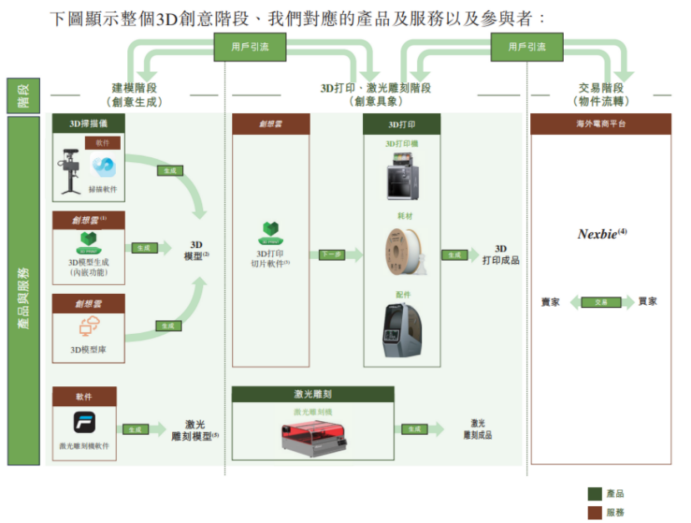
Creality is diversifying into scanners, laser engravers, and cloud platforms to build an ecosystem.
Why It Matters
The move to IPO signals the maturation of the consumer 3D printing industry, where software and AI integration are now critical competitive barriers.
What To Do Next
Evaluate how AI-driven automation can improve the 'out-of-the-box' experience of your hardware products.
Key Points
- •Creality is diversifying into scanners, laser engravers, and cloud platforms to build an ecosystem.
- •The industry is shifting from 'technical specs' to 'out-of-the-box' user experience.
- •Bambu Lab currently leads the market with a 42.7% share, challenging Creality's traditional dominance.
🧠 Deep Insight
AI-generated analysis for this event — not the original article.
🔑 Enhanced Key Takeaways
- •Creality has increasingly focused on 'Creality Cloud' as a centralized hub for model slicing, remote printing, and community interaction to increase user retention.
- •The company has expanded its manufacturing footprint beyond Shenzhen to include automated production lines aimed at reducing defect rates and lowering costs for entry-level models.
- •Creality's R&D strategy has shifted toward integrating AI-driven features, such as camera-based failure detection and automated bed leveling, to compete with Bambu Lab's 'plug-and-play' standards.
- •The IPO pursuit is reportedly driven by a need to fund aggressive expansion into the professional and industrial 3D printing segments, moving beyond the hobbyist market.
- •Creality has faced significant supply chain challenges and intellectual property litigation in international markets, which are key areas of focus for their pre-IPO financial restructuring.
📊 Competitor Analysis▸ Show
| Feature | Creality (K1/K2 Series) | Bambu Lab (X1/P1 Series) | Prusa Research (MK4) |
|---|---|---|---|
| User Experience | Improving (OS-focused) | Industry-leading (Plug-and-Play) | High (Reliability-focused) |
| Pricing | Aggressive/Budget-friendly | Premium/Mid-range | Premium |
| Ecosystem | Creality Cloud (Open) | Bambu Studio/Cloud (Closed) | PrusaSlicer/Printables (Open) |
| Speed/Performance | High (CoreXY) | High (CoreXY + AI) | Moderate (High Reliability) |
🛠️ Technical Deep Dive
- Creality's transition to Klipper-based firmware across its newer product lines allows for higher acceleration and input shaping capabilities compared to legacy Marlin-based printers.
- Implementation of AI LiDAR and camera systems for first-layer inspection and spaghetti detection is becoming standard in their flagship models to match competitor feature sets.
- Integration of multi-material systems (CFS - Creality Filament System) mirrors the AMS (Automatic Material System) architecture, utilizing a hub-based filament switching mechanism.
- Shift toward proprietary, modular hotend designs to facilitate easier maintenance and nozzle swaps for non-technical users.
🔮 Future ImplicationsAI analysis grounded in cited sources
⏳ Timeline
Weekly AI Recap
Read this week's curated digest of top AI events →
👉Related Updates


AI-curated news aggregator. All content rights belong to original publishers.
Original source: 虎嗅 ↗
This is a summary, not the original. Read the source, or get the weekly briefing.
Weekly AI briefing
One email a week. Unsubscribe anytime.