CPU-Z 2.19 Adds Ryzen AI 400 Support
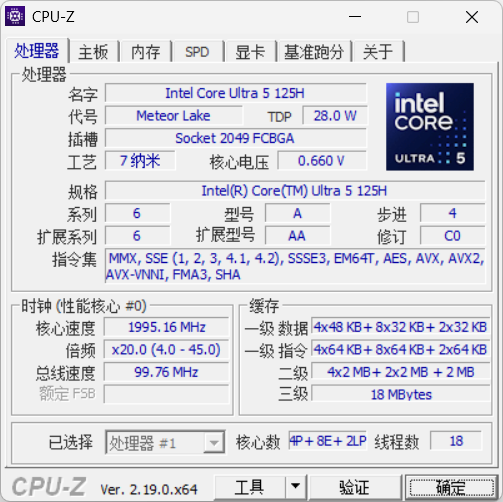
💡CPU-Z now detects Ryzen AI 400 NPUs—essential for benchmarking new AI PC hardware
⚡ 30-Second TL;DR
What Changed
Supports AMD Ryzen AI 400 series APUs
Why It Matters
Enables monitoring of new Ryzen AI APUs with NPUs for edge AI tasks. Useful for developers testing AI PCs and localized tools.
What To Do Next
Download CPU-Z 2.19 to verify Ryzen AI 400 APU specs in your AI edge device prototypes.
Key Points
- •Supports AMD Ryzen AI 400 series APUs
- •Includes Ryzen AI 7 450G/450GE and AI 5 440G/440GE/435G/435GE
- •Adds PRO commercial versions
- •Improved Chinese terminology
- •New memory type support
🧠 Deep Insight
Background and context from public sources — not the original article. 5 sources cited.
🔑 Enhanced Key Takeaways
- •Ryzen AI 400 desktop APUs use Krackan Point silicon, a scaled-down variant of the mobile Gorgon Point architecture, featuring up to 8 CPU cores (4 Zen 5 + 4 Zen 5C) and 8 RDNA 3.5 compute units, with peak clocks reaching 5.1 GHz on Zen 5 cores[3].
- •These are the first desktop processors to combine RDNA 3.5 GPU cores and XDNA 2 NPU architecture, marking a significant shift in bringing mobile AI capabilities to the AM5 socket for Copilot+ PC compliance[2][3].
- •AMD is restricting Ryzen AI 400 desktop APUs to OEM systems only—no boxed retail units—to ensure Copilot+ certification requirements are met, particularly the mandatory 16GB system memory specification[4].
- •Desktop Ryzen AI 400 models represent a performance trade-off: weaker CPU performance versus Ryzen 9000 (Granite Ridge) due to Zen 5C cores, but superior GPU performance and the first desktop NPU offering for local AI inference[2].
- •Commercial systems featuring Ryzen AI 400 desktop APUs are expected to ship in Q2 2026, with some OEM designs already in production as of the MWC 2026 announcement[2][4].
📊 Competitor Analysis▸ Show
| Feature | AMD Ryzen AI 400 (Desktop) | AMD Ryzen 9000 (Granite Ridge) | Intel Wildcat Lake (Preliminary) |
|---|---|---|---|
| CPU Architecture | Zen 5 + Zen 5C (8 cores max) | Pure Zen 5 (up to 16 cores) | Not yet officially detailed |
| GPU | RDNA 3.5 (8 CUs max) | RDNA 3.5 | Not yet officially detailed |
| NPU | XDNA 2 (50 TOPS) | None | Rumored for efficiency focus |
| Target Market | AI PCs / Copilot+ | High-performance desktop | Low-power / efficiency segment |
| Availability | OEM only (Q2 2026) | Retail boxed units | Pre-launch (CPU-Z support only) |
| Peak Clock | 5.1 GHz (Zen 5 cores) | Higher (pure Zen 5) | Unknown |
🛠️ Technical Deep Dive
- Krackan Point Die Configuration: Scaled-down variant of Gorgon Point; sacrifices 4 CPU cores and half the GPU compute units compared to mobile Gorgon Point (12 cores, 16 CUs), while retaining the 50-TOPS XDNA 2 NPU[3]
- CPU Core Split: 4+4 configuration with mixed Zen 5 (performance) and Zen 5C (efficiency) cores; Zen 5C cores operate at lower clock speeds for power efficiency[3]
- GPU Architecture: RDNA 3.5 with up to 8 compute units; delivers Radeon 860M graphics designation for integrated graphics performance[4]
- Memory Support: Desktop variants support standard DDR5 memory (unlike mobile counterparts using LPDDR5), enabling higher capacity configurations[2]
- Socket: AM5 platform compatibility, allowing integration into existing desktop motherboard ecosystems[3]
- Power Profile: Designed for power efficiency over peak performance, aligning with Copilot+ PC requirements and low-power design philosophy[4]
🔮 Future ImplicationsAI analysis grounded in cited sources
⏳ Timeline
📎 Sources (5)
Factual claims are grounded in the sources below. Forward-looking analysis is AI-generated interpretation.
- igorslab.de — Cpu Z 2 19 Adds Support for the Amd Ryzen AI 400g Ge and Mentions Intels Wildcat Lake for the First Time
- servethehome.com — Amd Launches Ryzen AI 400 Pro 400 Desktop Chips
- hothardware.com — Amd Unveils Ryzen AI 400 Apus
- Tom's Hardware — Amd Details Ryzen AI 400 Desktop with Up to 8 Cores Radeon 860m Graphics Apus Wont Be Available As Boxed Units Only in Oem Systems
- en.gamegpu.com — Vyshlo Obnovlenie Utility Cpu Z 2 19 S Podderzhkoj Novykh Chipov
Weekly AI Recap
Read this week's curated digest of top AI events →
👉Related Updates

AI-curated news aggregator. All content rights belong to original publishers.
Original source: cnBeta (Full RSS) ↗
This is a summary, not the original. Read the source, or get the weekly briefing.
Weekly AI briefing
One email a week. Unsubscribe anytime.