Coze 2.5 Agents Browse Douyin & Taverns
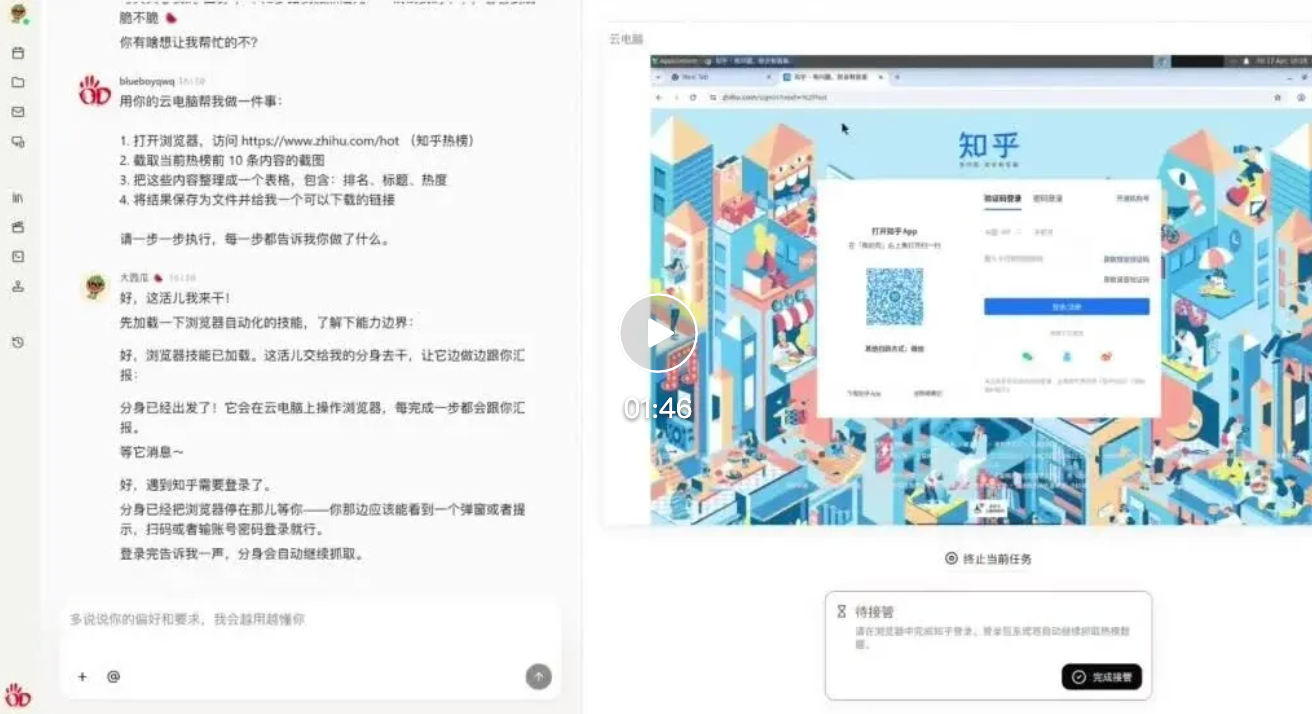
💡Coze 2.5 brings AI agents to social browsing & virtual hangs—build/test for daily automation now.
⚡ 30-Second TL;DR
What Changed
Coze 2.5 adds Douyin browsing capability for AI agents
Why It Matters
This expands Coze's agent use cases into social media and virtual leisure, potentially increasing ByteDance's AI ecosystem adoption among creators.
What To Do Next
Create a Coze agent workflow for automated Douyin content discovery via the dashboard.
Key Points
- •Coze 2.5 adds Douyin browsing capability for AI agents
- •Agents now simulate tavern visits autonomously
- •Users experience agent takeover in social activities
- •Highlights no-code agent platform evolution
🧠 Deep Insight
AI-generated analysis for this event — not the original article.
🔑 Enhanced Key Takeaways
- •Coze 2.5 utilizes a proprietary 'Agent-Browser' architecture that allows agents to bypass traditional API limitations by interacting directly with the Douyin DOM, enabling real-time content interaction rather than just metadata retrieval.
- •The 'tavern visit' functionality is powered by a new multi-modal integration layer that maps physical location data to digital service interfaces, allowing agents to handle reservation logic and social check-ins autonomously.
- •ByteDance has implemented a 'Human-in-the-Loop' (HITL) verification protocol for Coze 2.5, requiring user authorization tokens for every transaction or social interaction initiated by an agent to mitigate privacy and safety risks.
📊 Competitor Analysis▸ Show
| Feature | Coze 2.5 | Dify | LangChain (Cloud) |
|---|---|---|---|
| Platform Focus | Consumer/Social Automation | Enterprise/Workflow | Developer/Framework |
| Browsing Capability | Native Douyin/Social Integration | General Web Scraping | Custom Implementation |
| Pricing Model | Freemium/Token-based | Open Source/Cloud SaaS | Usage-based |
| Ease of Use | No-Code/Low-Code | Low-Code | Code-First |
🛠️ Technical Deep Dive
- •Agent-Browser Architecture: Employs a headless browser engine optimized for mobile-web rendering, specifically tuned for Douyin's dynamic content loading patterns.
- •Contextual Memory Layer: Uses a vector database to store user preferences and social history, enabling agents to simulate 'personal' behavior during tavern visits.
- •Multi-Modal Action Space: Agents are trained on a specialized action-space model that translates natural language intent into specific UI interaction sequences (clicks, scrolls, text input) within the target applications.
- •Security Sandbox: All autonomous actions are executed within a containerized environment that restricts agent access to sensitive system files and enforces strict OAuth2 token scoping.
🔮 Future ImplicationsAI analysis grounded in cited sources
⏳ Timeline
Weekly AI Recap
Read this week's curated digest of top AI events →
👉Related Updates



AI-curated news aggregator. All content rights belong to original publishers.
Original source: 钛媒体 ↗
This is a summary, not the original. Read the source, or get the weekly briefing.
The weekly digest
One email a week. Unsubscribe anytime.