Control AI Agents with Temporal Policies
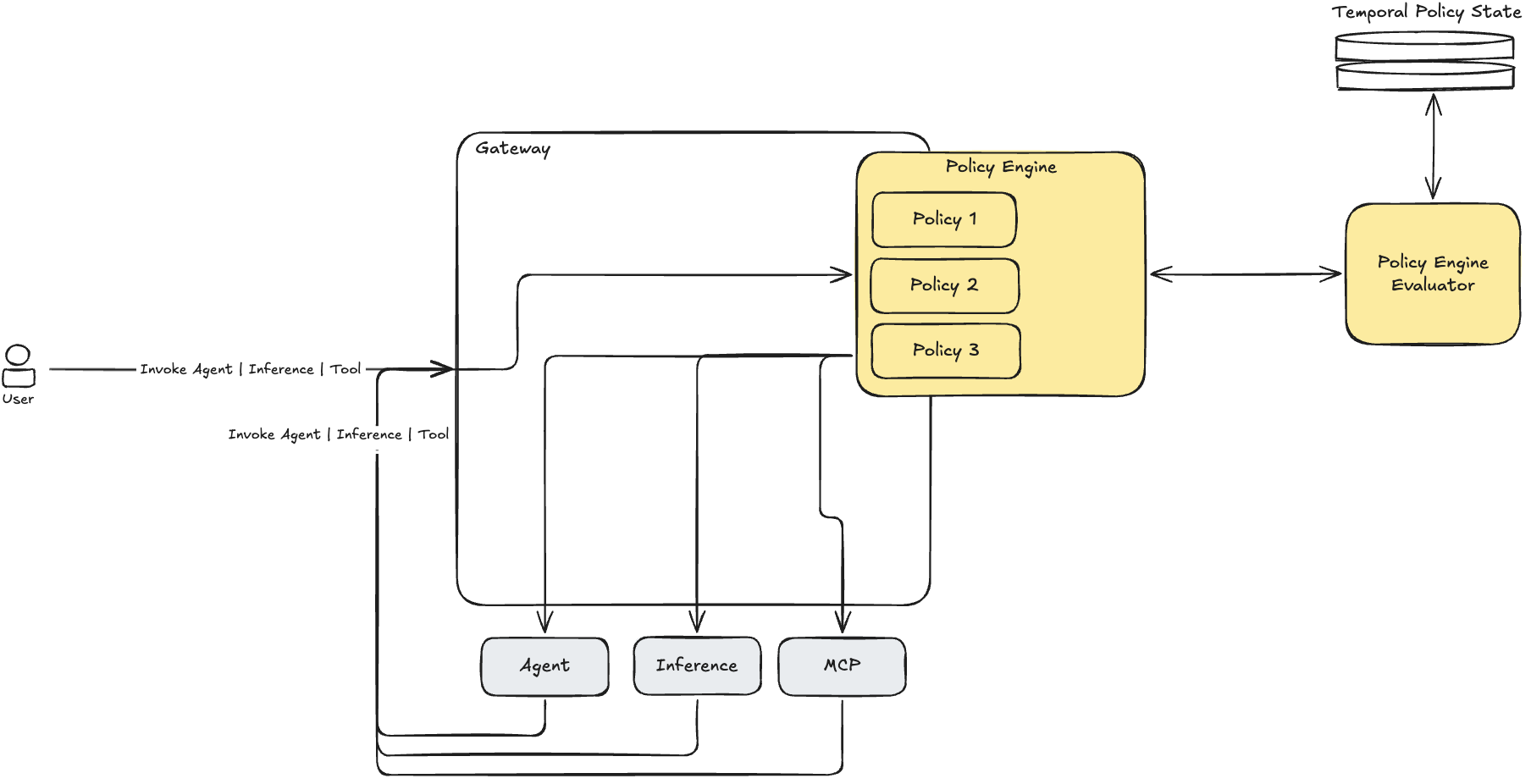
Learn how to make AI agents respect workflow order, spending limits, and human approval gates.
30-Second TL;DR
What Changed
Temporal policies evaluate authorization using an agent’s prior session history.
Why It Matters
This gives developers a way to apply finer-grained governance to stateful AI agents rather than relying only on one-time permission checks. It may reduce operational, financial, and compliance risks in agentic workflows.
What To Do Next
Prototype a high-risk workflow in Amazon Bedrock AgentCore and configure temporal policies for action sequencing, spending limits, and human approval checkpoints.
Key Points
- •Temporal policies evaluate authorization using an agent’s prior session history.
- •Policies can enforce required workflow sequencing before an agent performs later actions.
- •Controls support data-fabrication prevention, financial exposure caps, and human approval for high-value operations.
Deep Insight
AI-generated analysis for this event — not the original article.
Enhanced Key Takeaways
- •Temporal policies integrate with Amazon Bedrock's existing Guardrails, allowing developers to define state-dependent constraints using a declarative policy language rather than hard-coded application logic.
- •The system utilizes a vector-based session state store that tracks agent trajectory, enabling real-time evaluation of 'if-then' conditions based on previous tool-use outcomes.
- •Integration with AWS IAM allows temporal policies to inherit identity-based permissions, creating a dual-layer security model that combines user identity with session-specific behavioral context.
- •The feature includes a 'Policy Simulator' tool in the Bedrock console, enabling developers to test agent trajectories against temporal constraints before deploying to production environments.
- •Temporal policies support cross-session state persistence, allowing agents to maintain authorization context even if a session is interrupted or resumed across different client instances.
Competitor Analysis
- Amazon Bedrock AgentCore (Temporal)
- Managed, declarative policies
- LangChain (LangGraph)
- Code-based state machines
- Microsoft Azure AI Agent Service
- Managed, orchestration-focused
- Amazon Bedrock AgentCore (Temporal)
- Native IAM & Temporal integration
- LangChain (LangGraph)
- Custom implementation required
- Microsoft Azure AI Agent Service
- Entra ID & Role-based access
- Amazon Bedrock AgentCore (Temporal)
- Built-in policy triggers
- LangChain (LangGraph)
- Manual interrupt/resume logic
- Microsoft Azure AI Agent Service
- Integrated approval workflows
- Amazon Bedrock AgentCore (Temporal)
- Per-request/token (Bedrock)
- LangChain (LangGraph)
- Open Source (Self-hosted)
- Microsoft Azure AI Agent Service
- Consumption-based (Azure)
| Feature | Amazon Bedrock AgentCore (Temporal) | LangChain (LangGraph) | Microsoft Azure AI Agent Service |
|---|---|---|---|
| State Management | Managed, declarative policies | Code-based state machines | Managed, orchestration-focused |
| Authorization | Native IAM & Temporal integration | Custom implementation required | Entra ID & Role-based access |
| Human-in-the-loop | Built-in policy triggers | Manual interrupt/resume logic | Integrated approval workflows |
| Pricing | Per-request/token (Bedrock) | Open Source (Self-hosted) | Consumption-based (Azure) |
Technical Deep Dive
- Temporal policies operate as a middleware layer within the Bedrock Agent runtime, intercepting tool-call requests before execution.
- The architecture employs a state-tracking buffer that serializes the agent's execution graph into a lightweight JSON schema for policy evaluation.
- Policy evaluation is performed by a dedicated authorization engine that runs in parallel with the LLM inference, minimizing latency impact.
- Developers define policies using a subset of Cedar policy language, which is optimized for high-performance, attribute-based access control (ABAC).
- The system supports state-reset triggers, allowing developers to clear session history automatically upon reaching specific terminal states or time-to-live (TTL) thresholds.
Future ImplicationsAI analysis grounded in cited sources
Timeline
- 2023-09Amazon Bedrock becomes generally available with initial foundation model support.
- 2023-11AWS announces Agents for Amazon Bedrock to enable multi-step task automation.
- 2024-05Introduction of Guardrails for Amazon Bedrock to filter harmful content.
- 2025-02AWS expands Bedrock Agent capabilities with enhanced memory and long-term context.
- 2026-08Launch of AgentCore with Temporal Policies for stateful authorization.
Weekly AI Recap
Read this week's curated digest of top AI events →
Related Updates

AI-curated news aggregator. All content rights belong to original publishers.
Original source: AWS Machine Learning Blog ↗
This is a summary, not the original. Read the source, or get the weekly briefing.
The weekly digest
One email a week. Unsubscribe anytime.