Control AI Traffic with AgentCore Rate Limits
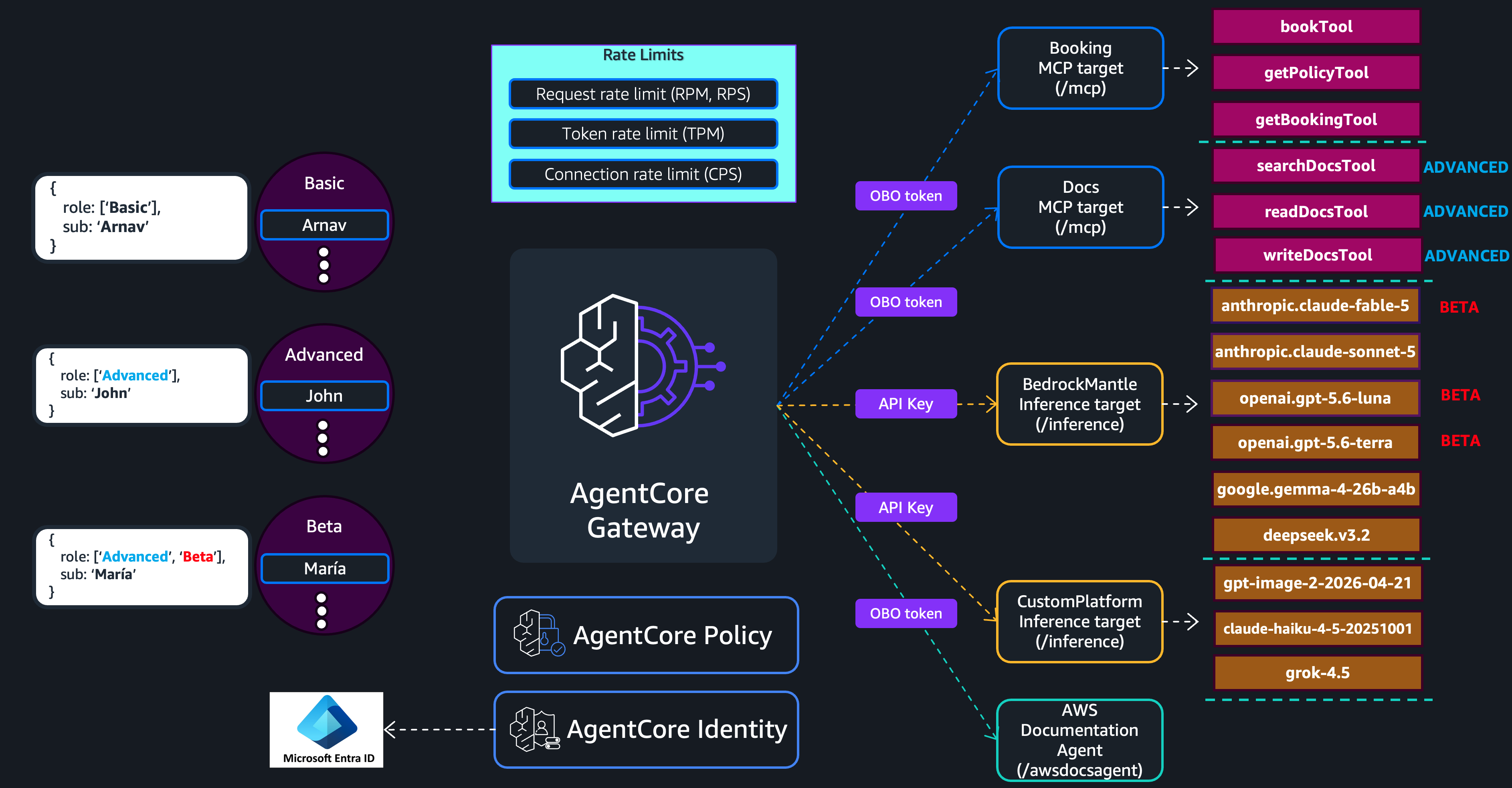
Protect shared AI agents and downstream models from traffic spikes with granular gateway controls.
30-Second TL;DR
What Changed
Set request, token, and connection limits for AI traffic.
Why It Matters
These controls can improve reliability and cost governance for agent-based applications that share downstream AI resources. They also give enterprise teams a way to isolate noisy users or targets before traffic spikes degrade service.
What To Do Next
Review your Amazon Bedrock AgentCore Gateway routes and define per-user request, token, and connection quotas before deploying shared agents to production.
Key Points
- •Set request, token, and connection limits for AI traffic.
- •Scope controls per user or target using JWT claims.
- •Use IAM identities to protect downstream models, tools, and agents from traffic spikes.
Deep Insight
AI-generated analysis for this event — not the original article.
Enhanced Key Takeaways
- •AgentCore Gateway integrates directly with Amazon CloudWatch to provide real-time observability and alerting for rate-limit violations.
- •The implementation utilizes a token-bucket algorithm to manage burst traffic while maintaining steady-state throughput for downstream AI agents.
- •Support for multi-tenant isolation allows enterprises to enforce distinct rate policies for internal departments versus external API consumers.
- •The feature includes a 'soft-limit' mode that logs violations for auditing purposes without blocking traffic, facilitating policy tuning before enforcement.
- •Integration with AWS PrivateLink ensures that rate-limited traffic remains within the AWS network, reducing latency and enhancing security for sensitive model interactions.
Competitor Analysis
- AgentCore Gateway
- Per-user/token/connection
- Google Cloud Vertex AI Gateway
- Per-project/API key
- Azure AI Gateway
- Per-subscription/workspace
- AgentCore Gateway
- IAM & JWT
- Google Cloud Vertex AI Gateway
- IAM & Service Accounts
- Azure AI Gateway
- Entra ID & API Keys
- AgentCore Gateway
- Token-bucket
- Google Cloud Vertex AI Gateway
- Quota-based
- Azure AI Gateway
- Token-based
- AgentCore Gateway
- Pay-per-request
- Google Cloud Vertex AI Gateway
- Included in Vertex pricing
- Azure AI Gateway
- Included in AI Studio
| Feature | AgentCore Gateway | Google Cloud Vertex AI Gateway | Azure AI Gateway |
|---|---|---|---|
| Rate Limiting | Per-user/token/connection | Per-project/API key | Per-subscription/workspace |
| Identity Integration | IAM & JWT | IAM & Service Accounts | Entra ID & API Keys |
| Traffic Shaping | Token-bucket | Quota-based | Token-based |
| Pricing | Pay-per-request | Included in Vertex pricing | Included in AI Studio |
Technical Deep Dive
- Architecture: Operates as a sidecar proxy or managed gateway layer within the Amazon Bedrock ecosystem.
- Enforcement Mechanism: Uses distributed state management to synchronize rate limits across multiple availability zones.
- JWT Validation: Supports OIDC-compliant identity providers for claim-based rate limiting.
- Throughput Control: Configurable at the granularity of requests per second (RPS) and tokens per minute (TPM).
- IAM Policy Integration: Allows fine-grained access control via resource-based policies attached to specific Bedrock agents.
Future ImplicationsAI analysis grounded in cited sources
Timeline
- 2024-09Amazon Bedrock introduces initial support for managed agents.
- 2025-03Launch of AgentCore framework for centralized agent orchestration.
- 2025-11Integration of JWT-based authentication for Bedrock API endpoints.
- 2026-05Preview release of traffic management controls for Bedrock agents.
- 2026-08General availability of configurable rate limits in AgentCore Gateway.
Weekly AI Recap
Read this week's curated digest of top AI events →
Related Updates

AI-curated news aggregator. All content rights belong to original publishers.
Original source: AWS Machine Learning Blog ↗
This is a summary, not the original. Read the source, or get the weekly briefing.
The weekly digest
One email a week. Unsubscribe anytime.