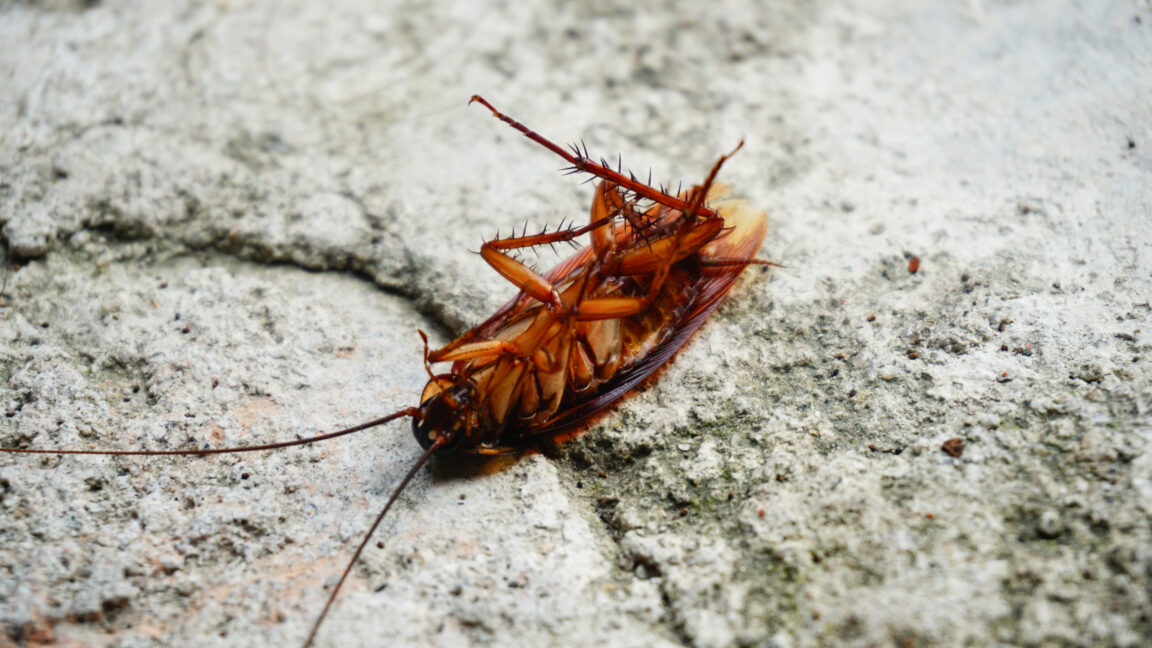
Cockroaches harbor extensive bacterial genome fragments
💡Understanding horizontal gene transfer is critical for researchers building biological models and synthetic DNA tools.
⚡ 30-Second TL;DR
What Changed
Cockroaches exhibit significant horizontal gene transfer from bacteria
Why It Matters
This discovery provides new insights into evolutionary biology and genetic adaptation, which could influence synthetic biology and genomic modeling approaches.
What To Do Next
Review your bioinformatics pipelines to ensure they account for horizontal gene transfer when analyzing non-model organism genomes.
Key Points
- •Cockroaches exhibit significant horizontal gene transfer from bacteria
- •Bacterial genome fragments are integrated into host DNA
- •Challenges traditional views on genetic isolation in complex organisms
🧠 Deep Insight
Background and context from public sources — not the original article. 23 sources cited.
🔑 Enhanced Key Takeaways
- •A systematic analysis of 218 insect genomes revealed 1,410 genes acquired through 741 distinct horizontal gene transfer (HGT) events from non-metazoan donors, indicating HGT is widespread and a significant evolutionary force in insects.
- •Bacterial endosymbionts, particularly Wolbachia, are a primary source of horizontally transferred genes to insects, with instances of nearly entire bacterial genomes integrating into host chromosomes, such as in the fruit fly Drosophila ananassae.
- •Horizontally acquired genes in insects can confer adaptive advantages, contributing to diverse traits like male courtship behavior in lepidopterans, detoxification, defense mechanisms, pigmentation, and metabolic innovations.
- •The integration of bacterial DNA can lead to substantial genomic restructuring, exemplified by the transfer of a full Wolbachia genome into the Drosophila ananassae fruit fly, which expanded chromosome 4 by approximately 20%.
- •While HGT has long been recognized in prokaryotes, its prevalence and adaptive significance in eukaryotes, especially complex multicellular organisms like insects, have been historically underestimated but are now increasingly acknowledged as a regular occurrence throughout evolutionary history.
🛠️ Technical Deep Dive
- Mechanisms of HGT in Prokaryotes: Well-understood mechanisms include transformation (uptake of free DNA), transduction (phage-mediated transfer), and conjugation (direct transfer via cell-to-cell contact). Integrated DNA can be incorporated into chromosomes via homologous recombination.
- Mechanisms in Eukaryotes: While less understood, endosymbiosis (e.g., the origin of mitochondria and plastids) is considered a form of large-scale HGT. Unicellular and early developmental stages are hypothesized as critical entry points for foreign genes into multicellular eukaryotes.
- Role of Transposable Elements (TEs): In animals and plants, HGT frequently involves transposable elements, with DNA transposons showing higher transfer rates than retrotransposons.
- Endosymbiont-Mediated Transfer: Intracellular, maternally inherited bacteria like Wolbachia are considered ideal donors for heritable HGT to eukaryotic genomes due to their intimate association with host cells.
- Detection and Validation: Methods include sequence similarity searches (e.g., BLAST), functional analysis through experimental gene manipulation (e.g., CRISPR-Cas9 gene editing to observe phenotypic effects), identification of HGT-associated genetic elements (e.g., plasmids, transposons), comparative genomics, and phylogenetic analyses to detect incongruences in evolutionary trees.
🔮 Future ImplicationsAI analysis grounded in cited sources
⏳ Timeline
📎 Sources (23)
Factual claims are grounded in the sources below. Forward-looking analysis is AI-generated interpretation.
Weekly AI Recap
Read this week's curated digest of top AI events →
👉Related Updates
AI-curated news aggregator. All content rights belong to original publishers.
Original source: Ars Technica ↗
This is a summary, not the original. Read the source, or get the weekly briefing.
Weekly AI briefing
One email a week. Unsubscribe anytime.