Climate Change Drives Invasive Species Northward
Learn how climate-driven ecological shifts are creating new demand for AI-powered predictive environmental monitoring.
30-Second TL;DR
What Changed
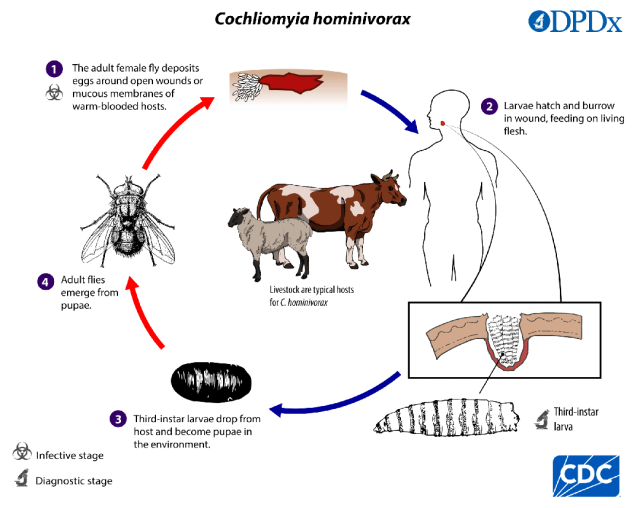
Invasive species like the New World screwworm are expanding into North America due to warmer winters.
Why It Matters
This trend suggests that AI-driven predictive modeling for ecological and agricultural monitoring will become increasingly critical to manage the northward shift of biological threats.
What To Do Next
If working in AgTech or environmental AI, integrate climate-trend datasets into your predictive models to better forecast invasive species migration patterns.
Key Points
- •Invasive species like the New World screwworm are expanding into North America due to warmer winters.
- •Forest pests like the southern pine beetle are moving into northern states and Canada, threatening timber industries.
- •Traditional climate boundaries (like the Qinling-Huaihe line in China) are becoming less effective at preventing pest migration.
- •Climate change is forcing a rethink of ecological management as traditional 'winter-kill' cycles fail to contain infestations.
Deep Insight
AI-generated analysis for this event — not the original article.
Enhanced Key Takeaways
- •The 'thermal niche' expansion is being accelerated by the 'urban heat island' effect, which creates microclimates that allow tropical pests to survive in otherwise temperate cities.
- •Phenological mismatch is occurring, where invasive pests emerge earlier in the spring than their natural predators, leading to unchecked population explosions.
- •Genetic adaptation is being observed in some invasive species, such as the southern pine beetle, which is evolving increased cold tolerance to survive northern winters.
- •International trade routes and increased shipping speeds are acting as secondary vectors, working in tandem with climate change to introduce pests into new latitudes faster than natural migration.
- •Economic modeling suggests that the northward migration of pests could reduce global crop yields by an additional 10-25% by 2050 if current warming trends continue.
Technical Deep Dive
- Species Distribution Models (SDMs) like MaxEnt are being utilized to predict habitat suitability by integrating bioclimatic variables such as mean temperature of the coldest quarter and precipitation seasonality.
- Genomic sequencing is being employed to track the 'invasion front' of pests, identifying specific alleles associated with cold-hardiness and rapid dispersal.
- Satellite remote sensing (NDVI and EVI indices) is used to monitor forest health and detect early-stage infestations of bark beetles before visible canopy damage occurs.
- Agent-based modeling (ABM) is used to simulate the interaction between climate-driven migration patterns and human-mediated transport networks.
Future ImplicationsAI analysis grounded in cited sources
Timeline
- 2015-06Southern pine beetle confirmed in New Jersey, marking a significant northward expansion from its historical range.
- 2019-11IPBES Global Assessment Report highlights climate change as one of the top five drivers of invasive species spread.
- 2023-09Publication of major study confirming the role of warmer winters in the survival of tropical pests in temperate North American zones.
Weekly AI Recap
Read this week's curated digest of top AI events →
AI-curated news aggregator. All content rights belong to original publishers.
Original source: 虎嗅 ↗
This is a summary, not the original. Read the source, or get the weekly briefing.
The weekly digest
One email a week. Unsubscribe anytime.