CLI Revives for AI-Human Harmony
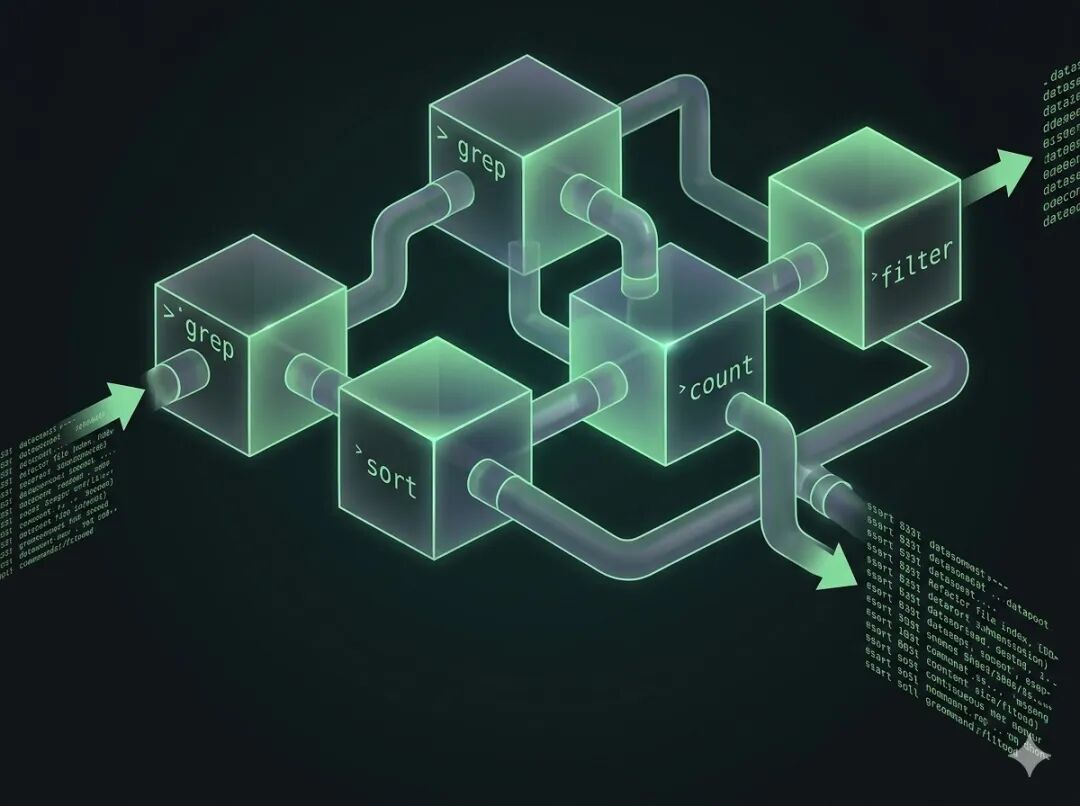
💡CLI's AI revival unlocks composable agent workflows beyond GUI limits.
⚡ 30-Second TL;DR
What Changed
CLI enables composability via Unix-like pipes for infinite task combinations.
Why It Matters
CLI empowers developers to orchestrate AI agents fluidly, boosting productivity in uncertain AI workflows over predefined GUIs.
What To Do Next
Test Claude's code interpreter with CLI refactoring commands for your next project.
Key Points
- •CLI enables composability via Unix-like pipes for infinite task combinations.
- •Programmability turns manual commands into reusable scripts.
- •Text as universal protocol allows seamless tool interoperability.
- •Historical GUI-CLI pendulum swings back with AI agents demanding flexibility.
🧠 Deep Insight
AI-generated analysis for this event — not the original article.
🔑 Enhanced Key Takeaways
- •The resurgence of CLI is driven by the 'Agentic Workflow' paradigm, where Large Language Models (LLMs) act as autonomous operators that prefer structured, deterministic text outputs over the non-deterministic, pixel-based interactions required by GUIs.
- •Modern CLI tools for AI, such as Claude Code or GitHub Copilot CLI, are increasingly incorporating 'Human-in-the-loop' (HITL) feedback mechanisms, allowing agents to request user confirmation for high-stakes terminal commands before execution.
- •The shift toward CLI-centric AI development is reducing the 'context window tax' by allowing agents to interact directly with file systems and shell environments rather than requiring developers to copy-paste code snippets into chat interfaces.
📊 Competitor Analysis▸ Show
| Feature | Claude Code | GitHub Copilot CLI | Cursor (Terminal) |
|---|---|---|---|
| Primary Interface | CLI-native agent | CLI extension | IDE-integrated terminal |
| Execution Model | Autonomous agentic loops | Command suggestion/execution | Context-aware terminal chat |
| Pricing | Usage-based (API) | Subscription (Pro/Business) | Subscription (Pro/Business) |
| Benchmarking | High autonomy in file ops | High accuracy in shell syntax | High integration with IDE state |
🛠️ Technical Deep Dive
- •Agentic CLI tools utilize 'System Prompts' that define a restricted set of allowed shell commands (e.g., ls, grep, sed, git) to prevent arbitrary code execution (ACE) risks.
- •Implementation often involves a 'ReAct' (Reasoning + Acting) loop where the model outputs a thought process, followed by a specific command, which is then executed in a sandboxed container or isolated shell environment.
- •State management is handled via persistent session logs that allow the AI to maintain context across multiple terminal commands, effectively treating the shell history as a long-term memory buffer.
- •Integration with Language Server Protocols (LSP) allows these CLI agents to perform semantic code analysis (e.g., finding function definitions) before executing terminal-based refactoring commands.
🔮 Future ImplicationsAI analysis grounded in cited sources
⏳ Timeline
Weekly AI Recap
Read this week's curated digest of top AI events →
👉Related Updates




AI-curated news aggregator. All content rights belong to original publishers.
Original source: 虎嗅 ↗
This is a summary, not the original. Read the source, or get the weekly briefing.
The weekly digest
One email a week. Unsubscribe anytime.