ClawPhone Launches First OpenClaw Android App
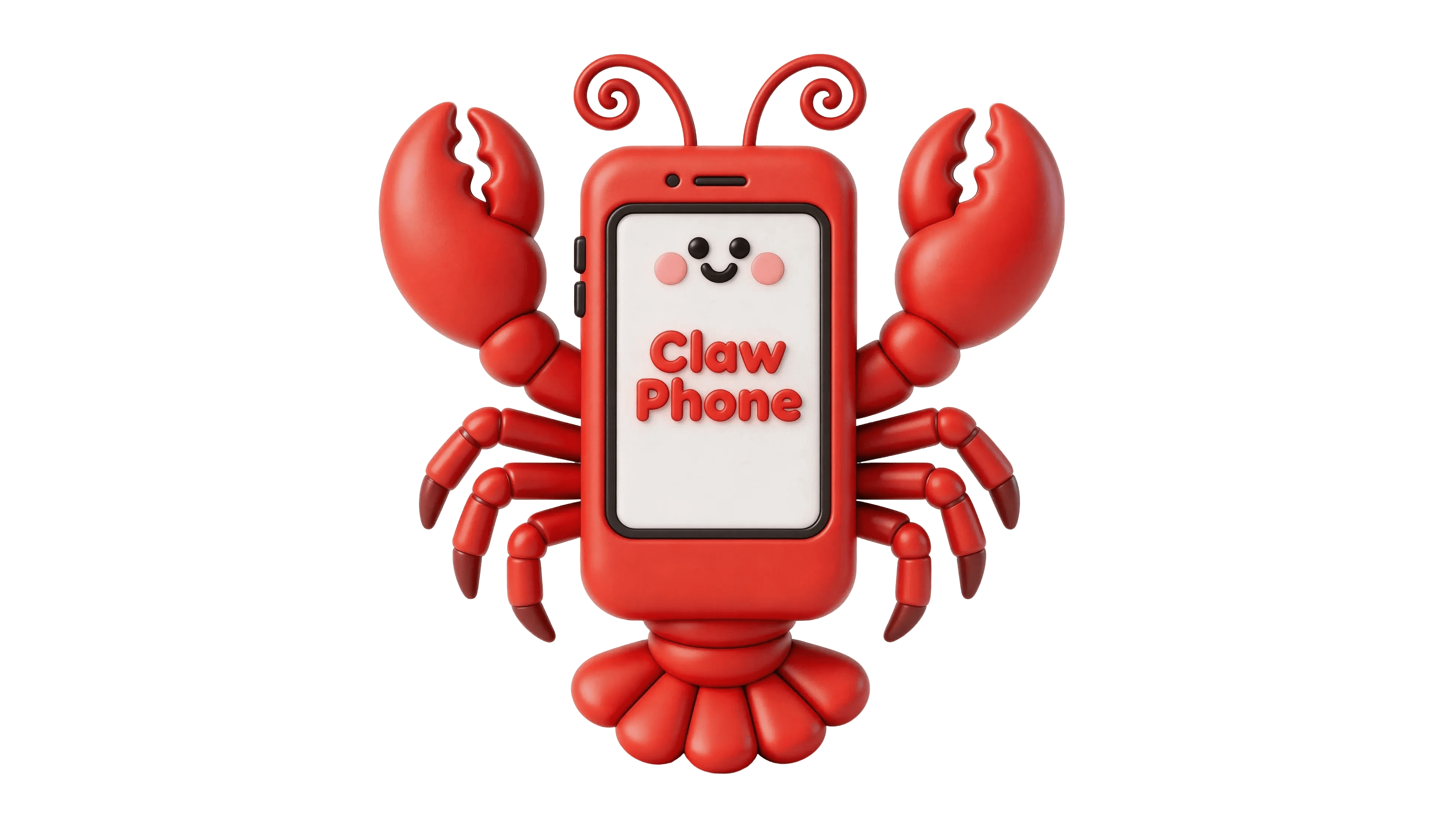
💡Rootless AI agents on Android via first OpenClaw app—build mobile automations now.
⚡ 30-Second TL;DR
What Changed
First native Android app for OpenClaw framework
Why It Matters
This launch lowers barriers for mobile AI agent development, potentially accelerating adoption in consumer apps and IoT. It positions OpenClaw as a key player in accessible AI frameworks.
What To Do Next
Install ClawPhone on an Android device and test OpenClaw's cross-app automation features.
Key Points
- •First native Android app for OpenClaw framework
- •Enables autonomous AI agents on smartphones
- •Supports cross-app automation and smart home control
- •Features emotionally aware interactions
- •Operates without OS root access
🧠 Deep Insight
AI-generated analysis for this event — not the original article.
🔑 Enhanced Key Takeaways
- •The OpenClaw framework utilizes a proprietary 'UI-Semantic Mapping' layer that allows the AI to interpret screen elements as functional nodes without needing direct API access to third-party applications.
- •ClawPhone leverages on-device Small Language Models (SLMs) optimized for the NPU (Neural Processing Unit) of modern Snapdragon and Dimensity chipsets to ensure low-latency inference while maintaining user privacy.
- •The application implements a 'Human-in-the-Loop' permission architecture, requiring explicit user authorization for any action that modifies persistent data or triggers financial transactions across integrated apps.
📊 Competitor Analysis▸ Show
| Feature | ClawPhone (OpenClaw) | Google Assistant/Gemini | Apple Intelligence (Siri) |
|---|---|---|---|
| Cross-App Control | Deep (UI-level interaction) | Shallow (API-dependent) | Shallow (API-dependent) |
| Root Access | Not Required | Not Required | Not Required |
| Model Hosting | On-device (SLM) | Hybrid (Cloud-heavy) | Hybrid (On-device/Private Cloud) |
| Pricing | Freemium | Free (Integrated) | Free (Integrated) |
🛠️ Technical Deep Dive
- UI-Semantic Mapping Engine: Uses computer vision to parse screen layouts into a DOM-like structure, enabling the agent to 'see' buttons and text fields as actionable objects.
- On-Device Inference: Utilizes quantized 3B-parameter models specifically fine-tuned for mobile UI navigation tasks.
- Accessibility Service Integration: Operates via the Android Accessibility API to perform simulated touch and input events, bypassing the need for root access.
- Emotionally Aware Layer: Employs a lightweight sentiment analysis module that adjusts the agent's response tone based on user input patterns and historical interaction context.
🔮 Future ImplicationsAI analysis grounded in cited sources
⏳ Timeline
Weekly AI Recap
Read this week's curated digest of top AI events →
👉Related Updates


AI-curated news aggregator. All content rights belong to original publishers.
Original source: Pandaily ↗
This is a summary, not the original. Read the source, or get the weekly briefing.
The weekly digest
One email a week. Unsubscribe anytime.