Chronic stress impairs sperm via gut microbiota axis
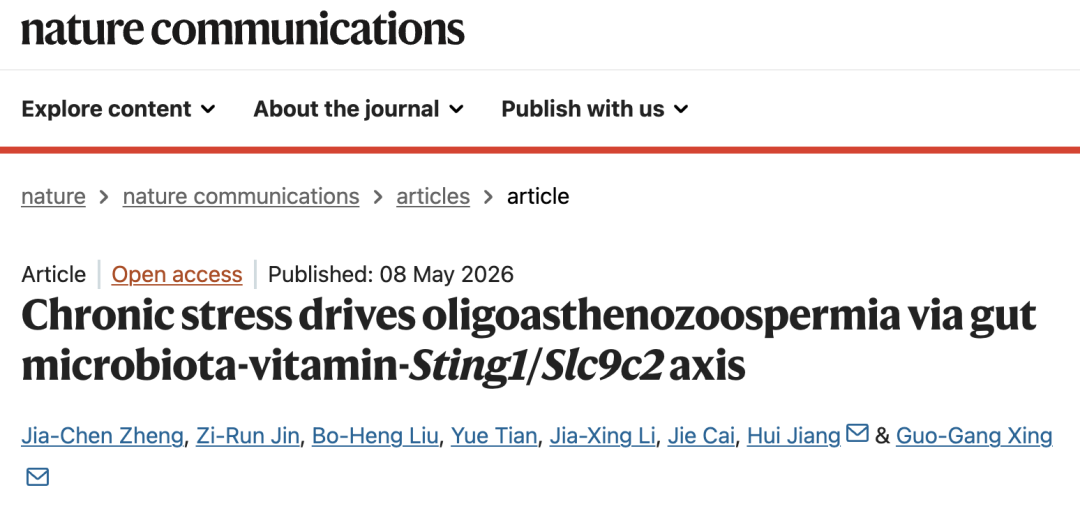
Groundbreaking research linking chronic stress, gut health, and male fertility via specific molecular signaling pathways
30-Second TL;DR
What Changed
Chronic stress increases corticosterone, damaging gut barrier integrity.
Why It Matters
This study redefines oligospermia as a systemic disease driven by gut-metabolic-testicular axes, offering new therapeutic targets for stress-related infertility.
What To Do Next
For researchers in health-tech, explore integrating gut microbiome data with metabolic markers to predict stress-induced physiological decline.
Key Points
- •Chronic stress increases corticosterone, damaging gut barrier integrity.
- •Loss of Lactobacillus leads to Vitamin A/E deficiency, impairing sperm development.
- •Sting1 upregulation and Slc9c2 downregulation are identified as key molecular drivers.
- •Probiotic and vitamin supplementation effectively restores fertility in models.
Deep Insight
Background and context from public sources — not the original article. 24 sources cited.
Enhanced Key Takeaways
- •The gut microbiota influences male reproductive function through a complex "gut-testis axis" involving hormonal regulation (e.g., testosterone, HPG axis), immune modulation, and antioxidant effects, extending beyond just vitamin metabolism.
- •Dysbiosis, or an imbalance in gut microbes, contributes to male infertility by increasing systemic inflammation and oxidative stress, which can damage sperm DNA, reduce motility, and disrupt testicular structure.
- •The identified molecular drivers, Sting1 and Slc9c2, mediate distinct aspects of sperm impairment: Sting1 upregulation in the testes leads to reduced sperm production via innate immune and cell-death pathways, while Slc9c2 downregulation in the epididymis impairs sperm motility by affecting pH regulation and tail function.
- •Beyond the gut, the semen microbiome itself is a critical factor, with beneficial bacteria like Lactobacillus associated with better sperm quality and certain pathogenic bacteria linked to poorer semen parameters and increased DNA fragmentation.
- •Clinical trials have demonstrated that supplementation with specific probiotic strains, such as Lactobacillus rhamnosus and Bifidobacterium longum, can significantly improve sperm concentration, motility, and morphology, while also reducing oxidative stress and DNA fragmentation in men with idiopathic infertility.
Technical Deep Dive
- Animal Model: Chronic psychological stress was induced in mouse models using methods like forced swimming, leading to anxiety, depression, elevated stress hormones, and oligoasthenozoospermia.
- Gut Barrier Integrity: Stress-induced corticosterone was shown to weaken protein seals in the intestinal lining, indicating a "leaky gut." Blocking the glucocorticoid receptor largely restored gut integrity and sperm quality.
- Microbiota Analysis: 16S rRNA gene sequencing was employed to analyze gut microbiota composition, revealing dysbiosis characterized by decreases in beneficial Lactobacillus populations responsible for vitamin biosynthesis.
- Metabolomic Profiling: Targeted metabolomic analysis identified perturbations in vitamin-related metabolites, specifically highlighting deficiencies in vitamins A, E, B, and K pathways in stressed mice.
- Molecular Pathways:
- Sting1 (Stimulator of Interferon Genes 1): Upregulated in the testes of stressed animals, acting as a master switch in innate immune and cell-death pathways, leading to reduced sperm production. Artificially boosting Sting1 decreased sperm production, while silencing it partially rescued sperm numbers.
- Slc9c2 (NHE11): Downregulated in the epididymis by stress. This gene encodes the Na+/H+ exchanger isoform 11, a sperm-specific ion transporter localized to the sperm head, crucial for maintaining intracellular pH and tail function, thus affecting sperm motility.
- Intervention Mechanisms: Probiotic treatment and vitamin A/E supplementation were shown to downregulate Sting1 and restore Slc9c2 expression, ameliorating sperm quality and gene profiles.
Future ImplicationsAI analysis grounded in cited sources
Timeline
- 2016-03Review highlights sex differences in the gut microbiome-brain axis development and maintenance.
- 2023-06Research increasingly associates changes in the human gut microbiome with systemic sex hormones and spermatogenesis, challenging the historical belief of a sterile genitourinary system.
- 2023-09Studies demonstrate that specific *Lactobacillus* strains can protect against restraint stress-induced male reproductive deficits in animal models.
- 2024-01Research identifies *Lactobacillus iners* as potentially having a negative impact on male fertility, linking specific microbes to sperm motility issues.
- 2024-06A systematic review concludes that probiotic supplementation shows promising antioxidant properties and improves sperm parameters in men with idiopathic infertility.
- 2026-05The study "Chronic stress impairs sperm via gut microbiota axis" is published, detailing the gut microbiota-vitamin-Sting1/Slc9c2 signaling axis.
Sources (24)
Factual claims are grounded in the sources below. Forward-looking analysis is AI-generated interpretation.
Weekly AI Recap
Read this week's curated digest of top AI events →
AI-curated news aggregator. All content rights belong to original publishers.
Original source: 虎嗅 ↗
This is a summary, not the original. Read the source, or get the weekly briefing.
The weekly digest
One email a week. Unsubscribe anytime.