🇨🇳cnBeta (Full RSS)•Stalecollected in 20h
Chrome Native Lazy Loading for AV Speeds Web
#browser-performance#lazy-loading#web-mediachromegooglechromechromium
💡Chrome's native AV lazy load boosts web speed—optimize AI web UIs today.
⚡ 30-Second TL;DR
What Changed
Native lazy loading for video and audio elements
Why It Matters
Improves performance for web apps with media, benefiting AI demos and generative tools in browsers.
What To Do Next
Add loading='lazy' to video/audio tags in your Gradio AI web apps for instant perf gains.
Who should care:Developers & AI Engineers
Key Points
- •Native lazy loading for video and audio elements
- •Supported in Chrome, Edge, Vivaldi soon
- •Proposed by Chromium contributor Helmut Januschka
🧠 Deep Insight
AI-generated analysis for this event — not the original article.
🔑 Enhanced Key Takeaways
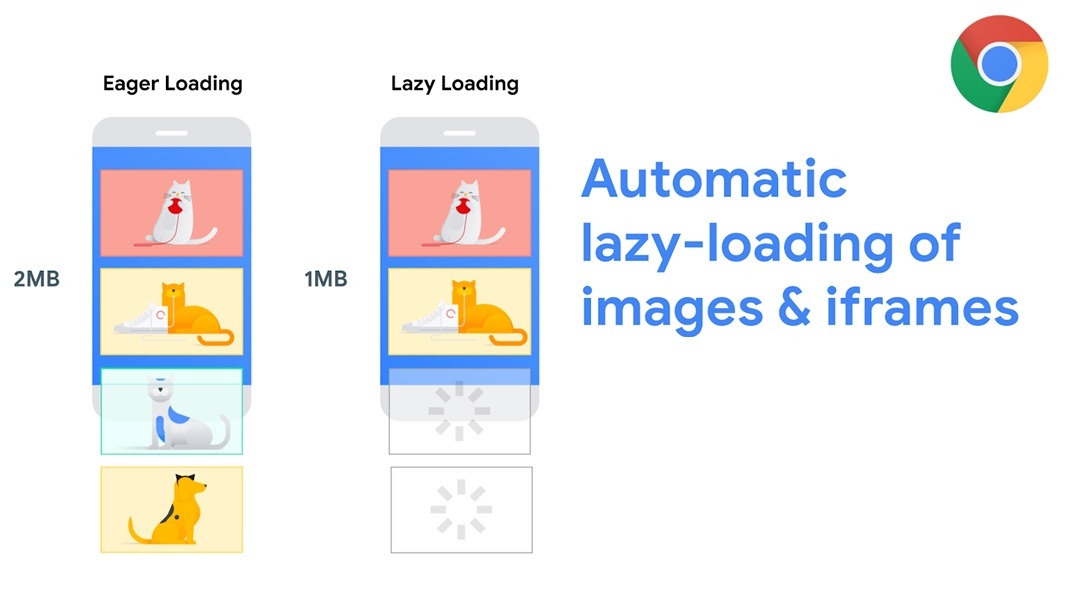
- •The implementation utilizes the 'loading' attribute, extending the existing 'lazy' value currently used for images and iframes to media elements.
- •This feature aims to reduce initial page weight and bandwidth consumption by deferring the loading of media resources until they are within a calculated distance from the viewport.
- •The proposal addresses performance regressions in Core Web Vitals, specifically Largest Contentful Paint (LCP), by preventing media elements from competing for network resources during the critical initial page load.
🛠️ Technical Deep Dive
- •The implementation involves updating the Chromium Blink rendering engine to recognize the 'loading=lazy' attribute on
- •The browser calculates a 'load margin' based on the connection type (e.g., 2G vs 4G) and the element's proximity to the viewport to trigger resource fetching.
- •The feature is designed to be backward compatible; browsers that do not support the attribute on media elements will ignore it and default to standard eager loading behavior.
- •The implementation includes logic to ensure that if a video is set to 'autoplay', the browser may override the lazy loading behavior to ensure the media starts as intended.
🔮 Future ImplicationsAI analysis grounded in cited sources
Reduction in global data traffic for mobile users.
By preventing the automatic download of off-screen media, users on metered connections will save significant data on media-heavy websites.
Standardization of lazy loading across all major browser engines.
As Chromium-based browsers adopt this, it creates pressure for WebKit (Safari) and Gecko (Firefox) to implement similar native standards to maintain parity in performance benchmarks.
⏳ Timeline
2019-08
Chrome 76 introduces native lazy loading for images and iframes.
2020-11
Native lazy loading for images becomes a standard feature across all major browsers.
2025-09
Chromium contributor Helmut Januschka formally proposes extending lazy loading to media elements.
2026-02
Implementation of media lazy loading reaches the Chromium 'experimental' flag stage.
📰
Weekly AI Recap
Read this week's curated digest of top AI events →
👉Related Updates




AI-curated news aggregator. All content rights belong to original publishers.
Original source: cnBeta (Full RSS) ↗
This is a summary, not the original. Read the source, or get the weekly briefing.
Weekly AI briefing
One email a week. Unsubscribe anytime.