Chinese Models Power 58% of US API Usage
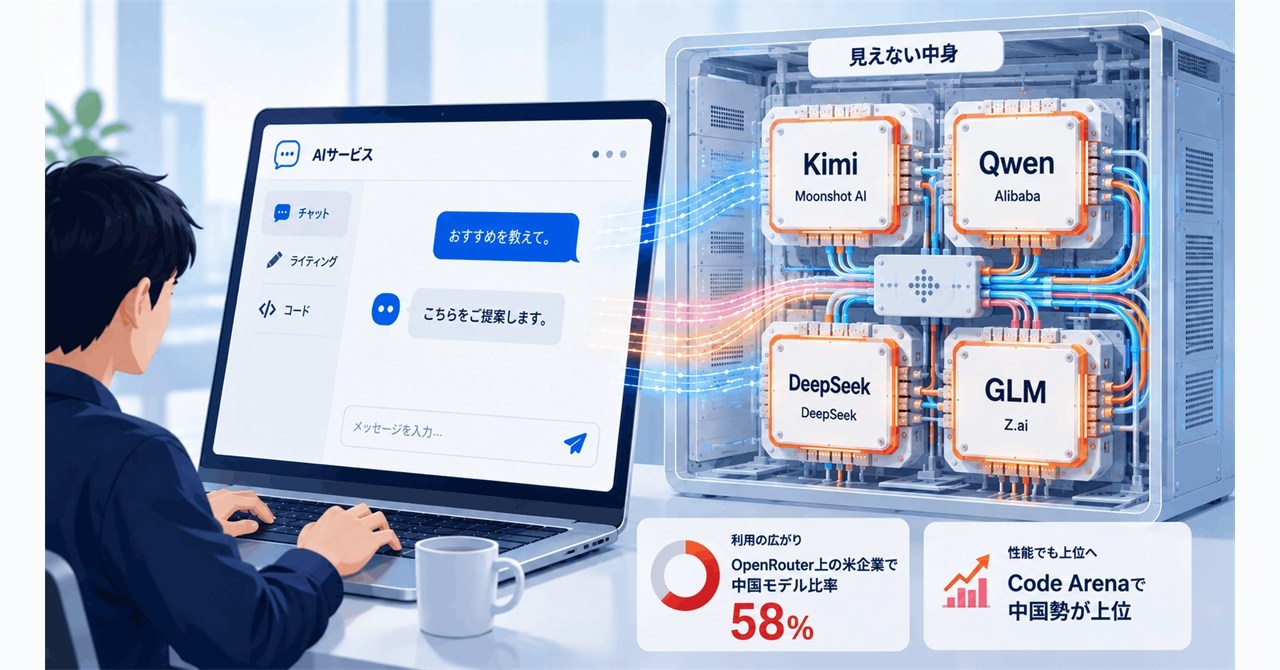
💡Your AI app may be powered by a Chinese model without users ever seeing it.
⚡ 30-Second TL;DR
What Changed
Chinese-origin models occupy 8 of the top 20 positions in Arena AI’s coding performance rankings.
Why It Matters
AI builders may be relying on Chinese models without realizing it, creating potential implications for data governance, compliance, security review, and vendor strategy. Model quality and cost may increasingly matter alongside geographic origin and policy constraints.
What To Do Next
Audit your OpenRouter routing configuration and log the underlying model for every production request before reviewing data-governance and compliance requirements.
Key Points
- •Chinese-origin models occupy 8 of the top 20 positions in Arena AI’s coding performance rankings.
- •US companies route 58% of their tokens to Chinese models through the OpenRouter service.
- •The model powering an AI product may be invisible to end users because services can operate through intermediary APIs.
- •The findings highlight the growing importance of model provenance and supply-chain visibility in AI applications.
🧠 Deep Insight
Background and context from public sources — not the original article. 11 sources cited.
🔑 Enhanced Key Takeaways
- •Chinese models are currently 60% to 90% cheaper than leading American frontier models, driving their rapid adoption for high-volume enterprise workflows.
- •The top five positions on OpenRouter by token volume in July 2026 were exclusively held by Chinese-developed models, including offerings from Xiaomi, DeepSeek, MiniMax, Alibaba, and Moonshot AI.
- •U.S. House Committees have initiated formal investigations into the national security implications of Chinese AI model usage, specifically citing concerns over China's National Intelligence Law.
- •Approximately 70% of enterprise AI activity is estimated to occur outside of formal IT oversight, facilitating the 'Shadow AI' phenomenon where Chinese models are integrated without corporate authorization.
- •The market share shift is stark: Chinese models grew from less than 10% of U.S. traffic in early 2025 to a majority share by mid-2026.
📊 Competitor Analysis▸ Show
| Feature | Chinese Frontier Models (e.g., Qwen, Kimi) | U.S. Frontier Models (e.g., GPT-5.6, Fable 5) |
|---|---|---|
| Pricing | 60-90% lower cost | Premium pricing model |
| Deployment | Primarily open-weight/flexible | Mostly closed-source/API-locked |
| Primary Use Case | High-volume, routine, cost-sensitive tasks | High-stakes, complex reasoning, sensitive data |
| Market Position | Rapidly gaining share via cost-efficiency | Maintaining dominance in high-security sectors |
🛠️ Technical Deep Dive
- Chinese models like Moonshot AI's Kimi K3 utilize massive parameter counts, reaching up to 2.8 trillion parameters to achieve performance parity with U.S. systems.
- The adoption is facilitated by the open-weight nature of these models, allowing for local deployment or routing via platforms like OpenRouter to bypass closed-source API constraints.
- Models such as Alibaba's Qwen 3.8 Max are optimized for high-throughput inference, enabling them to handle the majority of routine token traffic at a fraction of the compute cost of U.S. counterparts.
🔮 Future ImplicationsAI analysis grounded in cited sources
⏳ Timeline
📎 Sources (11)
Factual claims are grounded in the sources below. Forward-looking analysis is AI-generated interpretation.
Weekly AI Recap
Read this week's curated digest of top AI events →
👉Related Updates
AI-curated news aggregator. All content rights belong to original publishers.
Original source: ITmedia AI+ (日本) ↗
This is a summary, not the original. Read the source, or get the weekly briefing.
Weekly AI briefing
One email a week. Unsubscribe anytime.